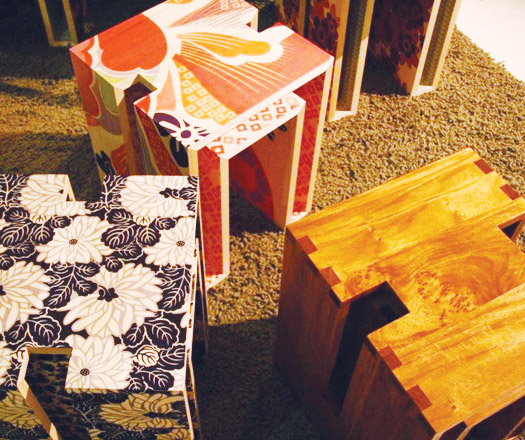
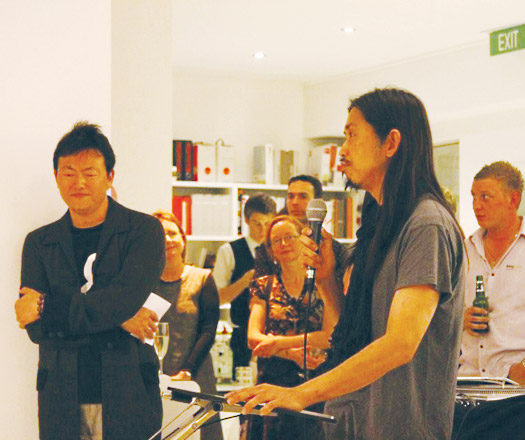
‘Dress Code’ by Akira Isogawa and Fukutoshi Ueno launched in Brisbane.
January 15th, 2009
Late last year saw the first official launch of ‘Dress Code’ following its release at 100% Design in Toyko in October last year.
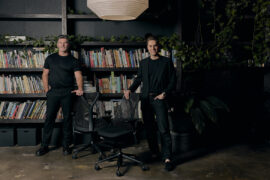
‘Dress Code’ is the result of a recent collaboration between world-renowned fashion designer Akira Isogawa and emerging Brisbane furniture designer Fukutoshi Ueno (AKA Toshi).
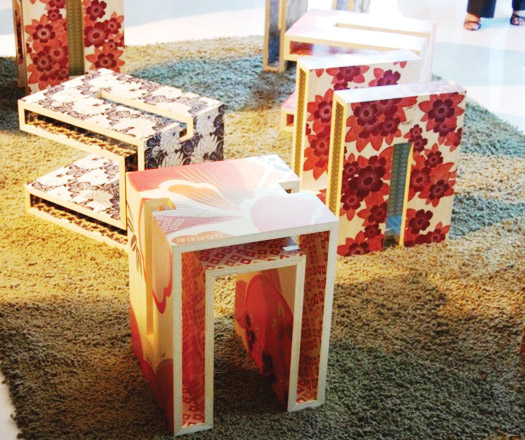
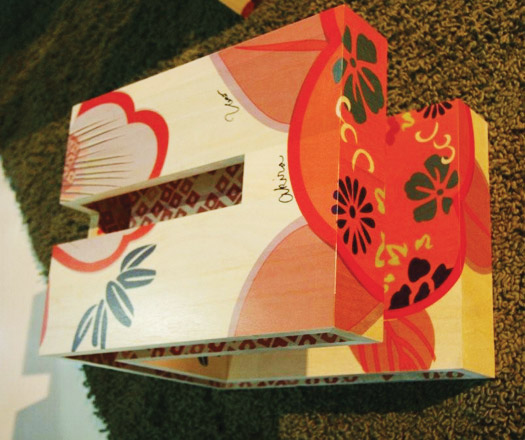
‘Dress Code’ pairs Akira’s passionate fashion prints with Toshi’s multifunctional design ‘code’. Akira’s Komono pattern prints were used to give a colourful ‘East meets West’ flavour to Toshi’s geometric design.
Made from recycled antique woods like rosewood, silver ash and Tasmanian oak, the pieces, available in a range of three finishes, can be used as seating, side-tables or a unique shelving and storage system.
The collaboration between Akira and Toshi created much discussion about the intricate relationship between fashion and furniture design.
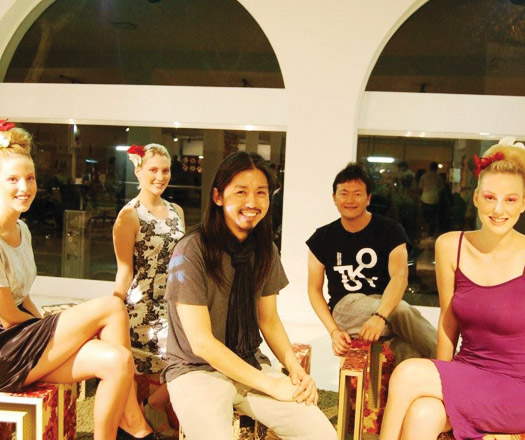
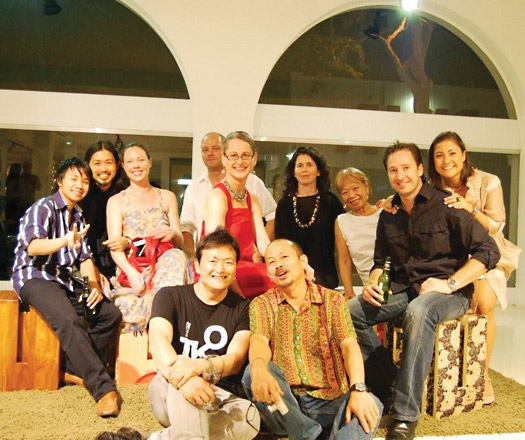
The evening showcased both ‘Dress Code’ and a fashion preview of Akira’s latest collection.
The night was supported by Living Edge, Artisan, Queensland Arts, Belinda and Akira.
For more details on their iconic furniture for the home and office visit livingedge.com.au and view the image gallery here.
INDESIGN is on instagram
Follow @indesignlive
A searchable and comprehensive guide for specifying leading products and their suppliers
Keep up to date with the latest and greatest from our industry BFF's!
The difference between music and noise is partly how we feel when we hear it. Similarly, the way people respond to an indoor space is based on sensory qualities such as colour, texture, shapes, scents and sound.
Blending versatile cooking with smart performance, Bosch AccentLine appliances bring a quieter sense of order and simplicity to the modern kitchen.
Stepping into Intuit’s Sydney workplace certainly doesn’t feel like walking into an office. Why? In this film, we discover that, when joy takes precedence as a design driver, even a high-performing commercial CBD headquarters can feel like an intuitive wonderland that invites employees to choose their own adventure.
Have we failed to provide equal access and equal opportunity for the disabled community? Where can A+D improve?
This Sofa Series is made up of five basic modules, Curved Corner Back; Straight Back; 1 Seat; 2 Seat and 3 Seat. You can make endless combinations, for example, three, four, five, six seater sofas, chaise, corner sofa, single seats, love seats, benches and ottomans that can be single, two seater, three seater etc. It’s […]
Andrea is Indesign’s New Zealand correspondent, inspired by the creative people she meets and the places she visits. What you do: I write about people, architecture, art and design. I collaborate with New Zealand architecture photographer Simon Devitt. Where you live: Point Chevalier, a harbour-side suburb close to Auckland City, New Zealand. Favourite designer/design: […]
The internet never sleeps! Here's the stuff you might have missed

In the last instalment of our three-part performance seating series, Alex Bain from Architectus explains why sitting well shouldn’t feel like sitting at all and explores an unexpected success metric of the hybrid workplace: the grounding power of emotional support.
Specification now centres on systems that drive performance, compliance, and lasting impact—not just materials.
In the first instalment of our three-part series exploring what it means to sit your best, we pose the question to Gray Puksand’s Dale O’Brien, who discusses the importance of ease and majority rule when it comes to sitting and reveals why specifying a task chair is not unlike choosing a Volvo.