The home of architecture and design in the Asia-Pacific
Get the latest design news direct to your inbox!

Get the latest design news direct to your inbox!
Is the ability to customise products the new frontier of luxury? How are brands responding? Annie Carroll takes a look at Sussex Tap’s latest innovation, which bridges tech and customisation.



November 22nd, 2018
In the world of luxury product design, customisation is not exactly a nascent trend. The concept has been fairly established in the worlds of furniture, fashion and car manufacturing for years.
But, the emergence of technology that enables customers to customise products in real time is transforming the way we engage with design across an ever-broadening spectrum, opening an interactive dialogue between brand and consumer like never before.
For Melbourne tap manufacturer Sussex, the launch of Design Studio – the company’s first online app that enables real-time customisation – marks a more accessible entry point into its existing customisation offer. Unprecedented of its kind within the tap design and manufacturing market in Australia, Design Studio takes the concept of ‘co-creation’ out of the domain of global powerhouse brands like Nike and into a far more local context.
Using technology that gives users the ability to mix and match colours and finishes across multiple components of Sussex’s tapware, Design Studio is the entry point into the company’s suite of customisation options, which includes the size and fit of its products, as well as a colour-matching service whereby customers can have their tap colour matched to a paint-swatch of their choice.
For architects, developers and interior designers, this presents a unique opportunity to create their own signature line of tapware. Luxurious, yes. But, then again, as the meaning of luxury becomes increasingly diluted through mass production and the large-scale visibility afforded by digital platforms, it’s the sense of real rarity that sets one project apart from the next.
Vanessa Katsanevakis, Sussex’s Creative Director, believes the app is a way of marrying Sussex’s unique local manufacturing with technical innovation to achieve something that’s truly bespoke.
“Customisation and innovation have been at the heart of Sussex since we started 27 years ago. We wanted to explore our customer’s desire for bespoke tapware further through this technology, because it has become such a core component of our business,” says Vanessa.
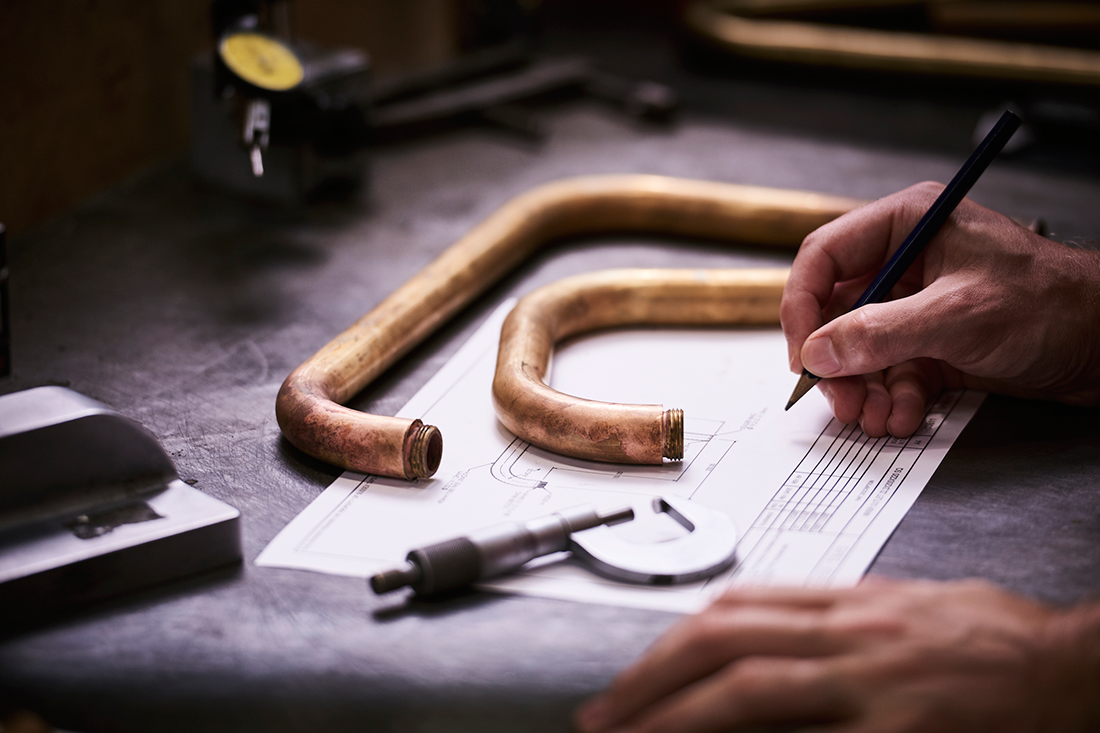
“We’ve always been really focused on maintaining local manufacturing, which has enabled us to have a much more agile approach to customisation and design. Our skilled craftsmen give us the ability to be responsive to our customer, and being local means we can oversee every single step of a custom design coming to life,” she continues.
For Sussex, the decision to invest in developing the app came from a mix of insight and the intuitive belief that tapware is an integral design component of a space. The rise in feature taps that act as ‘centrepieces’ to bathrooms and kitchens is concurrent with what Vanessa has seen as an increase in appetite for something out of the ordinary.
“5 years ago, chrome accounted for about 95 per cent of tapware finishes sold in Australia. For Sussex today, that number has dropped to about 30 per cent as we see more and more demand for colour, patina and matt finishes,” Vanessa explains.
Those finishes, spanning matte, reflective, chrome, brushed and ‘living’ (unlacquered, for a worn patina) are all achieved from the same starting point: a closed-loop system where recycled brass shavings are transformed into brass blocks that form the basis for a variety of mixers and systems. Sustainability is integral to Sussex’s business, and the customisation technology seen in Design Studio means deeper insight into the psyche of its customers, which could – in turn – help to minimise wasted stock.
When Nike iD launched in 2000, it was a harbinger of the obsession with product personalisation to come. After a slow start, the iD technology earned Nike $100 million in revenue in the fiscal year of 2009. Clearly, the demand for unique, custom products just needed the right alchemy of brand, tool and timing to take off.
As we move to reclaim luxury for what it should be – something rare – it’s only natural that the designers and manufacturers looking to own a slice of this market harness customisation technology, After all, if luxury equals rarity, then a bespoke piece of tapware is surely as luxurious as it comes.
INDESIGN is on instagram
Follow @indesignlive
A searchable and comprehensive guide for specifying leading products and their suppliers
Keep up to date with the latest and greatest from our industry BFF's!
The internet never sleeps! Here's the stuff you might have missed