The home of architecture and design in the Asia-Pacific
Get the latest design news direct to your inbox!

Get the latest design news direct to your inbox!
In her final blog of a series covering trends from the DesignThinkers Bootcamp (Amsterdam), Link Festival (Melbourne) and The Future Laboratory’s Sydney Trends Briefing, MashUp’s Customer Experience Designer Grace Turtle discusses the Me-economy.

April 27th, 2015
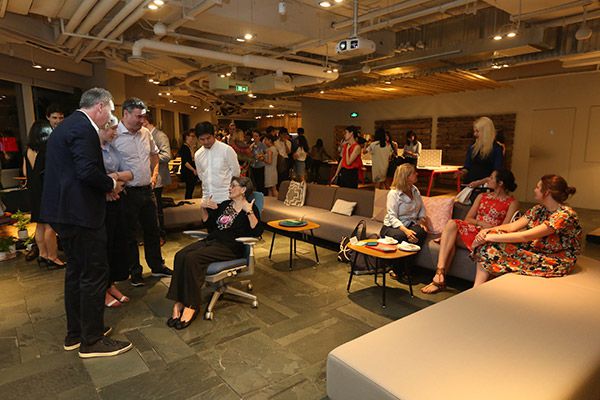
Above: Christian Sanderson from Future Labs speaking at the event
At The Future Laboratory’s Sydney Trends Briefing, the focus was on three macrotrends – The Sharded Self, The Flat Age Society and The Convergence Economy. Future Laboratories Christopher Sanderson and Martin Raymond discussed the bright, and enchanting, future world of Whole Age Marketing, confrontation commerce and dark net marketing.
Innovation firms, strategists and designers, it was discussed, will have to start thinking differently – on how we deliver projects and collectively solve problems. More stakeholders will have to be drawn into conversations to make solutions holistic and future proof. For example, educational institution design should not just involve schools and institutional governing bodies, but rather invite students parents and the community to have a greater voice and contribution to the development of their learning environments.
LS:N Global (The Future Laboratory’s trends and insights network), notes that across retail spaces, products, hospitality and entertainment, one theme is more prominent than others: it’s difficult to tell one thing from the other, or set one within particular parameters or boundaries. The lines between lifestyle industries, between forms of art and entertainment, and between the senses are increasingly blurred.
In an increasingly transparent and hyper connected society, every voice needs to be heard. In order to be relevant and have an impact in the market, we have to reframe how we work. Service design has moved beyond its role as a function to an instigator of change and beyond demographics to psychographics. How we converse with this ‘me-economy’ is the big opportunity.
INDESIGN is on instagram
Follow @indesignlive
A searchable and comprehensive guide for specifying leading products and their suppliers
Keep up to date with the latest and greatest from our industry BFF's!
The internet never sleeps! Here's the stuff you might have missed