The home of architecture and design in the Asia-Pacific
Get the latest design news direct to your inbox!

Get the latest design news direct to your inbox!
As global paradigms shift in the residential market, Australia is also embracing change with CHT Architects at the forefront of the new Build to Rent phenomena.


As our homes change to accommodate the times and our needs, the Build to Rent sector is finding its feet and interest in the model is taking hold. Historically, renters have drawn the short straw in the challenge to find property that is: a) fit for purpose; b) situated in a location that affords facilities; and c) is economically viable. Change is both in the air and on the drawing board, however. As perceptions of apartment living and the idea of renting are undergoing a macro-view shift, so too are the products to accommodate them.
Always at the vanguard of design and innovation, CHT Architects has further spread its wings, working to provide clients with Build to Rent project models. As a practice that engages with multiple sectors — commercial; aged care and retirement; education; hospitality; and multi residential — there is expertise and creativity to embrace yet another sector of the design market and create Build to Rent projects that are certain to garner wide appeal.
So what is Build to Rent? Basically, this is a concept whereby a residential property has been built specifically for the purpose of renting out and is owned privately by a company rather than an individual.
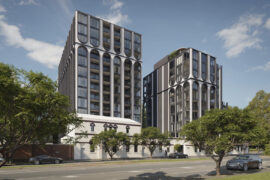
Joshua McAlister and Mark Spraggon, CHT Architects’ directors, have been involved with this new direction that currently sees two Build for Rent projects in process. Both projects are located in Melbourne, the first is a large residential tower at Fishermans Bend, an urban renewal project in the Melbourne city precinct, while the second is a smaller more bespoke development in Camberwell; and each is designed with a different demographic in mind.
The Fishermans Bend project is a 40-storey high-rise — due to commence construction early next year — located close to the city featuring 445 apartments, the design of which can be configured to meet a buyer’s desires. Apartments can be merged or adjoined to sublet or accommodate an aged parent or a carer; family groups can live side-by-side; and there is maximum flexibility of the spatial composition. The object of Build to Rent is to provide accommodation to reflect requirements that will appeal to long-term residents, thereby ensuring developers and renters alike of future rental security. As you’d expect from designs of CHT Architects’ calibre, this development will also feature outstanding amenity for residents.
Just as well-appointed yet different altogether, the Build to Rent project in Camberwell — nine kilometers east of Melbourne’s CBD — consists of just 30 apartments and is designed with a different clientele in mind. The apartment sizes are larger with a more high-end, luxury finish to appeal to downsizers. As, these days, empty nesters are more inclined to leave their large homes, the idea of Build to Rent is the ideal opportunity that allows a freedom of choice in how and where they live, security of tenure of their choosing along with financial flexibility.
Reflective of the health concerns arising from the pandemic, CHT Architects is also minimising touchpoints throughout the Build to Rent projects by incorporating technology into its designs. There will be smartphone connectivity for everything from entry to the building to individual apartment access. Add to that, public/communal areas will become bookable to allow for privacy, among other initiatives.
Both Build to Rent models are on trend and reflect the shift that developers are embracing as a complement to their Build to Sell developments. With lifestyles changing — and location and amenity are paramount — the Build to Rent model is rapidly garnering interest; sure to become a driving force for the future.
Images courtesy of CHT Architects

INDESIGN is on instagram
Follow @indesignlive
A searchable and comprehensive guide for specifying leading products and their suppliers
Keep up to date with the latest and greatest from our industry BFF's!
The internet never sleeps! Here's the stuff you might have missed