The home of architecture and design in the Asia-Pacific
Get the latest design news direct to your inbox!

Get the latest design news direct to your inbox!
Rob Caslick’s new form of signage using LED lights to write braille comes to Federation Square for the month of June, writes Hayley Davis.
June 13th, 2012
When Rob Caslick’s research led him to some insightful statistics about the blind’s ability to see light, he made it his focus for a lighting design competition he’d been invited to enter in Milan.
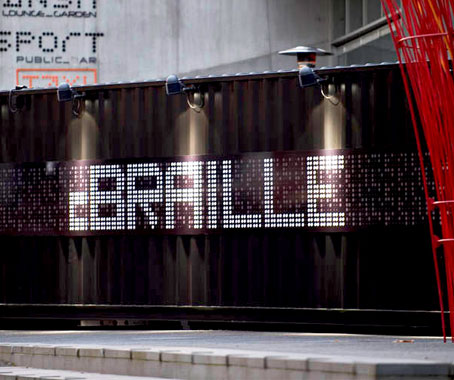
The result was a new form of signage, using LED lights to write braille.
An exhibition presenting his innovation is to be held at Federation Square for the month of June.
Visitors will walk through the exhibition, housed in a shipping container, and hear students from the Royal Institute of Deaf and Blind Children Teleschool answer the question, “what does light mean to me?”
The exhibition aims to raise awareness of the benefits of light for people with vision impairments.
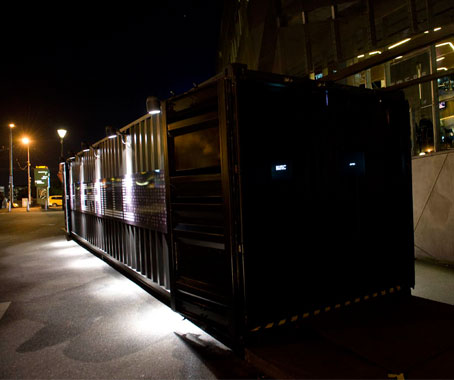
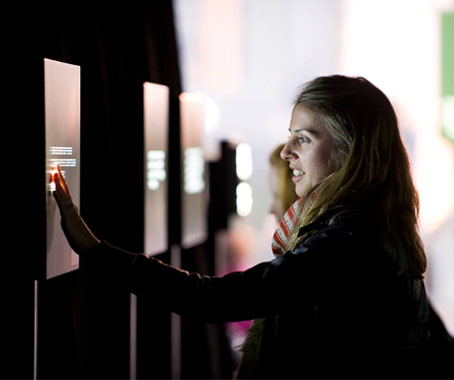
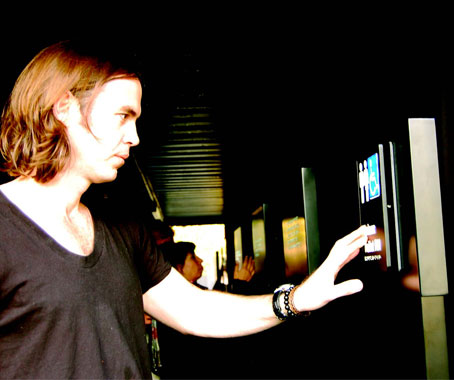
Research reveals that 90% of people who are blind can see light. With that in mind, Robert Caslick has developed lit signage to assists people of all vision types in navigating with greater ease.
cBraille is made up of fourteen LED panels arranged in braille code, where each braille dot is represented by one LED light.
Inscribed are quotes and anecdotes about light and blindness, such as, “Walking with a friend in the dark is better than walking alone in the light” by Helen Keller and “This guy came up to me and asked me how I made love with my wife. So I told him, Bring me your wife and I will show you” by Alvaro Vega.
The practical application of cBraille, cSigns has attracted the interest of hospitals and aged care facilities.
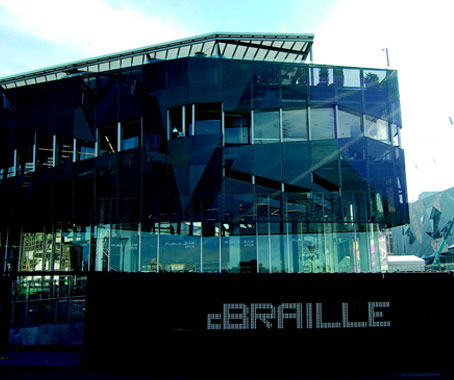
cBraille is a collaboration between experiential design firm e-2, engineering services company Medland Metropolis and construction company Built.
See cBraille Federation Square, Melbourne, June 1 – July 1
fedsquare.com/events/the-light-in-winter/program
INDESIGN is on instagram
Follow @indesignlive
A searchable and comprehensive guide for specifying leading products and their suppliers
Keep up to date with the latest and greatest from our industry BFF's!
The internet never sleeps! Here's the stuff you might have missed