The home of architecture and design in the Asia-Pacific
Get the latest design news direct to your inbox!

Get the latest design news direct to your inbox!
New tech meets old architecture in Tencent’s Guangzhou campus, designed by M Moser Associates.

June 4th, 2014
Young and fast-expanding firm Tencent – the originator of China’s popular WeChat application – saw its new Guangzhou campus as an important step in defining the company’s identity.
It’s choice of six dilapidated ex-factory buildings for its new corporate home may therefore appear as a surprising starting point, but the former industrial zone – now renamed Guangzhou Creative Park – is fast becoming a ‘creative hothouse’, and has already attracted a number of innovative brands to its red-brick buildings.
Tencent’s project manager explains, “There is a very human character at the Creative Park – a stimulating mix of history and culture that chimes with Tencent’s desire to create ‘meaningful’ workplaces that are environmentally friendly, comfortable and innovative.”
Four of the six buildings on campus are used as workspaces, while common amenities such as meeting rooms and the staff canteen are situated in the remaining two.
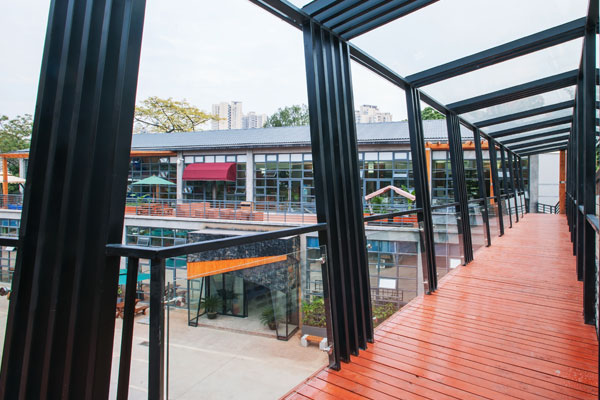
One of the challenges facing the M Moser Associates design team was the rather haphazard arrangement of the buildings themselves. At the same time, both the client and the designers recognised the importance of retaining the buildings’ original appearance – and their organic connection with the site’s history – as intact as possible. The solution to this came in the form of a network of open-sided bridges linking four of the six buildings together.
Say Ramesh Subramanian from M Moser Associates, “The bridges not only connect the buildings physically and make four workspace into one, but also link them together conceptually. They create a distinct ‘campus within a campus’ for Tencent, without altering the building’s existing historical features and characteristics.”
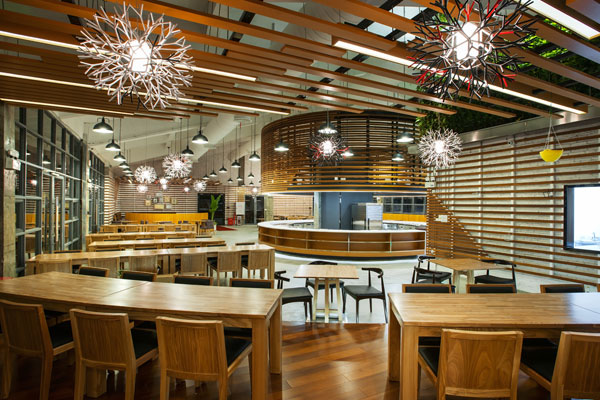
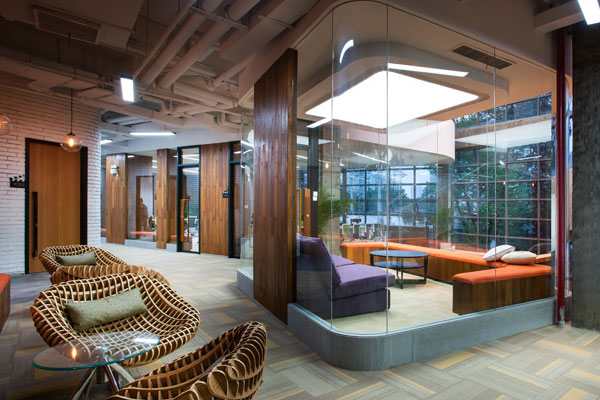
The design team has also brought the flavour of the Park right into the office through its choice of materials. The red wooden decks and exposed steel structures of the bridges, for example, have been incorporated inside – so too the signature red bricks of the building’s exterior.
The entranceway features a full-height, glazed atrium, complete with a composition of wavy fins on the ceiling that appear like clouds. There’s also a towering ‘cliff face’ of stacked meeting and workspaces, their transparent fronts interleaved with greenery and timber.
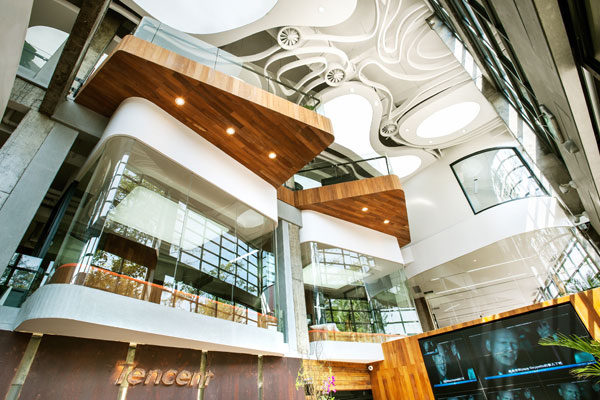
“The ‘cliff face’ exposes the functions inside the building: what’s in front of you are all the spaces you’re about the enter and use. You get an instant understanding of where everything is,” says Ramesh.
The ‘cliff face’ also hints at M Moser’s most radical intervention in the building’s original envelope: the insertion of mezzanine floors.
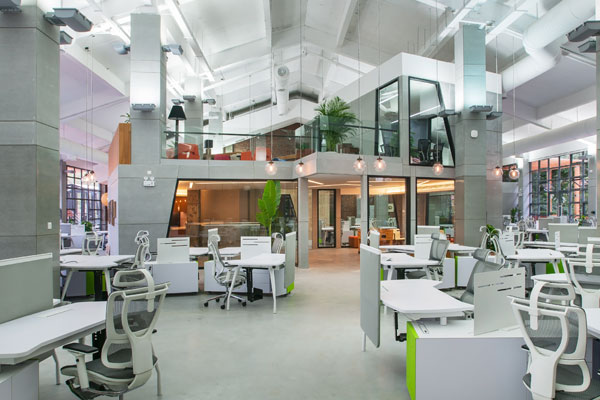
Grace Hu, project leader at M Moser, explains, “The mezzanine floors were added so we could fully exploit the floor-to-ceiling height of the buildings. It was one of the most successful but also difficult parts of the project, because we needed to blend new engineering into old architecture.”
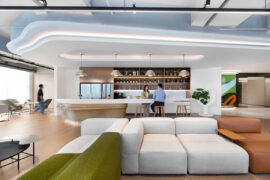
The new levels house the social, interactive spaces such as formal and informal meeting rooms, and open discussion and break-out areas.
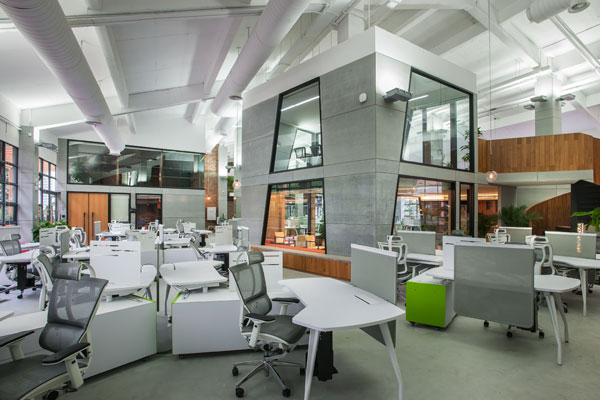
The workspaces themselves have been designed to stimulate innovation by encouraging interaction and collaboration between staff members and teams. To this end, the wide-open spaces and regular floor plates of the original factory buildings have been kept intact, with aisles and green walls used to separate different functional areas rather than opaque enclosures. Staff are free to roam through the space and have informal interactions with colleagues, engaging in impromptu discussions at the break-out zones located near their workstations.
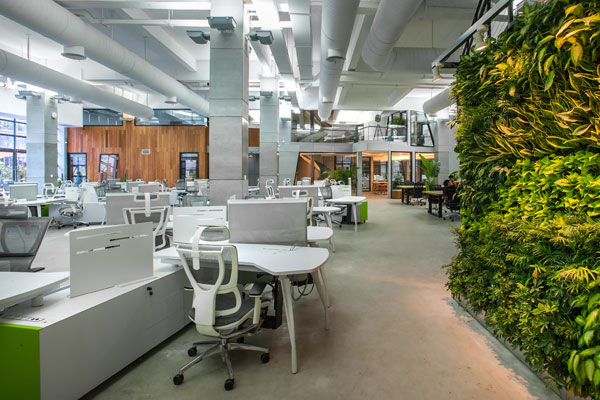
Even the meeting suite offers a measure of flexibility and movement – the glass walls of the meeting rooms are moveable, enabling spaces to be enlarged or reduced as required.
Sustainability was another important factor in the design. The materials used in the office interior are largely natural, locally sourced, and easily renewed or recycled. Natural, low-VOC finishes also help keep the interior atmosphere clean and chemical-free.
“This new campus offers our staff new possibilities for how they do their work. It breaks all the old expectations of what a working environment can be,” says Tencent’s project manager.
M Moser Associates
mmoser.com
INDESIGN is on instagram
Follow @indesignlive
A searchable and comprehensive guide for specifying leading products and their suppliers
Keep up to date with the latest and greatest from our industry BFF's!
The internet never sleeps! Here's the stuff you might have missed