The home of architecture and design in the Asia-Pacific
Get the latest design news direct to your inbox!

Get the latest design news direct to your inbox!
When it comes to shopping these days, it’s the experience that matters, as the British design firm demonstrated when they were tasked with redefining the interiors of Hangzhou Tower 501 Plaza.
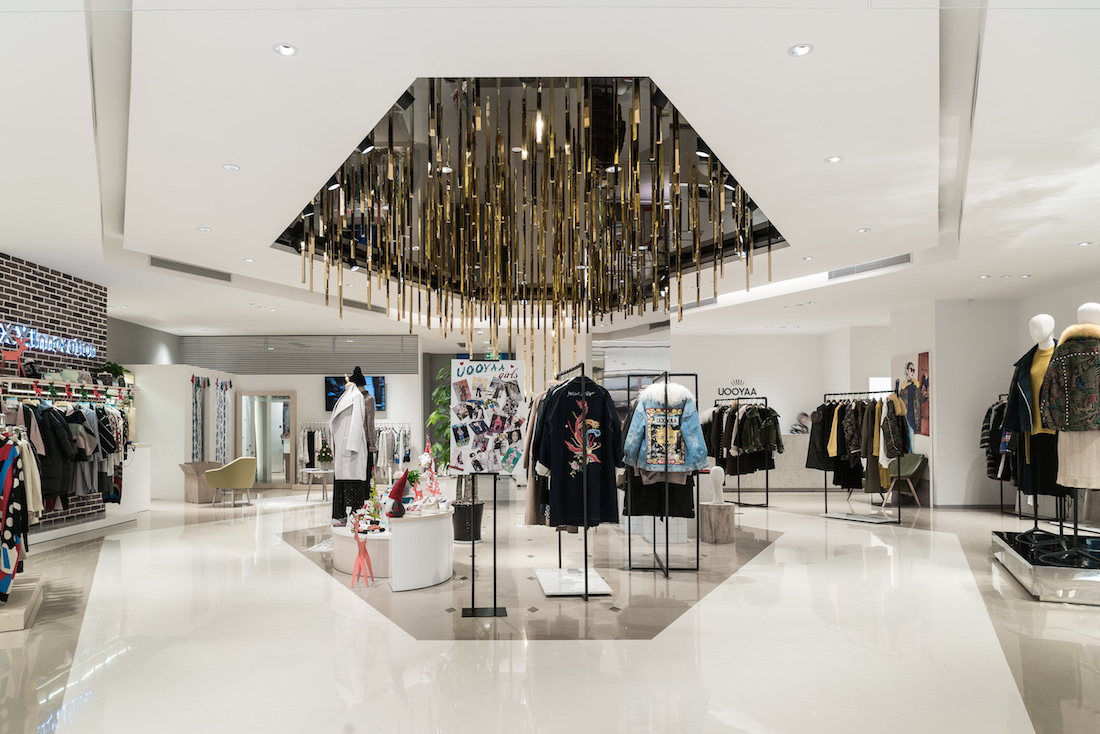
For Benoy, the design for the retail space within Hangzhou Tower 501 was not without its challenges. According to Simon Wong, Director at British architecture, masterplanning, interior and graphic design firm Benoy, the mixed-use complex was originally designed purely for office use, so the design team was confronted with the challenge of adapting 50,000 square metres of office space into a retail mall that would give shoppers a diverse and enjoyable shopping experience.
Hangzhou Tower 501 is located in Hangzhou’s new commercial district. Featuring commercial, retail and residential programmes, the development’s shopping mall is spread over six floors of what initially a “grid-like configuration” says Wong, who explains that the team deployed their experience in adaptive reuse to the project.
In reconfiguring the space, the Benoy team drew inspiration from the idea of a jewel box. Within the enclosure of the plaza, the design team created boxes-within-boxes defined by strong linear elements. The idea is that visitors can enjoy a variety of different shopping experiences as they encounter the different boxes.
Within the mall’s department store, each retail tenant’s area is demarcated by simple space defining elements. These elements also create boxes of various sizes and materials. The simplicity of the design language, which includes linear forms such as lightboxes, highlights the retail products. The distinctive boxes create points of interest, giving visitors visual surprises that are designed enhance their shopping experience.
The children’s floor of the department store is nature-themed, and different tenant areas feature elements such as green hills, tress, and colourful, miniature houses. Benoy’s aim here was to create an area that would encourage children visiting the store to explore the space and have fun. “We imagined the children’s area as a place where a wonderland meets a retail space,” explains Ping Zhu, Associate Director at Benoy.
At Hangzhou Tower 501 Plaza, even an escalator ride is an enticing experience. Set within an atrium, the escalator is surrounded by glass shelves and reflective stainless steel boxes. This transforms it into a gallery where merchandise can be displayed, giving visitors something to look at as they descend or ascend the escalators.
For Benoy, the transformation was a successful one. “The idea was to promote engagement and interaction and to set Hangzhou Tower 501 apart in the city,” says Zhu. “Designing for your audience is one of the keys to success in retail. This project shows how we’ve diversified and targeted our design to the end-user.”
INDESIGN is on instagram
Follow @indesignlive
A searchable and comprehensive guide for specifying leading products and their suppliers
Keep up to date with the latest and greatest from our industry BFF's!
The internet never sleeps! Here's the stuff you might have missed