The home of architecture and design in the Asia-Pacific
Get the latest design news direct to your inbox!

Get the latest design news direct to your inbox!
Merging the features of a primitive hut and chapel, Issei Suma Architects created a small community complex made up of a private residence and social care facilities. Joanna Kawecki writes.
September 15th, 2016
Photography by Takumi Ota
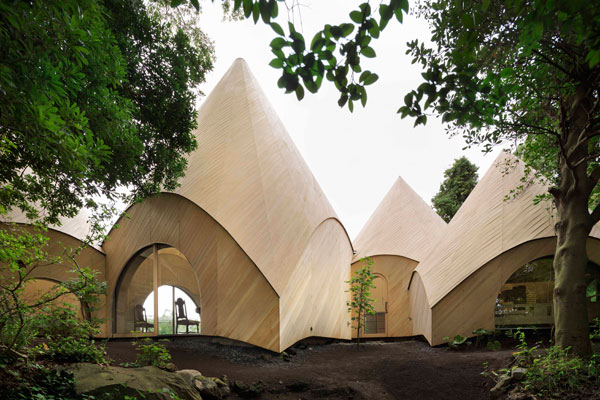
Located in the mountainous region of Shizuoka, Japan, JIKKA is an independent housing complex conceived to serve the local community and provide care to the elderly and disabled.
The owners of the space approached Tokyo-based Issei Suma Architects to design the multifunctional complex, which would function as their personal residence while fulfilling their social objectives. Both in their 60s, the owners – a cook and a social worker – sought to combine their catering service with a permanent nursing care facility in the form of a restaurant and guesthouse.
Architect Suma notes, “The client told us that this space would be where they would serve the community until the end of their remaining lives, intending for it to also be their final abode. The story led us to search for something as unembellished as a primitive hut and something as holy as a chapel.”
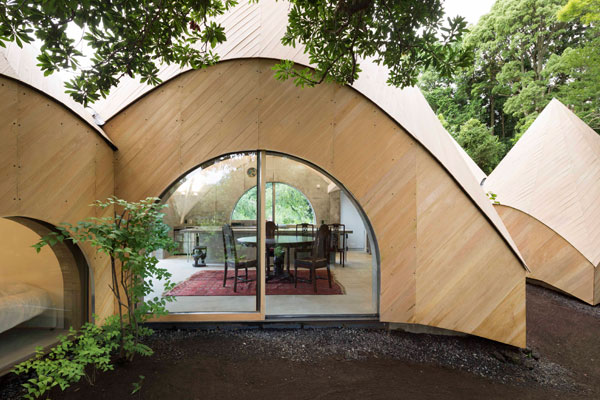
The restaurant and dining area acts as a public space that is open daily to locals, neighbours, customers and friends to enjoy meals made with seasonal ingredients.
The two huts that serve as a guest room and bathroom are minimally-designed. There are no partitioning walls or doors, optimising the nursing care facility. A large bath can be easily accessed by the disabled and elderly.
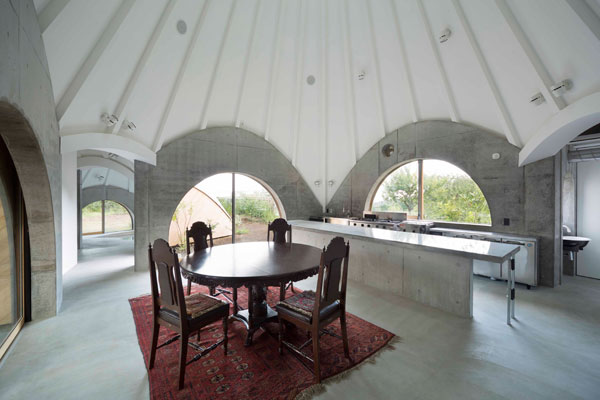
The owners’ residence and bedroom is located within the furthest hut. It is combined with other huts that offer space for the back of house storage, kitchen and catering, leading up to the restaurant. The conjoined huts are suitably private while enabling an open floor plan and design.
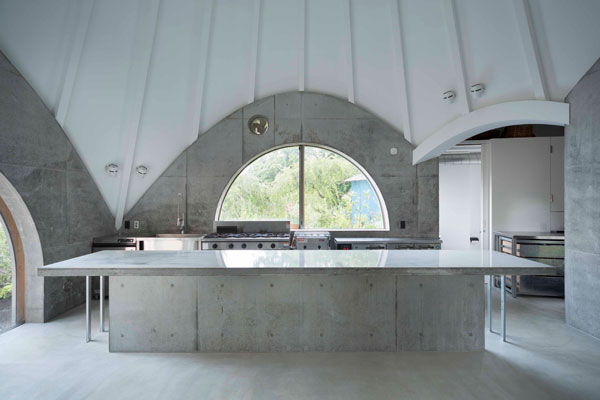
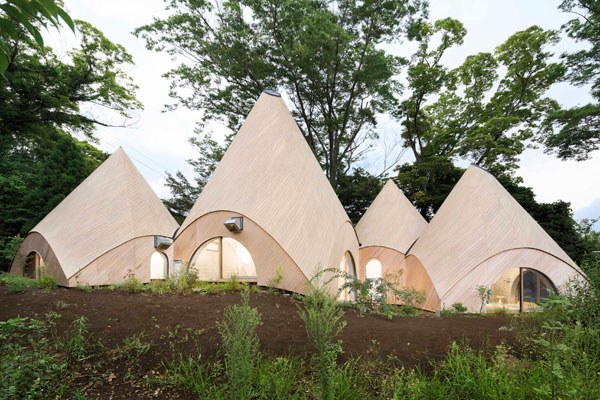
Lodged on a complex site spanning over 100 square metres, the five huts are constructed using local timber. The exteriors are defined by Japanese cypress wood cladding, while the interiors feature concrete flooring and walls, with the ceilings painted white. The hut exterior features individual wooden planks that are curved to support varying heights. They integrate seamlessly into the mountainous environment.
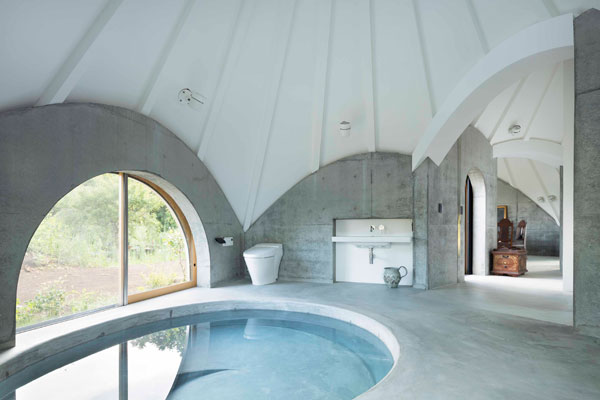
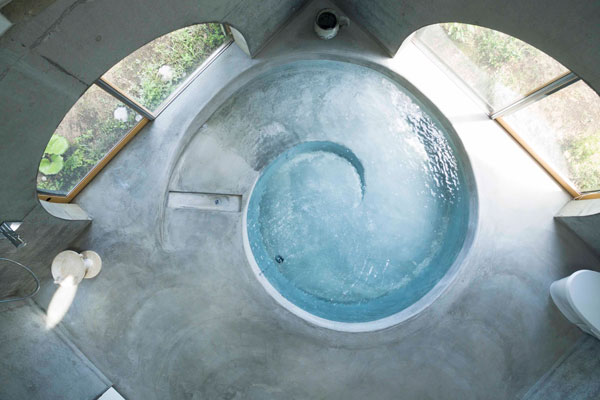
Suma details, “The site is located on the mountain ridge, which has been cut off and flattened by the previous owner. We aimed to recall the original mountain ridge by giving each hut different heights.”
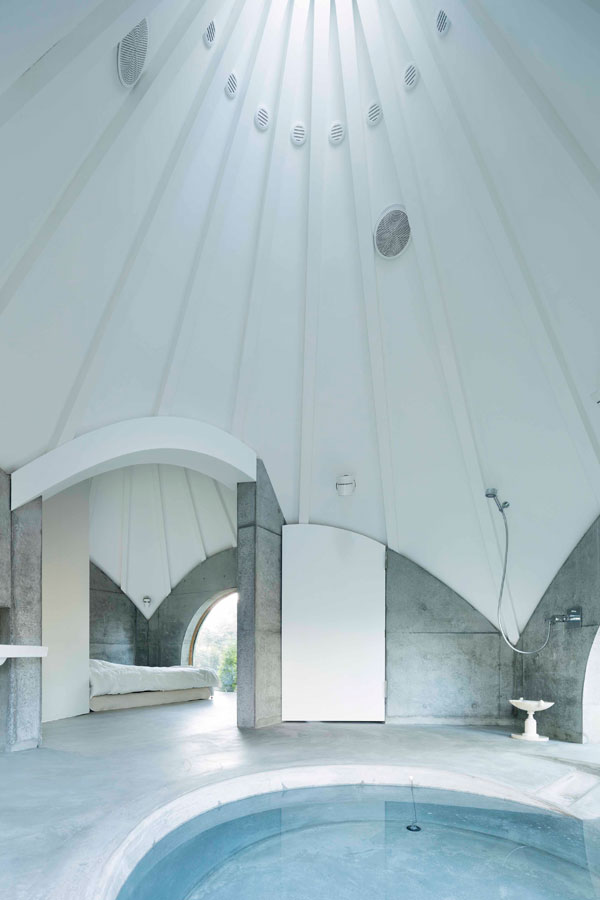
Each hut features large, curved sliding doors that allow natural light and fresh air to enter the space. As the site is set within a mountainous forest, the prominent design feature provides natural shade and protection from the wind. The two public huts (restaurant space and guesthouse) feature small openings in the ceiling that allow direct sunlight to enter from the top.
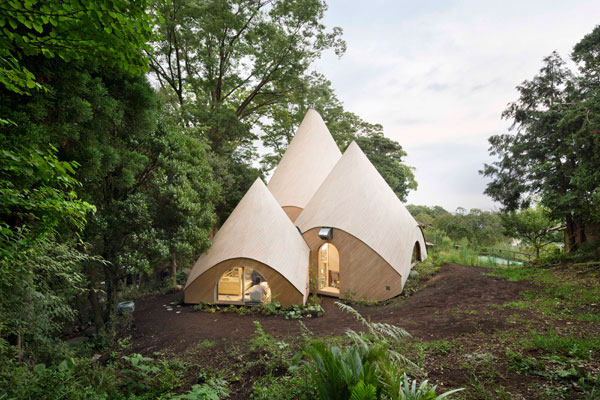
JIKKA has attracted locals and visitors to the area. Architect Suma explains, “They seem to enjoy the sincere hospitality of the two ladies, the local food that they serve, and the sublime [design and] space.”
Issei Suma Architects
isseisuma.com
INDESIGN is on instagram
Follow @indesignlive
A searchable and comprehensive guide for specifying leading products and their suppliers
Keep up to date with the latest and greatest from our industry BFF's!
The internet never sleeps! Here's the stuff you might have missed