The home of architecture and design in the Asia-Pacific
Get the latest design news direct to your inbox!

Get the latest design news direct to your inbox!
As Paola Lenti launches at colourliving, its Managing Director talks about brand vision, synergy and a holistic approach.
June 2nd, 2016
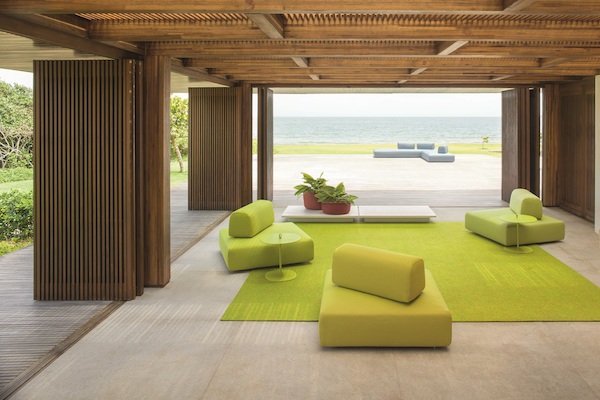
“Increasingly, people want to live outdoors,” says Anna Lenti, Managing Director of Italian lifestyle brand Paola Lenti. Seeing Paola Lenti’s bright, fresh and energetic pieces on show for the first time at colourliving, it’s easy to see the truth in what she’s saying.
Paola Lenti is the eponymous furniture business, named after its lead designer and founder, Paola, who is Anna’s sister. Specialising in outdoor furniture – but moving more and more into indoor items – the brand is a perfect match for lifestyle curator colourliving, which presented the collections with a bustling party at its Wan Chai showroom on 24 May 2016.
On show was seating, tables, shading systems and more from the 2015 and 2016 collections, as well as new colours and materials, and beloved classics. Here, we speak to Anna Lenti about the brand and future directions.
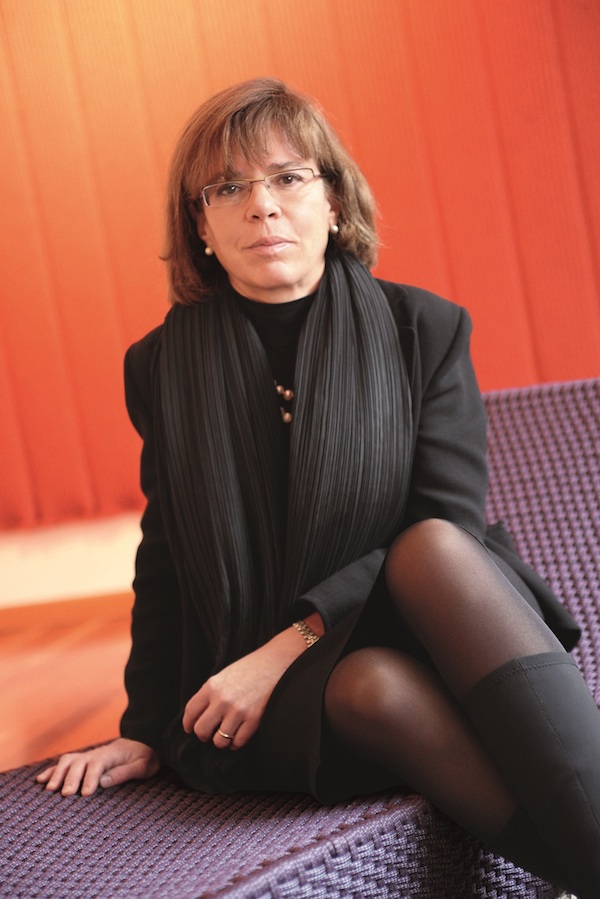
Anna Lenti, Managing Director of Paola Lenti
What sets Paola Lenti apart?
Paola Lenti is quite a young company, we started in 1994. It is still a family business today, because it’s run by the two of us. The design is very simple, so you can use it with all different kinds of architecture – from very modern to very classic. We always like very simple things [that work with everything].
Everything we use is our own: we only use signature material and signature fabric. We start with raw fibre manufacture – it’s a polyolefin fibre, modified in order to be UV resistant. We weave the material in different ways. We use it in different ways for outdoor and indoor products. For outdoors, we do a lot of research and collaboration with universities, to have material that is weather-proof.
Another important element is the colour; the collection features a lot of it. We start from a limited amount of solid colour. We have also started weaving the colours together, as we have done with Plump, our outdoor throw.
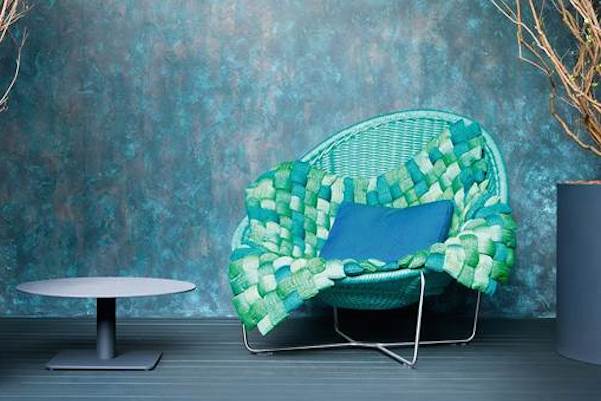
Plump, Paola Lenti’s outdoor throw, weaves different colours together
How did the partnership with colourliving come about?
We started talking to colourliving about Paola Lenti around one-and-a-half years ago, as we were searching for a new distributor. Also their name was so fitting [as colour is such a significant aspect of Paola Lenti’s DNA], and they were expanding beyond bathrooms into lifestyle. It was probably the right moment for both sides to get to know each other, so we met when they came to Milan Design Week in 2015.
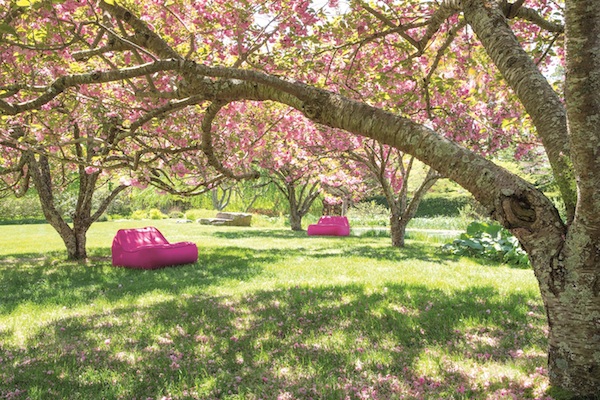
The Float collection
What are the next steps for the brand?
If I listen to my sister, she wants to go into doing the complete house! If I let her go with it, she will soon be building whole houses.
What we are able to do now is to offer more of a “lifestyle”. This is increasingly the direction we would like to go in. We started with rugs and furniture; now we have tables, architectural elements, the parasol, and more structural elements like the cabana.
At the beginning we started with indoor, but then we specialised in outdoor. Now we are doing indoor pieces again – not only furniture and rugs, but also architectural elements.
Two years ago, we presented this new system, Build, which is made up of panels that are soundproof. It comes in the Paola Lenti colours. People are increasingly living in loft environments, and maybe they would like to be able to change their environment, to have separation within the environment without being limited by fixed elements. With Build, you can create a home office, or a home theatre. It’s very exciting because you can even start making accessories, you can have a cabinet.
We also collaborate with a lot of different companies, doing finishing for walls, for floors. You can find Paola Lenti colours for your walls, and in finishes for your floors. It’s really about offering a complete lifestyle.
Paola Lenti
paolalenti.it
colourliving
colourliving.com
INDESIGN is on instagram
Follow @indesignlive
A searchable and comprehensive guide for specifying leading products and their suppliers
Keep up to date with the latest and greatest from our industry BFF's!
The internet never sleeps! Here's the stuff you might have missed