The home of architecture and design in the Asia-Pacific
Get the latest design news direct to your inbox!

Get the latest design news direct to your inbox!
Christie Lee catches up with Arik Levy at the opening of his first solo exhibition “Manmade (Human) Nature” in Hong Kong.

March 10th, 2015
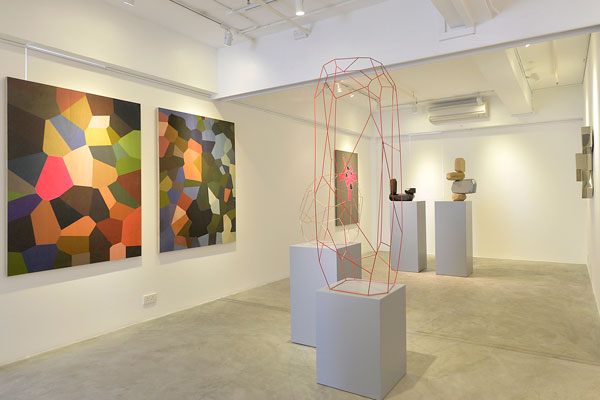
With a predilection for giving the most quotable sound bites – a favourite includes “creation is an uncontrolled muscle” – Arik Levy is one of those rare individuals who are equally adept at art and design. One of his most recognisable artworks is perhaps Totem, a human-size glass sculpture whose multi-faceted surface reflects everything – and everyone – surrounding it. “It’s really quite amazing. The images differ from one second to the next and once past, is lost forever. Yet, they remain in our minds.” A range of his artworks is now on show at the “Manmade (Human) Nature” exhibition, which runs until May 9 at Pekin Fine Arts in Hong Kong. We find out more.
Who were your early influences?
Victor Vasarely was an important influence. To conceive of such paintings, you need to be calculating to the tee, yet don’t forget that he lived in a low-tech world. Keith Haring was another. I’m amazed by how he always manages to transform something so quickly with the simple splash of the brush.
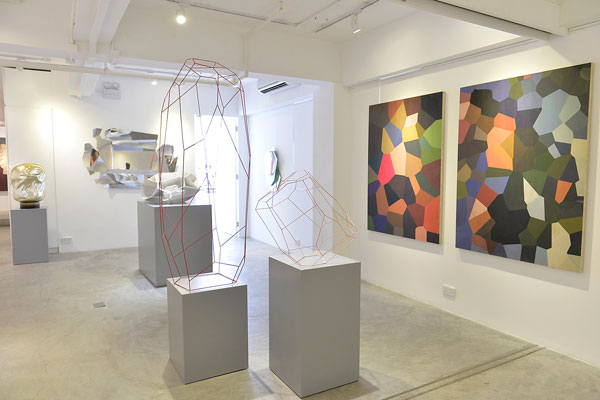
Why did you choose an apple as the subject for the two Mineralised Paintings on display?
Ah seduction. You know, the story of Adam and Eve? I mean, where else could I go with that? Everything that has to do with fruits is amazing. Everything is connected in my art, rarely is it arbitrary.
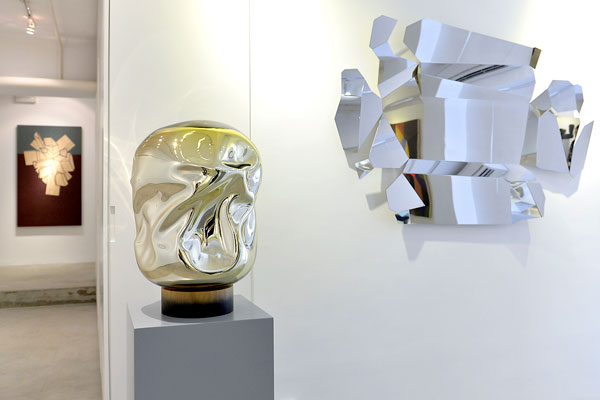
How did the dents in your Mercury series come about? I’m guessing they are also intentional…
Yes and no. Every single glass molecule has its own memory and when the glass sculpture is blown to a certain form, these molecules remember that form and try their best to stick to it. Yet, when placed near a fire, the sculpture wouldn’t be able to withstand the pressure, resulting in the dents. I say that it was also unintentional because we couldn’t control the shape of the dent.
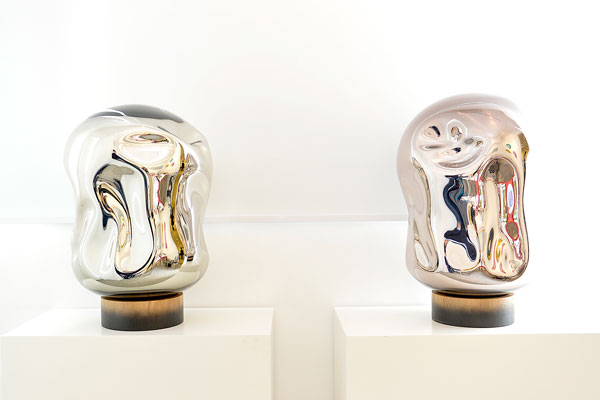
Many of your artworks deal with the distortion and indeed, destruction of memory. Do you see memory as a burden?
Not at all! Memory is very precious to me. The problem with my family is, we’re so bad at documenting moments via photography, mostly because we had no money back in the day. As a result, we’re used to carrying all the memories in our brains, which has permitted us to dig deep into our archives wherever we were and under whatever circumstances because we were surrounded by such havoc.
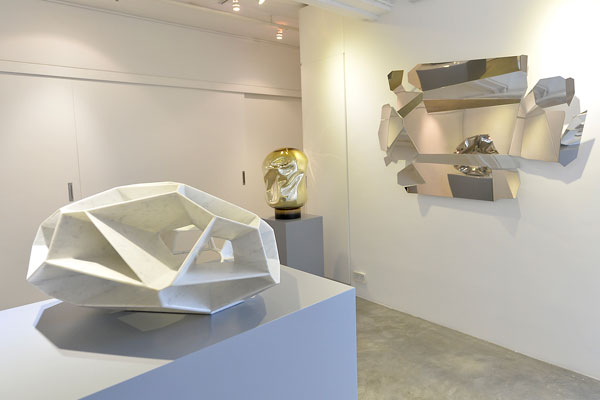
Did you move a lot as a child?
Not really. I only left Israel for the States when I was 14. But even then, the sense of displacement left a huge impression on me. Politically, Israel was a very unstable state. As a kid, we were told not to touch anything lying around on the floor, because even if it looked like a toy, it might be a bomb. I’m still scared of sitting by a window in a restaurant.
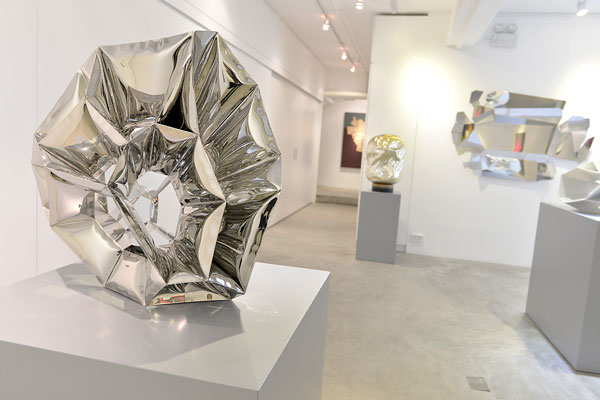
Have you ever tried to document the images that appear on your Totem sculptures, as fleeting as they are?
Not really. I think part of the beauty lies in their ephemerality. Sure, it’s sad when a beautiful moment disappears, but the other side of the coin is you always have something new to look forward to.
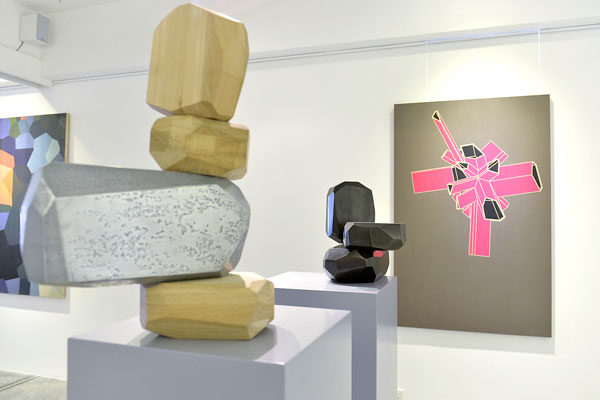
Destruction is obviously an important theme in your art, but you also seem to be fascinated with the idea of the origin of life.
I’ve always believed that what grows above ground is a reflection of the grain, i.e. the origin of life. When I was small, my father warned that even if I were to plant a bunch of euros trees, I wouldn’t get stacks of euros. Maybe doing all this is my desire to prove him wrong (chuckles).
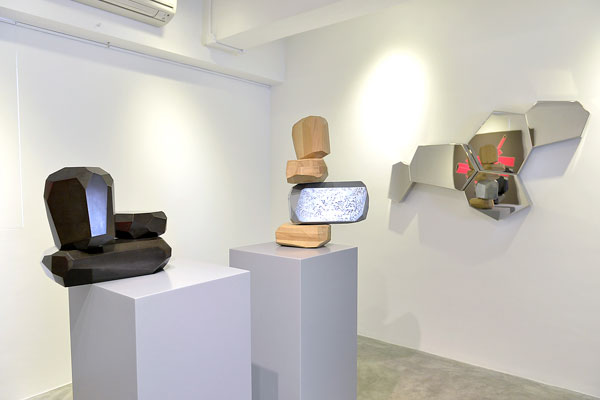
You seem to work a lot in contraries.
Yes, I build to break, break to build and destruct to create.
Could you tell us about Facet Pattern A1?
If you stand in front of it, you see things that you can’t see elsewhere. Despite all the different layers and depths, the picture is far from complete – you have build it up in your brain. As an artist, I’m only the facilitator. This was actually inspired by a trip I took to the tailor’s, as this is how they hang up the measurements of their clients. It’s quite fascinating every time I go, because I feel as if I’m being surrounded by hundreds of individuals, despite their not physically being there!
“Manmade (Human) Nature” runs until May 9 at Pekin Fine Arts in Hong Kong.
INDESIGN is on instagram
Follow @indesignlive
A searchable and comprehensive guide for specifying leading products and their suppliers
Keep up to date with the latest and greatest from our industry BFF's!
The internet never sleeps! Here's the stuff you might have missed