The home of architecture and design in the Asia-Pacific
Get the latest design news direct to your inbox!

Get the latest design news direct to your inbox!
An addition to the INDE.Awards this year is The Graduate, recognising excellence in the work of a fifth-year architecture student.
October 6th, 2021
An addition to the INDE.Awards this year is The Graduate, recognising excellence in the work of a fifth-year architecture student. Students were nominated by course leaders and professors and the calibre of the group was outstanding.
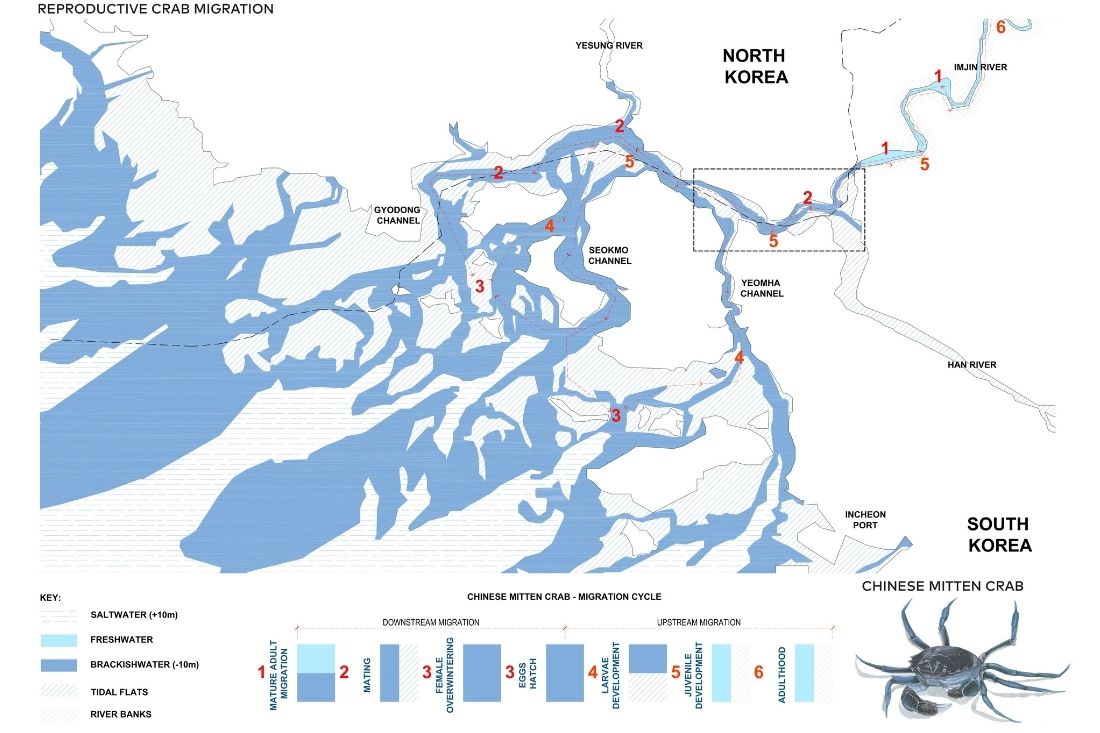
As the winner of The Graduate category, James McNicol from University of Technology Sydney (UTS), delivered a project that reflects a proposition that is both bold and topical exploring the idea of food production and reciprocity that could engage North and South Korea.
Sponsor of The Graduate, Alspec understands just how important support for the next generation of architects can be. With students leaving their schools to take their place in architecture practices across Australia and New Zealand, Alspec through The Graduate, offers an opportunity for a student to shine on a regional and global platform in the INDE.Awards.
Ross Baynham, National Specification Manager, Alspec commented, “It was great to see the calibre of the shortlisted candidates and the outstanding work of the winner James McNicol. James demonstrated high levels of conceptual skills and technical abilities in his fascinating submission on the relationship between crabs and rice. The architectural intervention of reciprocity between two sides to create sustainable farming practices is both thoughtful and inspired.”
The submission received from James is both thought-provoking and innovative and it explores possibilities that could be beneficial to feed people but also bring them together.
A short excerpt from James McNicol’s submission:
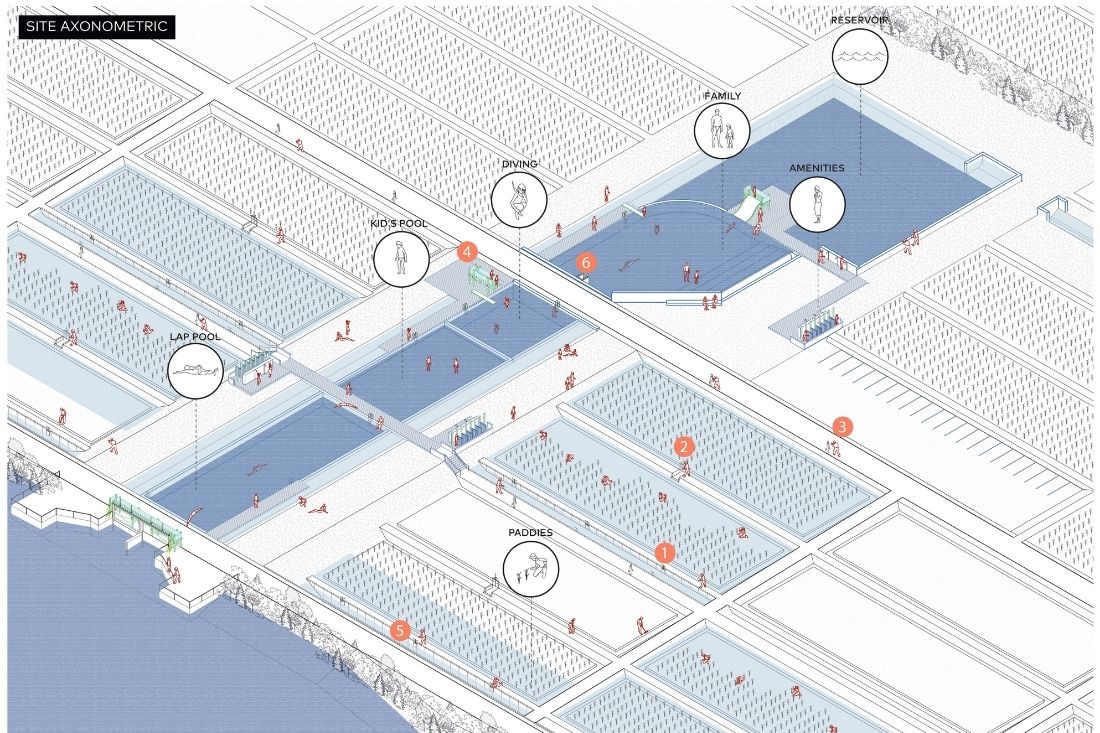
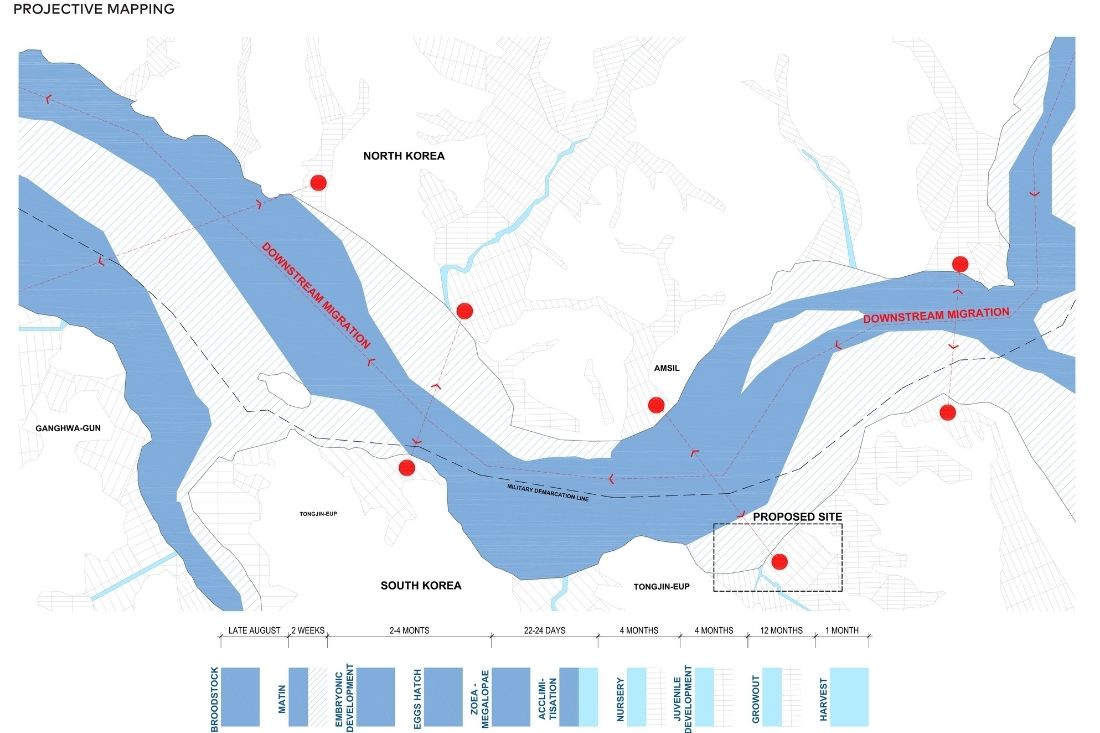
The project facilitates the relationship of interdependence between crabs and rice that rises out of huge disparities in food production between the two Koreas. The project proposes multiple sites that farm crabs and rice situated both sides of the Imjin River. The idea of reciprocity can then be explored as the Korean Demilitarized Zone (DMZ) condition allows for an architectural intervention that suspends the friend and enemy distinction by relying on the neutrality of the water body as a critical resource in order to maintain the operation of the farms on both the North and South.
While the channelling, distribution and mixing of water must be specific for the operation of the farm there was an opportunity to break from an engineered functionalism to insert the idea of swimming as double program.
Baynham concurred saying, “The INDE Awards are an important recognition of the vision and the talent we have throughout our industry, Alspec are proud to be able to acknowledge that inspiring work within our region. As Partner of The Graduate, we want to demonstrate a commitment to our industry and encourage the creativity and innovation of emerging talents.”
To provide a regional stage for up-and-coming architects is inspiring and also aspirational and provides a pathway for knowledge and acknowledgment. Congratulations to James McNicol and UTS as the inaugural winner and school of The Graduate and to Alspec for its belief in the category.
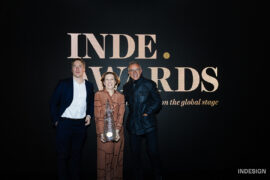
And for all the excitement of the INDE.Awards catch up on the gala event here.
INDESIGN is on instagram
Follow @indesignlive
A searchable and comprehensive guide for specifying leading products and their suppliers
Keep up to date with the latest and greatest from our industry BFF's!
The internet never sleeps! Here's the stuff you might have missed