The home of architecture and design in the Asia-Pacific
Get the latest design news direct to your inbox!

Get the latest design news direct to your inbox!
Indesign catches up with botanist and artist Patrick Blanc as he commences work on the world’s highest vertical garden at One Central Park.

January 20th, 2011
Patrick Blanc has been adorning our urban surroundings with his vertical gardens for over 30 years. Cultivating greenery in the most unlikely of places around the world, he is set to build his tallest-ever creation on the façade of Broadway’s One Central Park.
The project is a special one for Blanc. At its highest point the garden will be elevated 100 metres above ground level, where it will be especially exposed to the wind and sun.
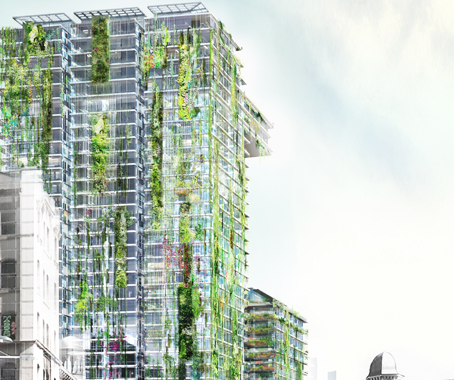
A concept drawing of Blanc’s vertical garden for One Central Park.
The scope of the project will be made easier by Sydney’s relatively moderate climate.
“Sydney has a very easy climate, when you compare it to Paris for instance,” explains Blanc.
“You have no winter – you have only fresh air! For such a high project it’s better to do it in a climate like Sydney.”
The garden will comprise a variety of primarily native Australian flora. Blanc is set to spend one week in the forests of Tasmania hunting for species that will best suit his project.
Blanc’s vertical gardens aim to create, as he describes, “a new kind of cohabitation between nature and humans” in a world where the majority of the world’s population live in cities.
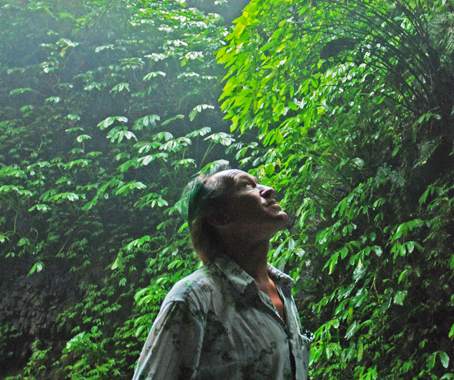
Blanc’s creations beautify the cityscape and add an element of surprise to the urban experience.
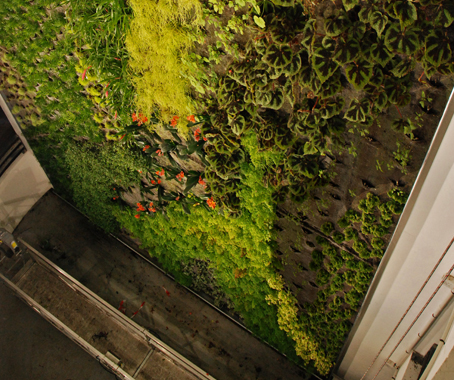
“The advantage of a vertical garden is that you can put it in a place where you are not at all waiting for nature,” says Blanc.
He recently created a garden for a carpark in Lyon.
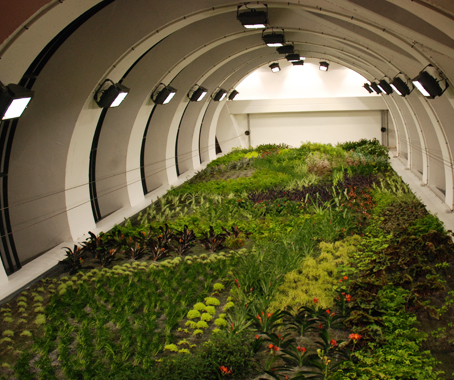
Parking Perrache in Lyon
“A carpark is an ugly place,” says Blanc.
“You are not waiting for life. I think it’s interesting to show that even in what you may consider the worst places, if you can choose the right plants and give the right amount of light and water, you can have life everywhere in our world.”
INDESIGN is on instagram
Follow @indesignlive
A searchable and comprehensive guide for specifying leading products and their suppliers
Keep up to date with the latest and greatest from our industry BFF's!
The internet never sleeps! Here's the stuff you might have missed