The home of architecture and design in the Asia-Pacific
Get the latest design news direct to your inbox!

Get the latest design news direct to your inbox!
Direct from Venice, Lucy Bullivant reports on the major talking points at this year’s Architecture Biennale.
September 8th, 2010
Kazuko Seijima, partner in SANAA (with Ryue Nishizawa) has focused on the experiential aspects of architecture in her selection for the 12th Venice Architecture Biennale.
The extensive expanses of the Arsenale and Corderie, and rooms of the International Pavilion include artists as well as architects.
Smiljan Radic and Marcela Correa’s The Boy Hidden in a Fish, a simple, elemental refuge in granite, is followed by Wim Wenders’ ‘If Buildings could Talk’, a 3D film about SANAA’s new Rolex Learning Center in Lausanne, Switzerland.
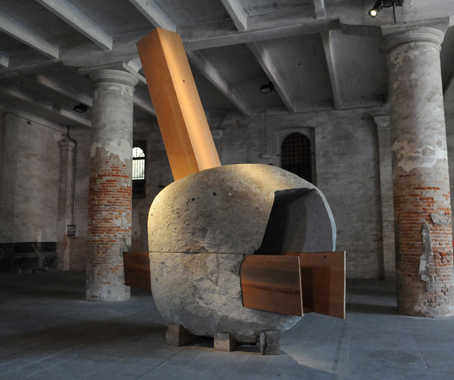
Smiljan Radic + Marcela Correa El Niño Escondido En Un Pez / The Boy Hidden In A Fish, 2010
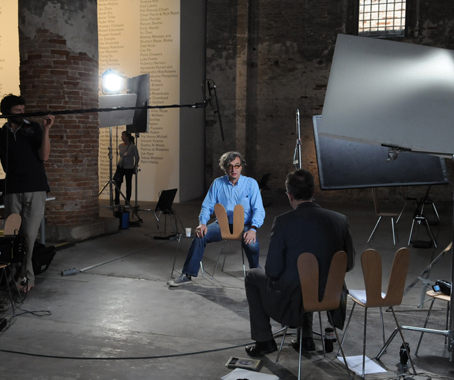
Interview by Hans Ulrich Obrist with Wim Wenders Now Interviews, 2010 Corderie, Arsenale
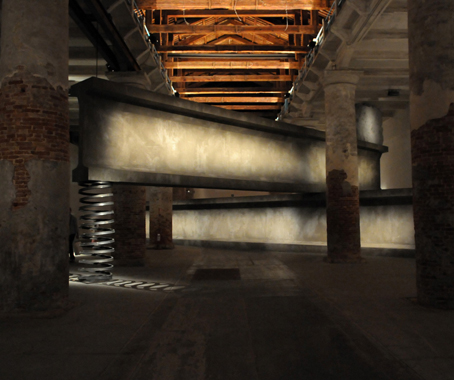
Anton Garcia-Abril/Ensemble Studio’s Balancing Act, a contrapuntal structure laid out across the long enfilade of the Arsenale is a fitting counterpoint to Transsolar and Tetsuo Kondo’s Cloudscapes, a spiralling jetty of a form enveloped by clouds.
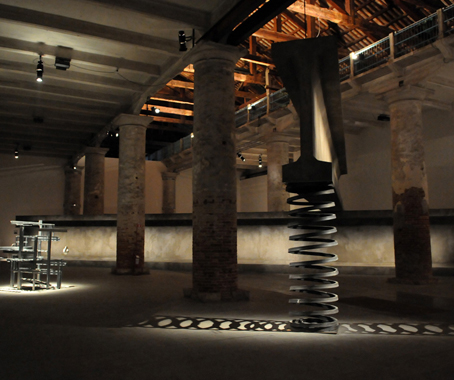
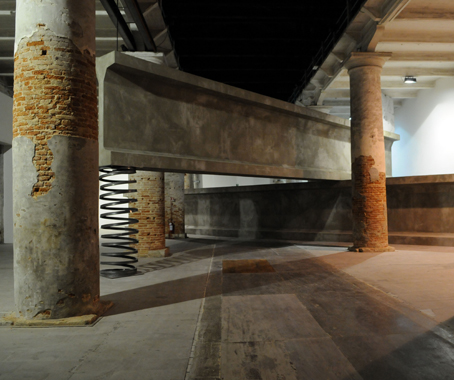
Anton Garcia-Abril Ensamble Studio Balancing Act, 2010
Next to the International Pavilion in the Giardini is Raumlabor’s Space Buster, an inflatable plastic structure, another sign of Sejima’s love of the ethereal.
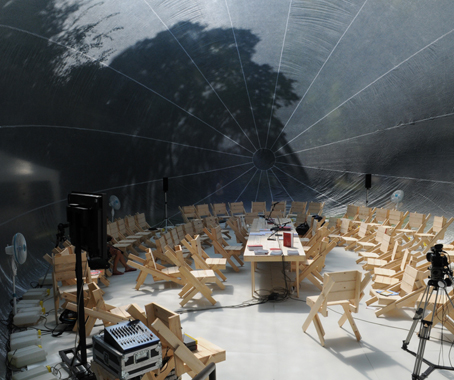
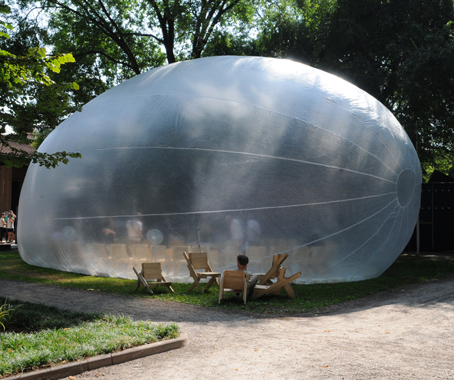
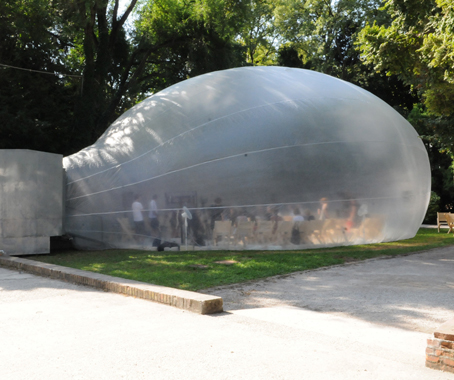
Raumlabor, Küchenmonument, 2006
Engrossing displays by Italian architect Lina Bo Bardi (1914-1992), OMA on urban preservation, and by Aldo Cibic and Andrea Branzi, both concerned with urban solutions, Cibic’s of the agro-techno variety appear in the Pavilion, while standout national pavilions (among a total of 56) include Australia’s 3D stereoscopic films of landscapes, ‘Now and When’; Great Britain’s Villa Frankenstein, linking London and Venice past and present and Factory Russia.
Reclaim, three simple, full size fishermen’s huts from Bahrain, a new exhibitor which won the Golden Lion for Best National Pavilion, for its refreshing defence against excessive coastal development, was indicative of the upbeat mood of this year’s Biennale.
Photography by Giorgio Zucchiatti
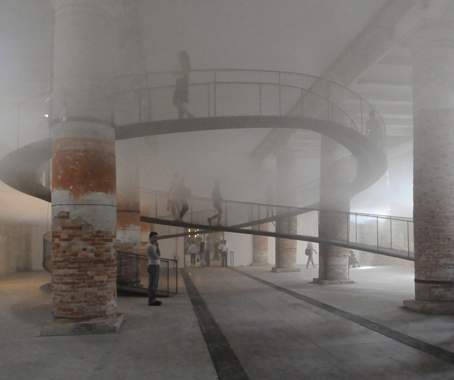
Transsolar + Tetsuo Kondo Cloudscapes, 2010
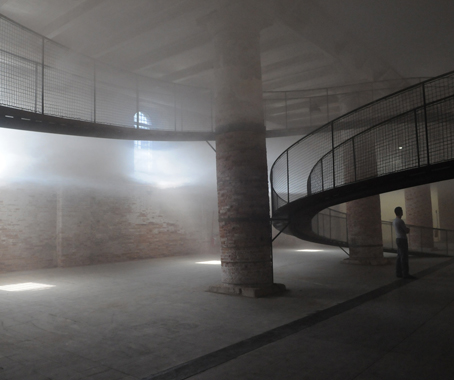
Transsolar + Tetsuo Kondo Cloudscapes, 2010
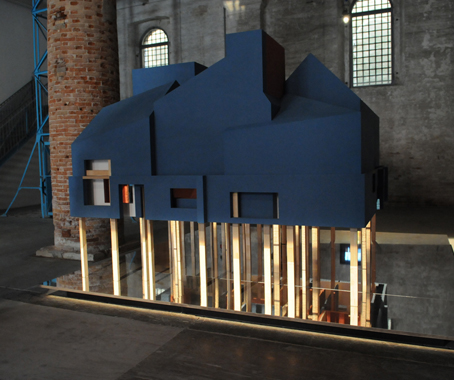
architecten de vylder vinck taillieu ordos 100
INDESIGN is on instagram
Follow @indesignlive
A searchable and comprehensive guide for specifying leading products and their suppliers
Keep up to date with the latest and greatest from our industry BFF's!
Café Culture has expanded its collection and will now distribute lighting brand FontanaArte on Australia’s East Coast.
The internet never sleeps! Here's the stuff you might have missed