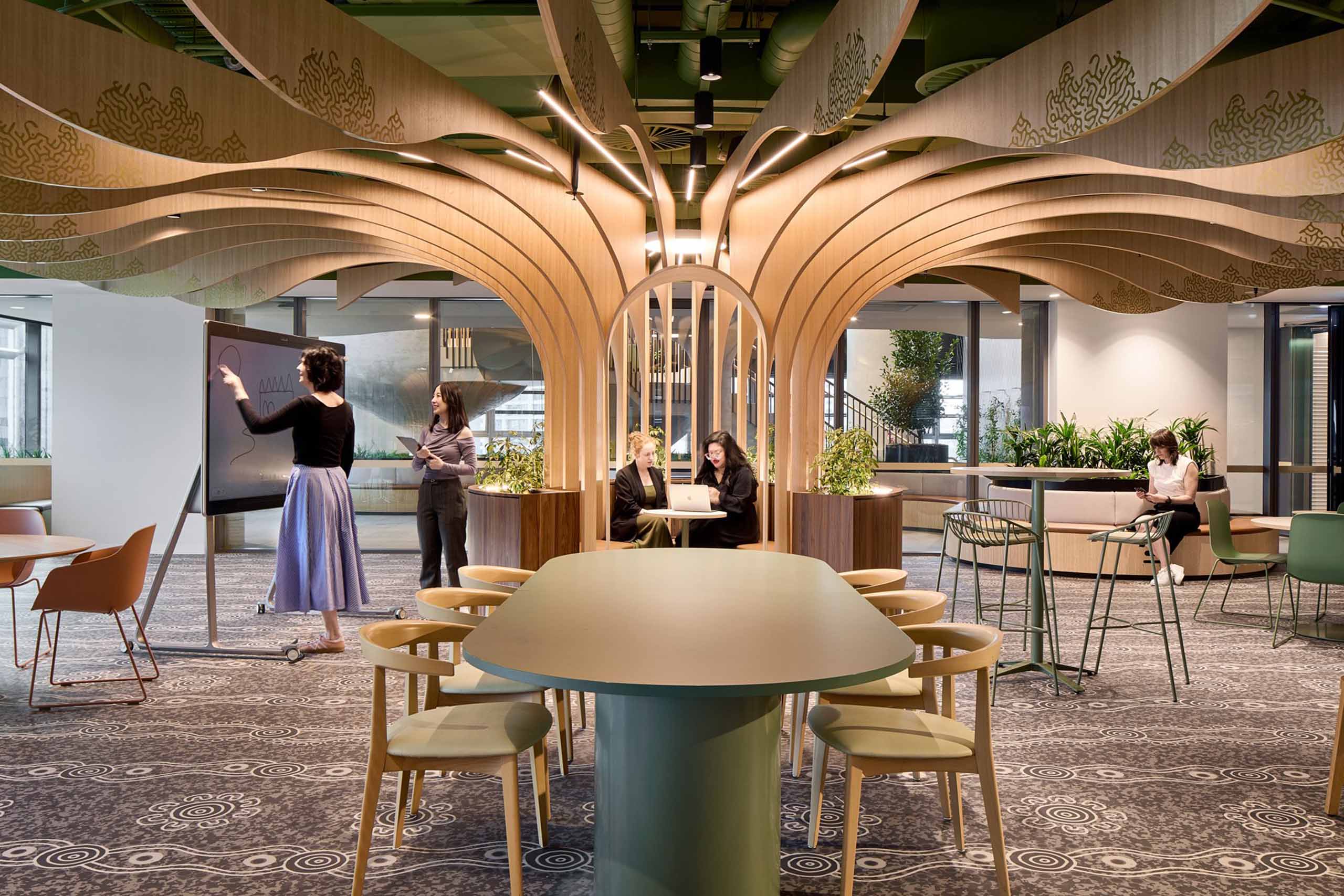
Architecture often begins with a brief. A site, a set of requirements, a budget, a program. But the projects that resonate most deeply are rarely shaped by process alone. They emerge from a deeper understanding of place, its histories, its communities, its cultural knowledge and its relationship to Country.
For architects, that understanding cannot be applied retrospectively. If these perspectives and narratives are going to meaningfully shape architecture, they need to be part of the project’s foundation.
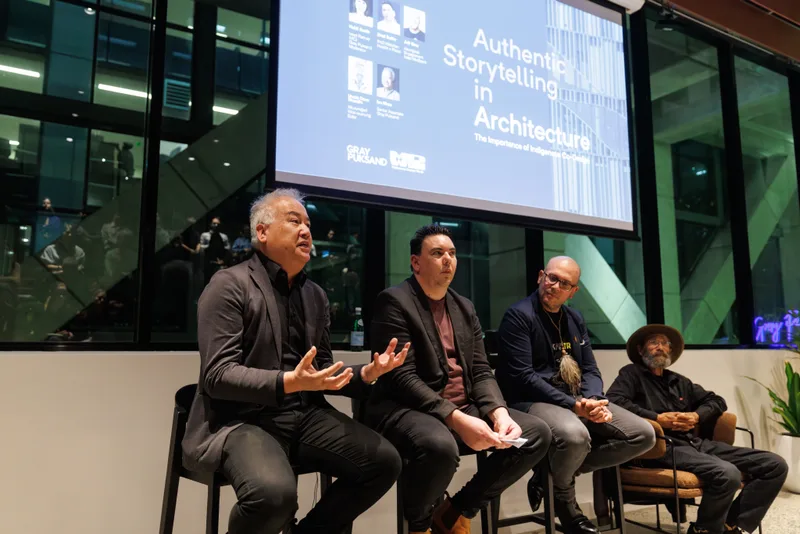
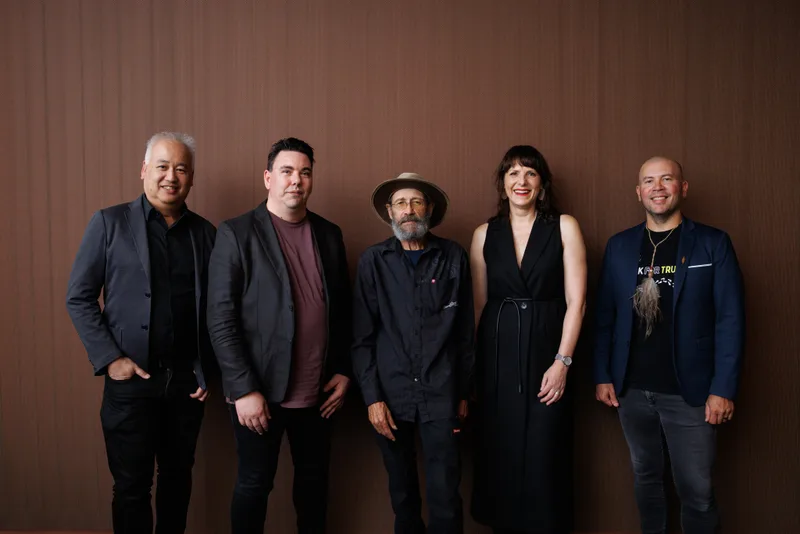
That was the focus of Gray Puksand’s Melbourne Design Week panel discussion, moderated by Heidi Smith, Lead Partner (Victoria) at Gray Puksand. The conversation brought together Wurundjeri Woi-wurrung Elder Uncle Dave Wandin, historian Brad Buller, Medibank Indigenous Engagement Lead Jeff Gray and myself to explore how environmental, historical and cultural engagement can shape stronger architectural outcomes.
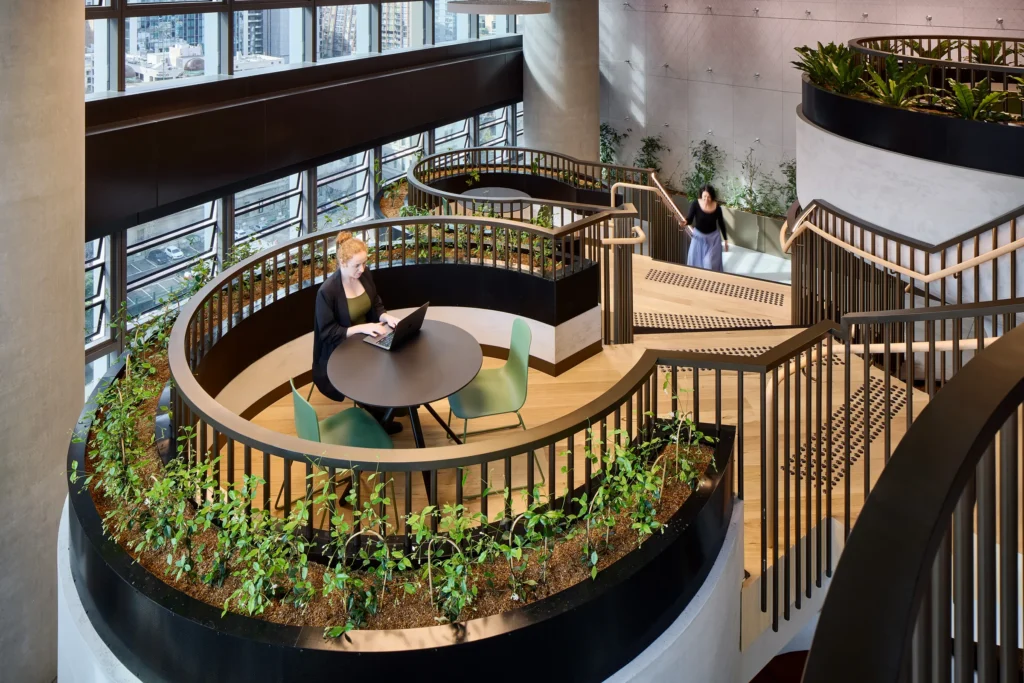
Throughout the discussion, one question kept emerging: What changes when culture leads? Jeff Gray’s reflections on Medibank’s Melbourne workplace provided a powerful answer.
Jeff spoke about the difference between Medibank’s former workplace and the Melbourne Medibank Hub, designed by Gray Puksand. At the previous workplace, there was a token Indigenous artwork on the wall, but little else in the environment created a sense of cultural connection or belonging.
At the Melbourne Medibank Hub, the experience is fundamentally different. The building carries a story that people can move through, understand and share. It is not a gesture towards culture, but an environment shaped by cultural knowledge.
Related: The design discussions of Saturday Indesign 2026
Importantly, this was not the result of a single consultation workshop. What began as a six-month engagement with Uncle Dave evolved into a relationship spanning almost three years. The process included visits to Coranderrk Aboriginal Reserve and an ongoing commitment to listening, learning and refining the project’s direction.
The resulting design narrative, The Life Force of Water, reflects the Country on which the workplace sits. The interior journey follows the Birrarung from the forests of Mount Baw Baw through to the wetlands and Port Phillip Bay. Conventional meeting spaces were reimagined as yarning circles. Indigenous-owned businesses were engaged throughout the project, from Dreamtime Flooring to Manapan Furniture.
What makes the project successful is not the presence of individual cultural elements. It is the way those elements are connected through a coherent narrative that informed the project from the beginning.
The outcome is a workplace that creates a genuine sense of belonging, not simply acknowledgement.
A more traditional approach to cultural engagement often occurs after a concept has already been developed. The question then becomes how cultural expression can be incorporated into an existing design.
At Gray Puksand’s student accommodation project for La Trobe University in Bendigo, the process worked differently.
The project began with a cultural reference group involving Dja Dja Wurrung representatives and the creation of a cultural brief that sat alongside the design brief. Cultural knowledge was not responding to the architecture. It was helping shape it.
Through that process, the group identified the site’s relationship to the former Bendigo River alignment, a waterway that once moved through the landscape before being altered through mining and urban development. Discussions also explored the area’s history as a fertile forest environment connected to riverbanks, valleys and ecological abundance.
These conversations led to the concept of ‘plenty’, alongside ideas of growth, care and nurturing. Today, those ideas continue to inform the building’s materiality, colour palette and facade expression.
The significance of that process was captured in a small but powerful detail: eighteen stones.
Before the cultural briefing process formally began, we visited existing landscaped gardens developed in collaboration with the Jaara reference group. During those visits, the number eighteen emerged as a recurring motif. In one garden, eighteen stones were placed within the landscape to represent eighteen ancestors whose stories were intrinsically linked to the survival and continuation of Aboriginal culture in that region.
At first glance, the gesture appears simple. Yet it carries generations of history, resilience and meaning.
What struck me was not the stones themselves, but what they represented. No amount of research, precedent studies or design workshops would have uncovered that story independently. It existed because it belonged to that place and community.
Moments like these demonstrate why cultural engagement cannot be reduced to a checklist. They emerge through relationships, trust and time.
When architects begin by acknowledging that a space has an existing history to be respected and preserved, rather than approaching it as a place for a design solution to be imposed, the trajectory of a project changes and the outcome is enriched.
It challenges the assumption that every site can be approached using the same process or design language. It encourages a deeper understanding of what already exists before asking what should be built.
Central to this conversation was a question posed by Uncle Dave Wandin: What would this place be if the building wasn’t here?
What stories already exist within the land? What is the environment or place on which the building sits? What histories have shaped it? What should be continued, protected or honoured through the act of building?
These questions extend beyond culture as a sole paradigm. They invite consideration of landscape, ecology, memory and community. They encourage architecture that responds more carefully to place and produces outcomes that are both meaningful and lasting.
Sustainability, accessibility, structural performance and fire safety are integrated into projects because they are recognised as fundamental to good design and safety. The evolution of our architectural practice needs to move beyond a cookie-cutter approach to consultancy and apply these varying layers of place, history and culture to enrich the design outcome.
With this approach and early engagement, projects become more specific, more meaningful and more deeply connected to the communities they serve.
Gray Puksand
graypuksand.com.au