The home of architecture and design in the Asia-Pacific
Get the latest design news direct to your inbox!

Get the latest design news direct to your inbox!
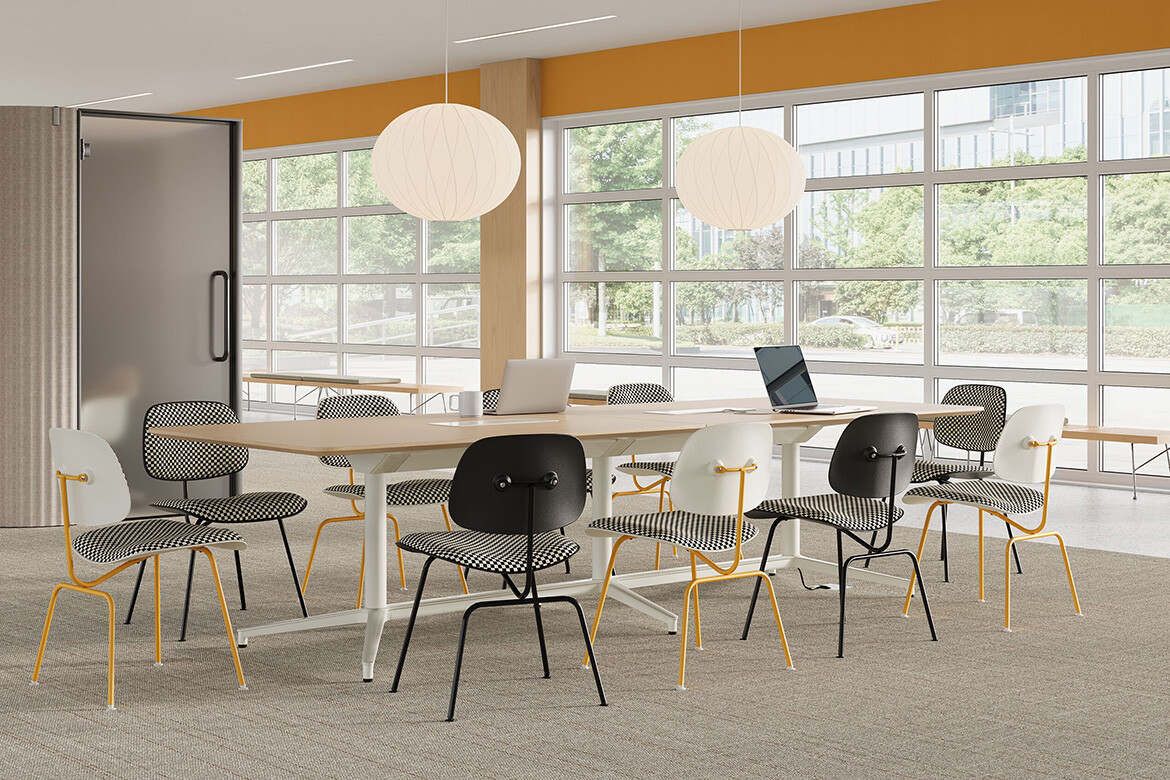
Herman Miller’s reintroduction of the Eames Moulded Plastic Dining Chair balances environmental responsibility with an enduring commitment to continuous material innovation.
February 2nd, 2026
Refining a design icon requires honouring its foundations while embracing contemporary sustainability expectations, the possibilities of new materials and responsible manufacturing. Herman Miller‘s reintroduction of the Eames Moulded Plastic Dining Chair, the EC-127, exemplifies this delicate balance, demonstrating how thoughtful evolution can extend a design’s relevance without compromising its essential character.
First introduced in 1970, the EC-127 emerged from Charles and Ray Eames’ philosophy of continuous improvement and is now a widely recognised cultural icon across residential and commercial interiors. The designers were known for revisiting their work as new materials and methods became available, treating each iteration as an opportunity for refinement rather than total reinvention. The EC-127 itself evolved from the 1946 DCM (dining chair-metal), whose back legs were later extended to create the DCM-L for library use, which supports a more upright posture. When the Eames developed the EC-127, plywood was replaced with reinforced plastic, integrating a shock absorbing rubber and metal mount that proved stronger and easier to manufacture while maintaining the chair’s familiar silhouette.
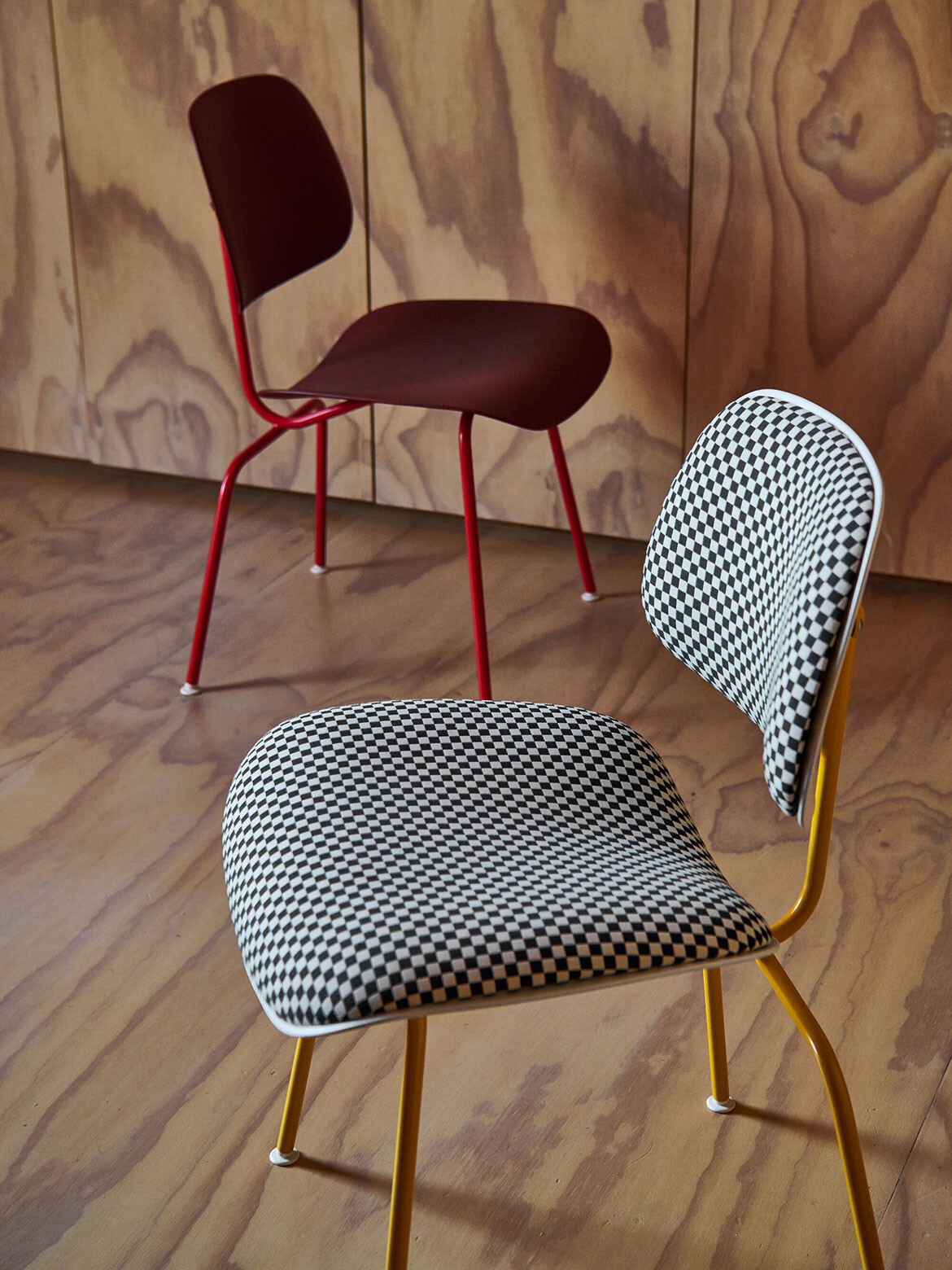
Today’s reintroduction builds upon this legacy of material innovation. The chair now incorporates 99% post-industrial recycled plastic, a meaningful advancement that aligns with contemporary environmental imperatives while preserving the design’s structural integrity and comfort. The curved seat and back continue to provide ideal support for extended periods of sitting, whether for dining, reading, or working.
Eames Demetrios, Director of the Eames Office and grandson of Charles and Ray Eames, states, “In addition to being comfortable and elegant, the EC-127 is a perfect exemplar of the Eameses’ belief in constant improvement of their own designs.” Further, “Unsurprisingly, since the Eames office of today is the very firm that Charles and Ray started, we’ve continued that process by working with Herman Miller to use the most environmentally friendly recycled plastics available to reintroduce this beautiful chair.”
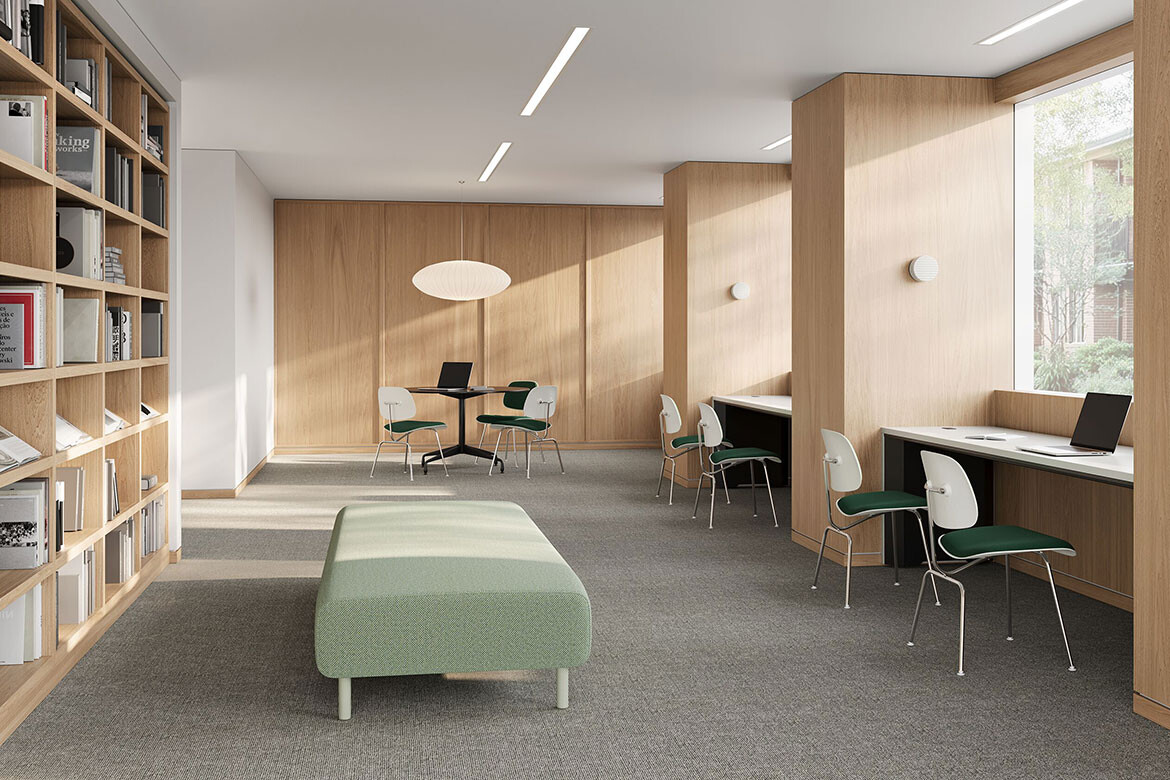
This latest iteration expands the chair’s versatility significantly. For the first time, it is available in a non-upholstered version, making it particularly suitable for high-use environments including offices, libraries, dining rooms, and hospitality settings. The expanded specification options reflect a pragmatic understanding of how the chair functions across diverse interiors.
The colour and upholstery choices draw inspiration from the Eameses’ original work, particularly the vibrant hues used on prototypes of “The Toy,” their architectural construction set for children. Legs can be specified in classic chrome, saturated primary colours including blaze, marigold, and berry blue, or in black or white. Upholstery options feature thoughtfully selected Maharam fabrics, including Alexander Girard’s Hopsak – a textile that was available when the chair first launched and now returns as a contemporary specification choice.
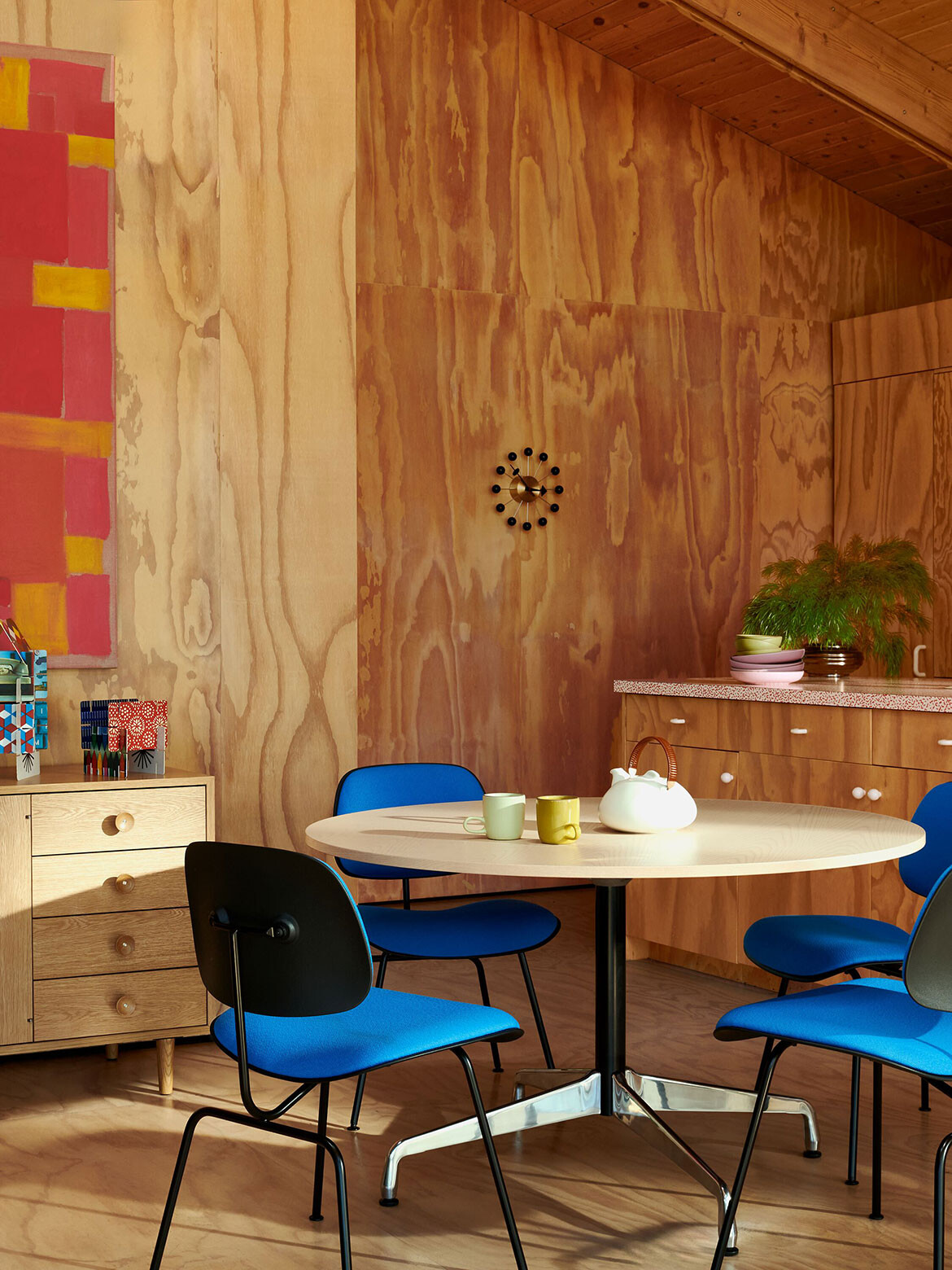
This approach to design evolution speaks to a broader philosophy; iconic pieces need not remain in the past to maintain their integrity. The EC-127’s journey from plywood to reinforced plastic to recycled plastic demonstrates how responsible material choices can honour heritage while addressing present day environmental challenges. The Eameses’ ambition to create “the best for the most for the least” remains embedded in the chair’s DNA, now expressed through materials that reflect current sustainability standards.
Herman Miller and the Eames Office have continued the designers’ iterative process, proving that innovation and preservation need not be opposing forces and that design can do more for the planet. The design is relevant for today’s challenges being durable, spirited and versatile. The EC-127 stands as both an enduring cultural icon and practical, sustainably-led specification choice – a design that has earned its place in the contemporary built environment precisely because it has evolved to meet it.
Visit your local MillerKnoll dealer to discover Herman Miller’s EC-127 throughout Asia.
INDESIGN is on instagram
Follow @indesignlive
A searchable and comprehensive guide for specifying leading products and their suppliers
Keep up to date with the latest and greatest from our industry BFF's!
The internet never sleeps! Here's the stuff you might have missed