The home of architecture and design in the Asia-Pacific
Get the latest design news direct to your inbox!

Get the latest design news direct to your inbox!
Charlotte Ruben, partner at Swedish firm White Arkitekter, is at the forefront of the new generation of hospital design. Ruben shares her insights into this growing sector and how a hospital ecosystem comes together.

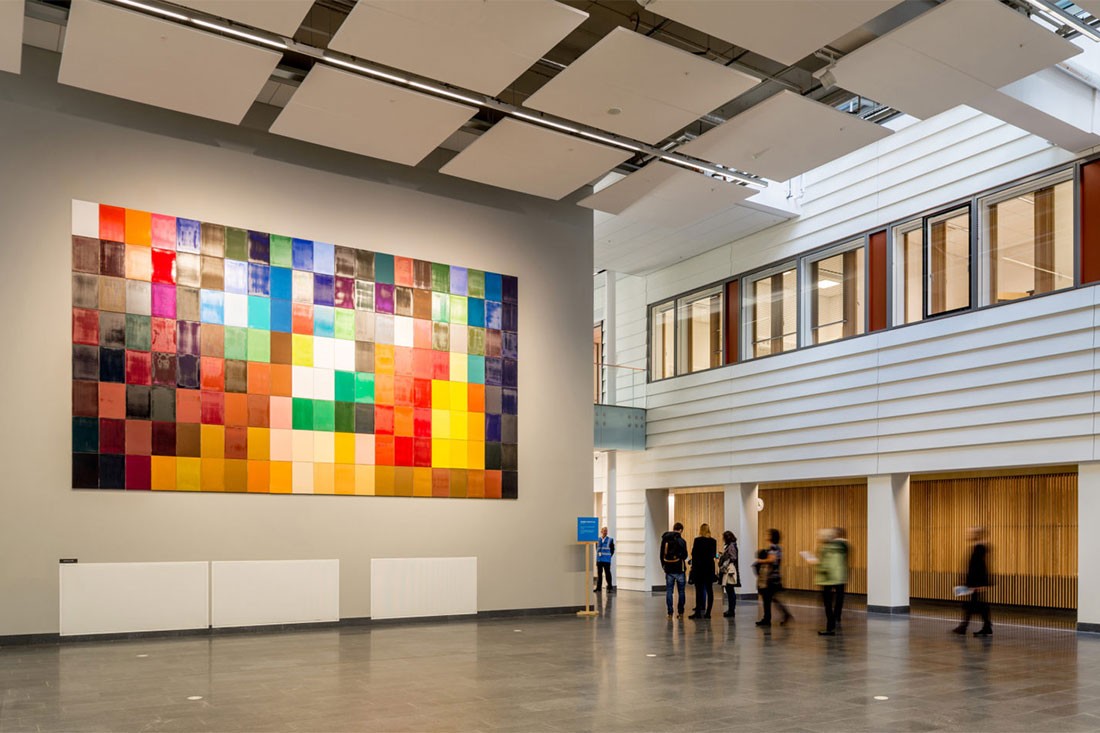
Art is often used in public spaces to instil a sense of wellbeing.
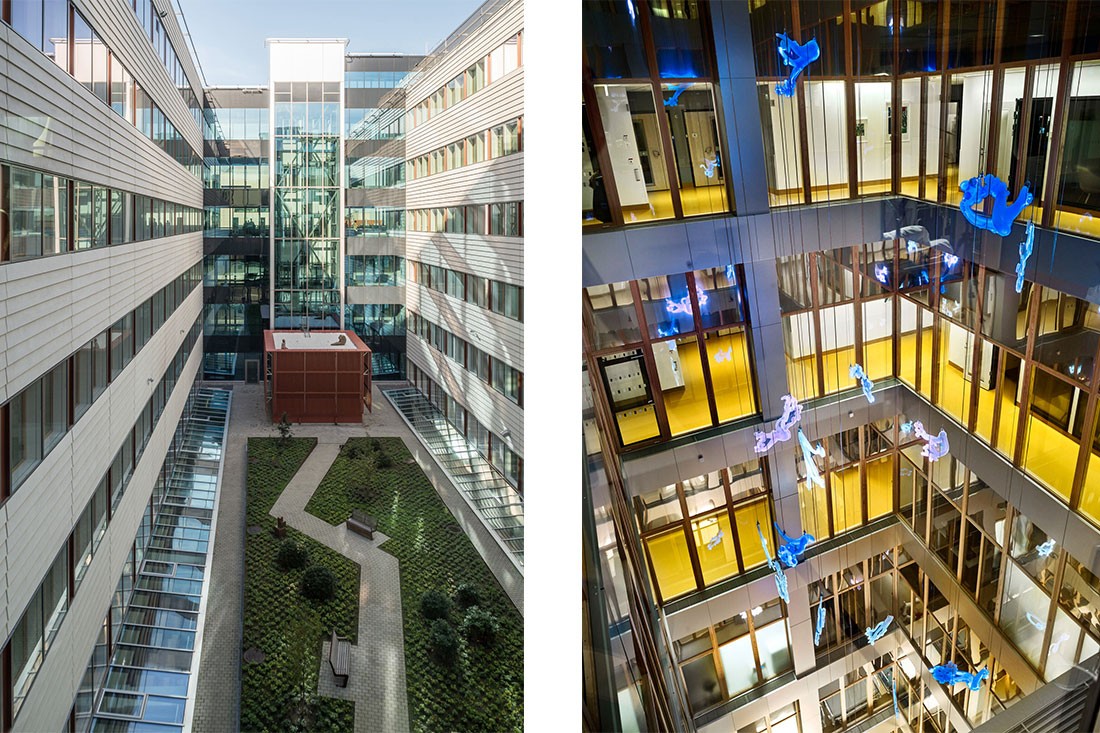
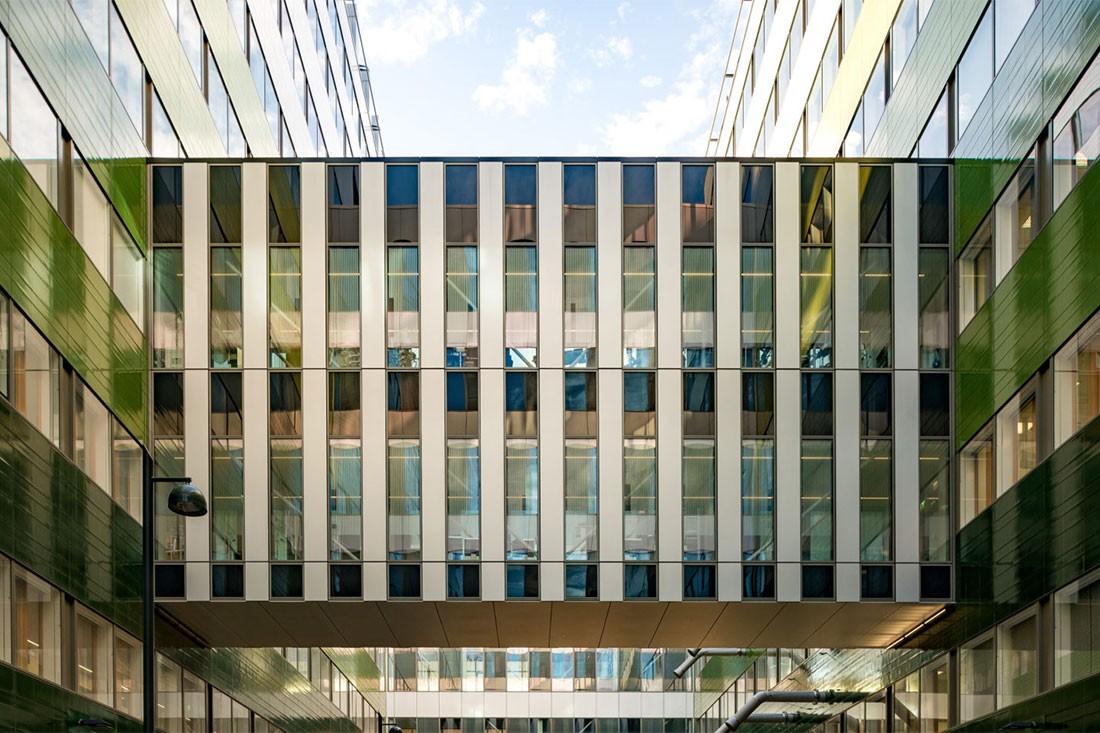
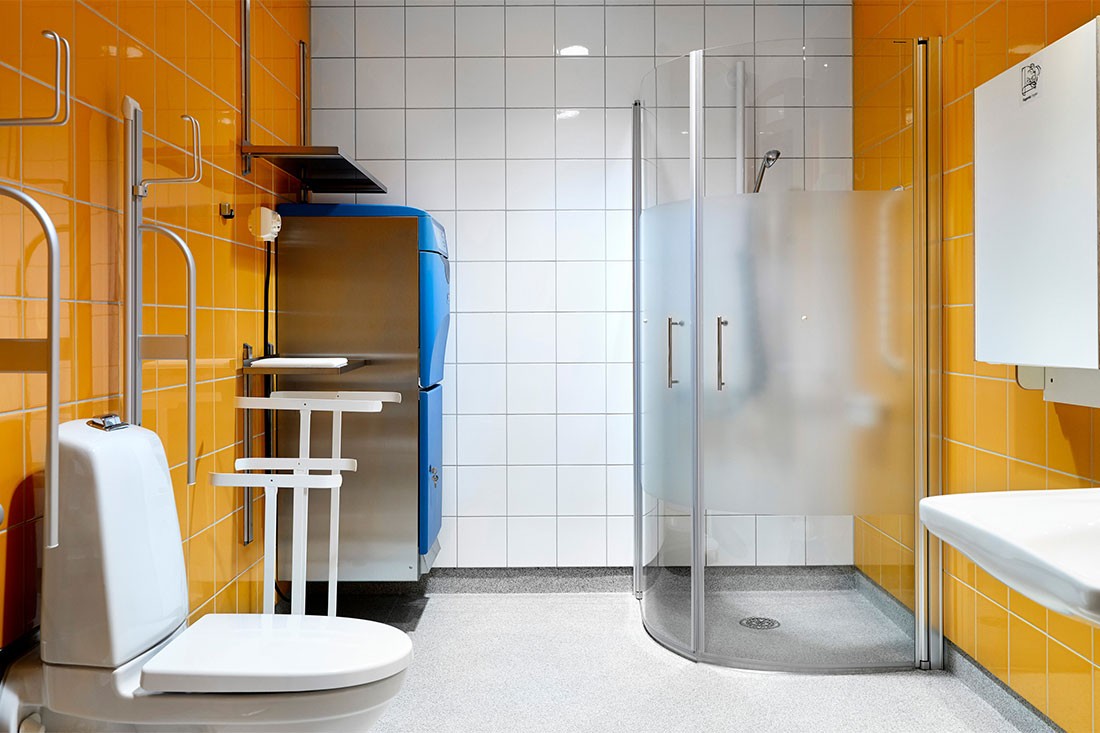
The New Karolinksa Hospital uses colour effectively.
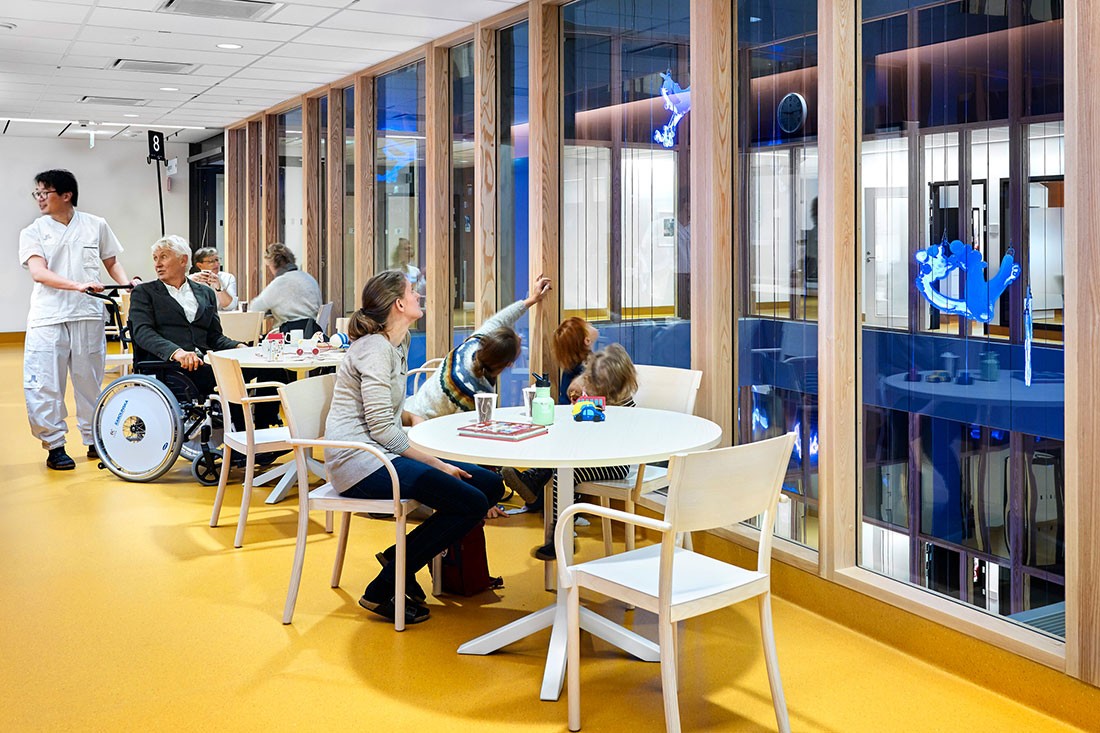
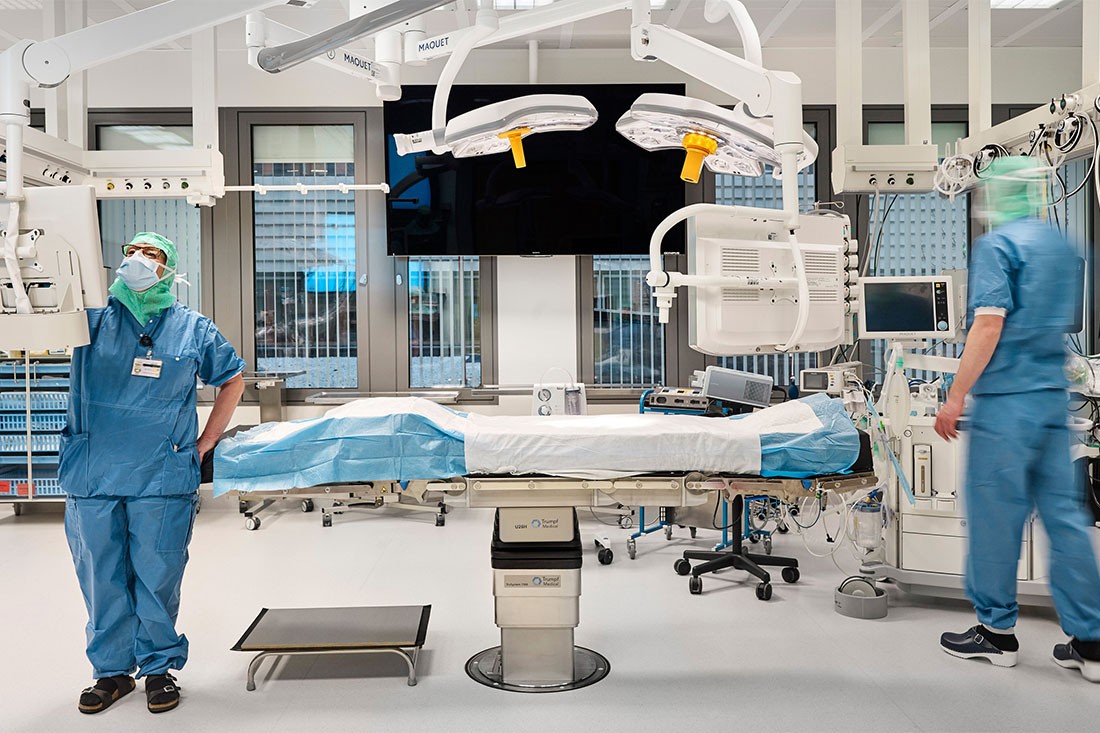
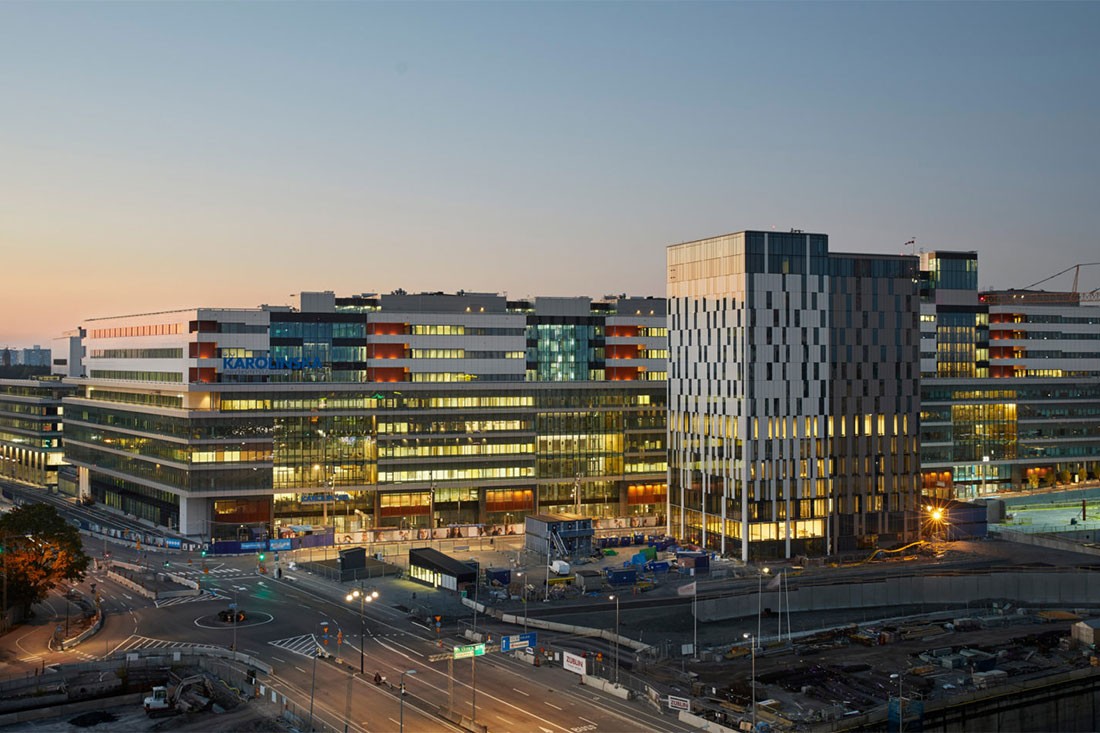
Hospitals are changing. With an ageing population and technology permeating every facet of life, the healthcare sector must keep pace. Swedish architect Charlotte Ruben is on the forefront of these changes, having worked extensively in healthcare design. Ruben was recently in Australia for the Design 4 Health Conference at Swinburne University talking about the New Karolinska Hospital in Solna, Stockholm – a new type of hospital that showcases the importance of urban integration as well as social interaction.
Charlotte Ruben: In healthcare design, you create environments people inhabit when they’re most vulnerable. Therefore our main aim is to design healthcare buildings, which focus on the varied needs of its users. A hospital has to work for multiple users: patients, staff, visitors and we know today that architecture and design plays an important role in the healing process and wellbeing in general. A well-designed healthcare environment reduces stress and can speed up the recovery process.
Each of our projects has its own unique design interpretation of these requirements. Healing environments for psychiatric patients or the elderly differ to an environment for acute and technically advanced treatment.
We always strive for holistic solutions from an urban point of view down to specific details. Hospitals are often mono-functional institutions. With an extended approach, we see new potentials.
The projects also often represent:
By including these aspects, the projects become a tool for development that address all current challenges and possibilities. This is what we call sustainable hospital design.
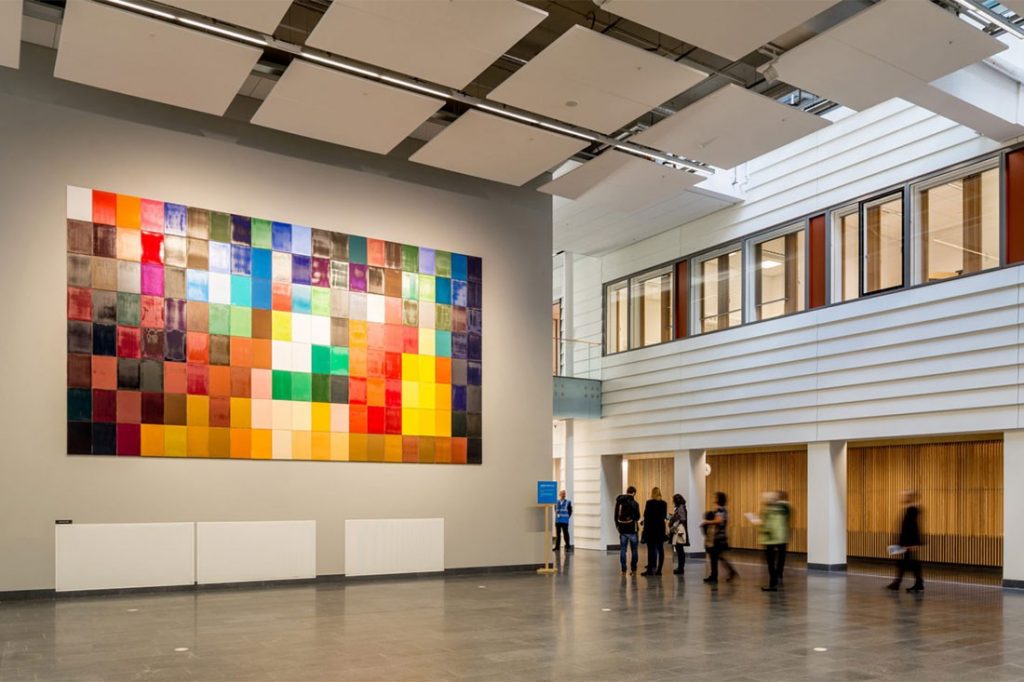
Art is often used in public spaces to instil a sense of wellbeing.
There are different design concepts and materials for the public spaces and the clinical environment. An entrance hall could be clad in natural materials that age well including natural stone, wood or concrete while operating theatres have completely different requirements. These areas need to be sterile and easy to clean, reducing the spread of antibiotic-resistant bacteria. Plastic carpets are folded against walls, built-up cabinets, strategic locations of sinks etc. In these environments colour, contrast and art integration are even more important to create a unique and stimulating atmosphere.
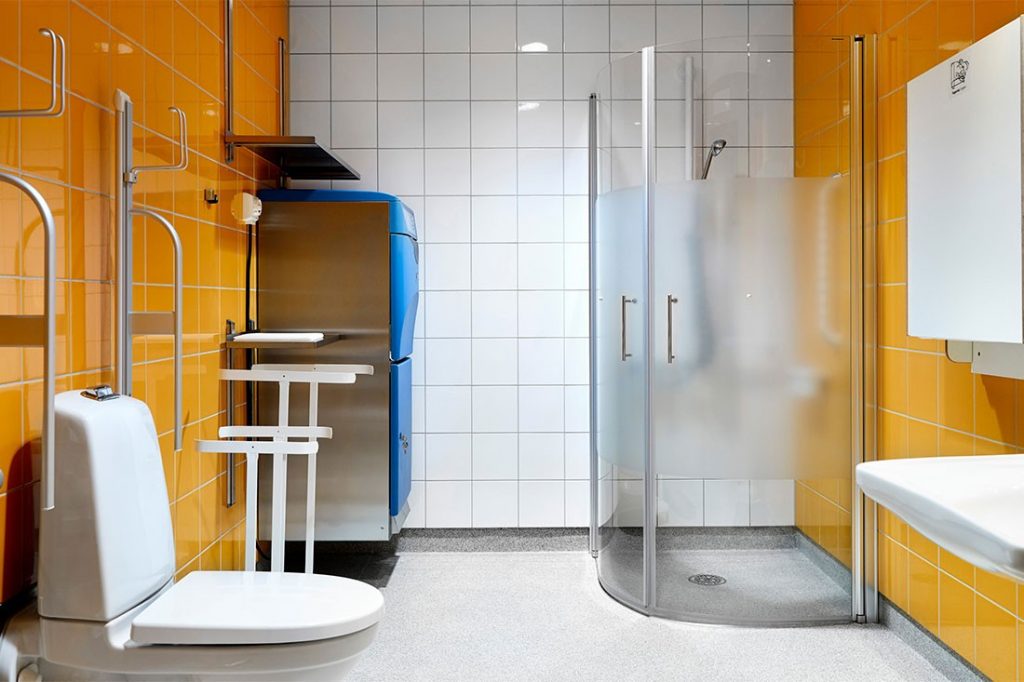
The New Karolinksa Hospital uses colour effectively.
The need for healthcare facilities is increasing due to an ageing population and unhealthy lifestyles.
In addition, the rapid development of technology is impacting how we design and interact with clinical spaces. For example, new ways of communication effect how we design waiting areas and meeting places. Also, an increase in patient involvement demands new solutions. This is one of many reasons why ideally wards should be designed as single patient rooms. Another factor is how can design help prevent the spread of hospital-borne infections? We are entering an era of growing antibiotic resistance and hospitals are slowly becoming the most dangerous place to be.
Function, aesthetics and economics all need to be aligned to make a hospital a great success. My office White Arkitekter has a long tradition in hospital design.

Some highlights are:
New Karolinska University Hospital in Solna, a joint venture by White Arkitekter and Tengbom (2016-18) will be a brand new teaching hospital in Stockholm. The project is visionary and includes many of the concepts we believe represent what way future healthcare design should strive for.
Queen Elisabeth II Primary Healthcare Center by Penoyre&Prasard.
I have visited the Victorian Comprehensive Cancer Centre by Silver Thomas Hanley, DesignInc and McBride Charles Ryan. I was impressed by how well it was executed in terms of overall architectural concept, clinical design and urban integration.
For more on the way the healthcare sector is being shaken up in design, grab the latest issue of Indesign the ‘design pharmacy’ issue. Also, hear from Tonya Hinde about the creativity of caring in a piece straight from print.
INDESIGN is on instagram
Follow @indesignlive
A searchable and comprehensive guide for specifying leading products and their suppliers
Keep up to date with the latest and greatest from our industry BFF's!
The internet never sleeps! Here's the stuff you might have missed