The home of architecture and design in the Asia-Pacific
Get the latest design news direct to your inbox!

Get the latest design news direct to your inbox!
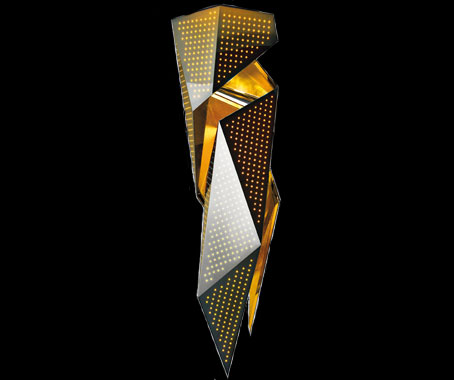
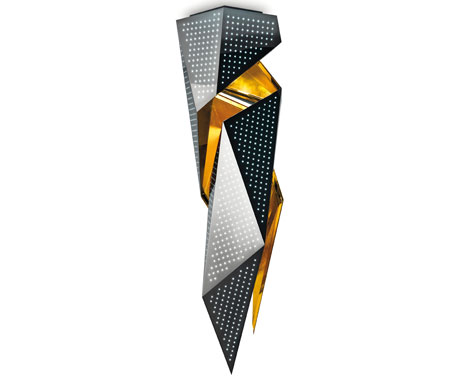
Architect Daniel Libeskind has created a luminaire for Zumtobel as part of the brand’s Masterpieces series.
January 23rd, 2012
Debuting at Art Basel Miami Beach in December 2011 was the latest in lighting company Zumtobel’s Masterpieces, a series of collaborations with architects, designers and artists resulting in unique cutting-edge pieces.
The eL Masterpiece was designed by Polish-born architect Daniel Libeskind along with his astrophysicist son Dr Noam Libeskind, who developed an algorithm for lighting patterns on the luminaire that represent the development of the universe.
“I wanted to design a truly unique object, one that gives off light in a way that is natural, that encapsulates the complexity and interesting quality of the very light that surrounds us,” said Libeskind (Senior) of the project.

Daniel Libeskind
“I wanted my design to not simply be about the mechanism or the formalistic use of light, but instead about creating a truly new experience that will add a dimension to the demonstration of the mystery, wonder and beauty of light.”
The 2.7 metre structure features steel finishes, an interior coated in 23 carat gold, and 1680 specially-made LED modules, each with a built-in microcontroller, allowing it to be controlled individually. The light emitted by the LEDs aims to reproduce the cosmic light that fills the universe.
“We’re essentially trying to tell the history of light,” said Noam Libeskind of the concept. “How light in the universe evolved, how it was created, how it is absorbed and re-emitted and how, over 14 billion years, the light in the entire universe was changing and was in turn affecting the evolution of the universe.
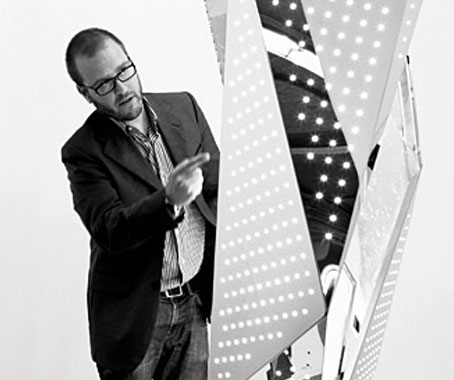
Dr Noam Libeskind with the eL Masterpiece
“We shaped a box representing a section of the universe, millions of light years across, and out of that box we took little portions and used LEDs on the luminaire for each of these portions.
“Each LED stands for a small piece of the universe… The colour of the LEDs reflects the starlight in that particular part of the universe. When the LEDs are very bright it means there is a lot of starlight – a lot of bright lights going off. When the LEDs have a darker shade, it means that there is less starlight emerging from this particular part of the universe.”

“Today we are still at very close range to the beginnings of light, and it’s fascinating to consider how all the subatomic particles were formed, how they are a part of life, part of our own human experience,” added Daniel Libeskind.
Zumtobel
zumtobel.com
Daniel Libeskind
daniel-libeskind.com
INDESIGN is on instagram
Follow @indesignlive
A searchable and comprehensive guide for specifying leading products and their suppliers
Keep up to date with the latest and greatest from our industry BFF's!
The internet never sleeps! Here's the stuff you might have missed