The home of architecture and design in the Asia-Pacific
Get the latest design news direct to your inbox!

Get the latest design news direct to your inbox!
SALT is a yearlong music and art extravaganza on a remote beach in Arctic Norway that offers a new way to think about festival events. Words by Mandi Keighran.
October 17th, 2014
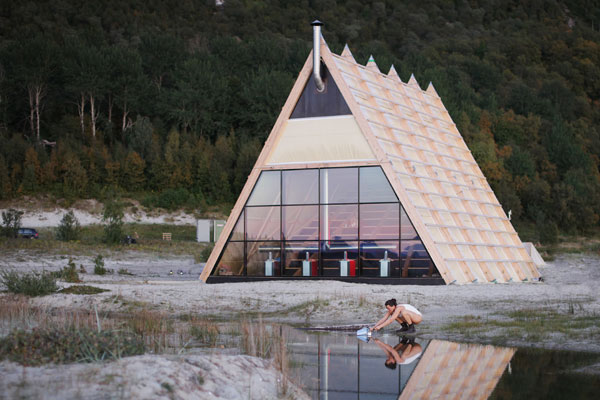
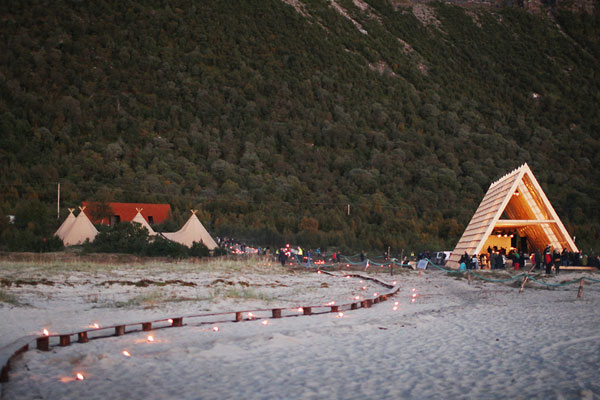
Founded by Erlend Mogård-Larsen and Helga-Marie Nordby, SALT is a yearlong music and art extravaganza that launched this September on what has to be one of the world’s most dramatic stages: a lonely two-kilometre stretch of beach on Sandhornøya, a Norwegian island with a population of just 350 in the Arctic circle.
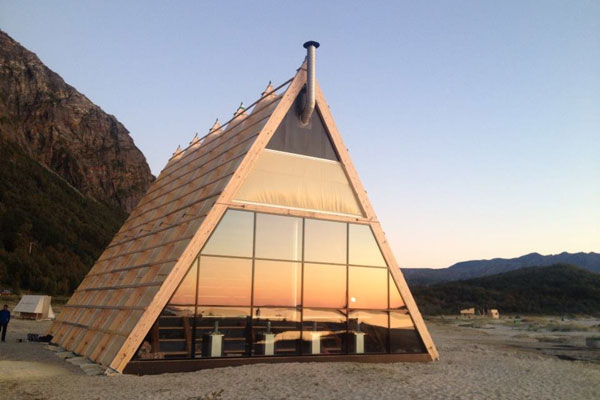
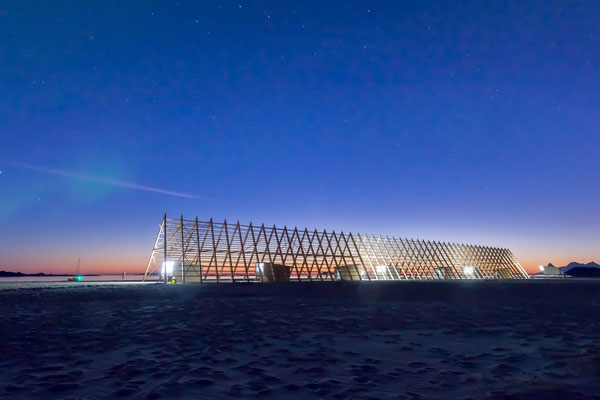
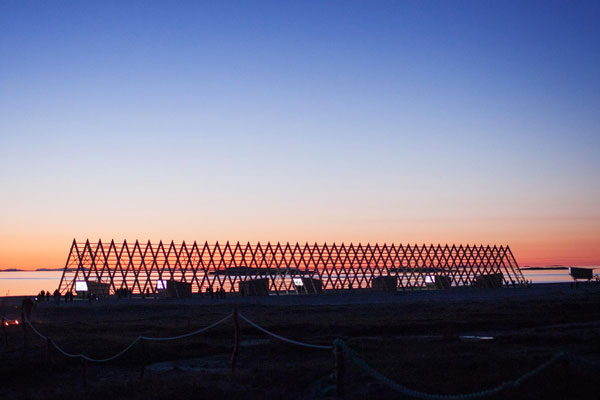
Here, overlooked by a vertiginous black-rock mountain, and surrounded by a raw, expansive landscape of ocean and snow-capped mountains, sit three primitive architectural structures designed by Finnish architects Sami Rintala and inspired by the traditional Arctic fiskehjelle (fish drying rack).
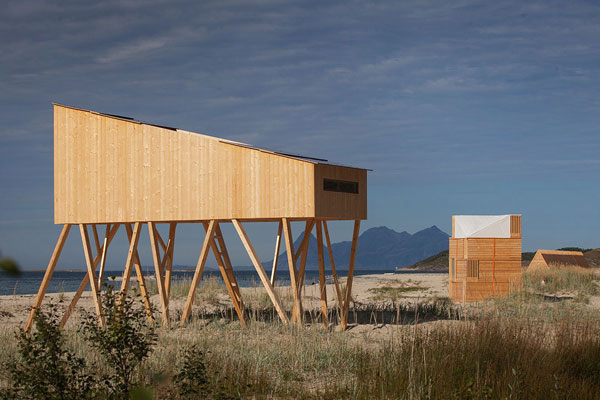

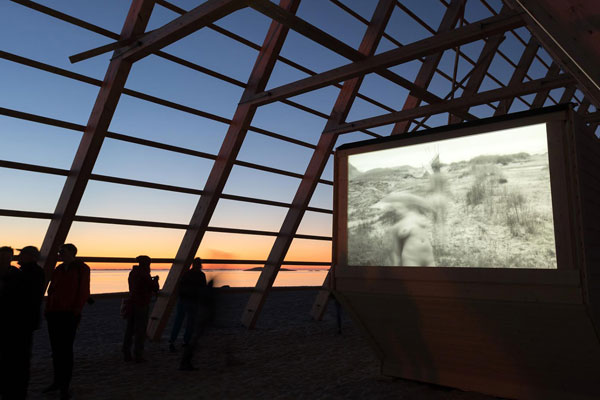
“Before oil, the fish rack was the heart of the Norwegian economy,” says SALT’s manager, Andreas Førde. “When I first saw the first frames go up, I got goosebumps – Erlend and I had talked about it for so long and it was finally happening.” There’s the world’s largest sauna (which also functions as a performance space and bar), a services building with showers and toilets (a cor-ten steel clad triangular building, and the only permanent structure at SALT), and the Gildehallen – also known as the Arctic Cathedral – an impressive 140-metre-long, 12-metre-high A-frame structure that serves as the main event space, and was unfortunately badly damaged in a recent storm (the organisers are currently working on re-building the space).
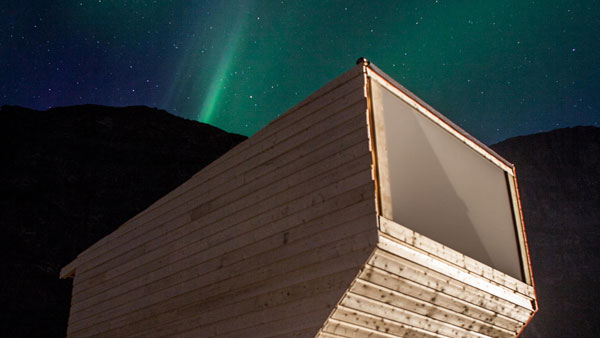
And, there’s a series of sculptural accommodation pods – some designed by students during a workshop earlier in the year, and others inspired by traditional Sami Njalla tents and designed by artist and architect Joar Nango in collaboration with architect Tone Selmer-Olsen.
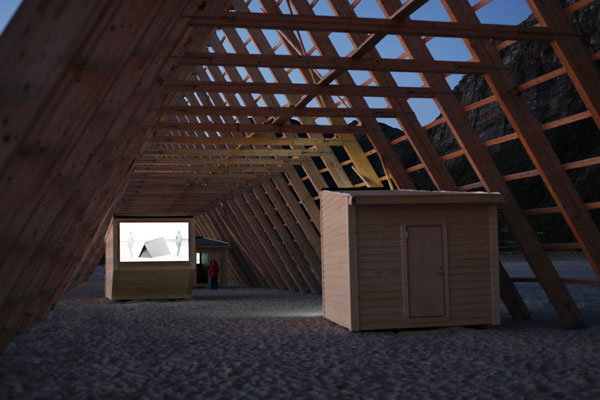
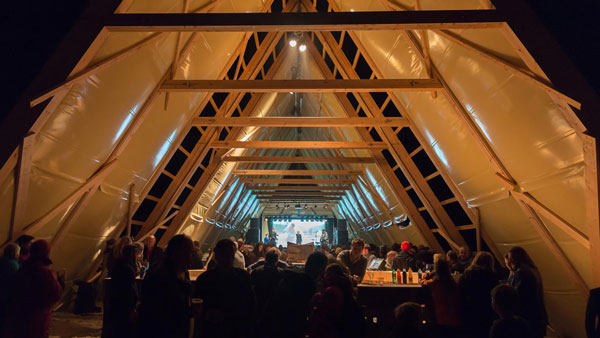
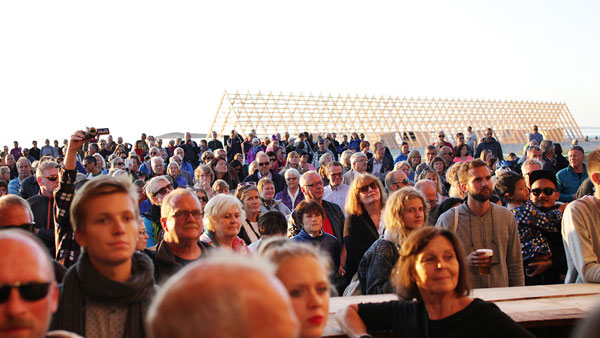
Over 8,000 visitors attended SALT’s opening, taking a thirty-minute boat from Bodø, a two-hour flight from Oslo, the last stop on Norway’s rail network and the closest urban centre to Sandhornøya. There were performances under the northern lights by the Arctic Symphony Orchestra and Alabama-born outsider artist Lonnie Holley, and a film installation in the Gildehallen by renowned Chinese artist Yang Fudong.
Over the next year – pending the successful rebuilding of the Gildehallen – there are plans for avant-garde electronica, a heavy metal night on the winter solstice, orchestral performances, a climate change convention, and a host of epic art installations. As yet, however, very little has actually been confirmed. Surprisingly, this doesn’t seem to be much of an issue at all. While the programme is certainly part of the attraction of SALT, it easily takes second place to the opportunity to spend time in this remote corner of the world.
“Lots of people have crazy ideas,” says Stian Antonson, a tattooed and dreadlocked chainsaw-carving champion and metal musician in charge of construction at SALT. “When Erlend has a crazy idea, though, it will happen.”
Over the next eight years, SALT – including its portable structures – will travel to various locations around the Arctic Circle, from Nuuk in Greenland to the Faroe Islands and Spitsbergen in Svalbard. The festival is inspired by the movement of animals and the seasonal rhythms of the Arctic landscape, and aims to leave no traces in its wake. As Mogård-Larsen says: “It’s a very interesting thing to expand an idea that is usually achieved in a day to a whole year”.
Mandi Keighran is the Editor-at-large of Indesign, based in London
SALT
salt.no
INDESIGN is on instagram
Follow @indesignlive
A searchable and comprehensive guide for specifying leading products and their suppliers
Keep up to date with the latest and greatest from our industry BFF's!
The internet never sleeps! Here's the stuff you might have missed