The home of architecture and design in the Asia-Pacific
Get the latest design news direct to your inbox!

Get the latest design news direct to your inbox!
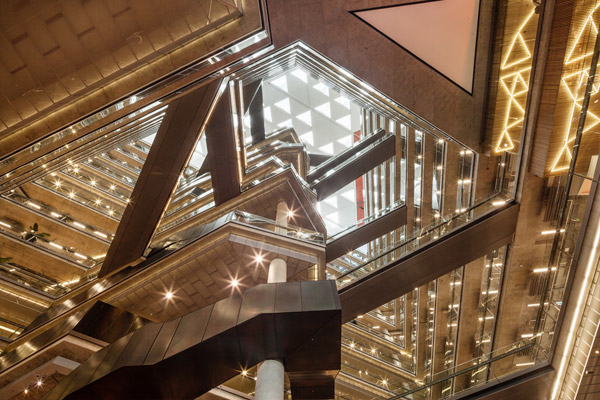
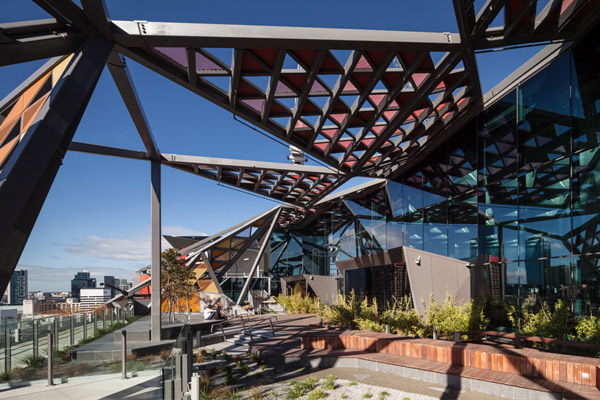
NAB’s new office building represents not just the next stage in the development of Melbourne’s docklands, but a milestone in the evolution of the Australian workplace.
January 8th, 2014
National Australia Bank (NAB) has been a presence in Melbourne’s Docklands since 2004 when it’s highly innovative campus style workplace at 800 Bourke Street opened.

Now a second, even more innovative building and workplace has been unveiled at 700 Bourke Street, suggesting a narrative in which the NAB has played a key role in the evolution of Docklands into what is one of Australia’s most absorbing urban developments.
But NAB is also part of another narrative, namely the evolution of workplace design in Australia, as Woods Bagot’s Global Design Director, Nik Karalis, puts it: “NAB have been slowly fine-tuning their workplace transformation to reach this ultimate goal.”
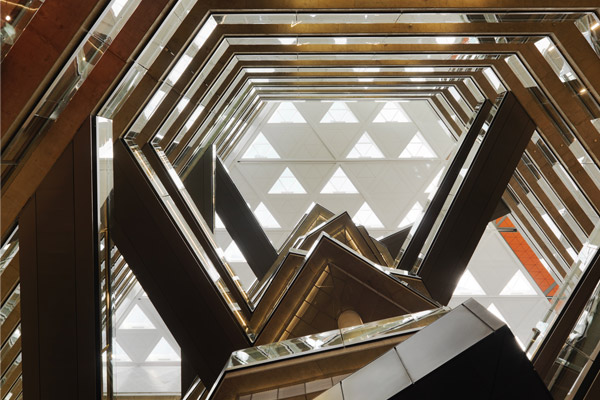
Adding to a sense of continuity is the figure of workplace consultant and strategist, James Calder, who worked on MLC Campus and who then worked with Nik Karalis in developing the strategy for 700 Bourke Street before moving on to establish his own independent consultancy. For Calder, 700 Bourke is “an evolution of Activity Based Working”.
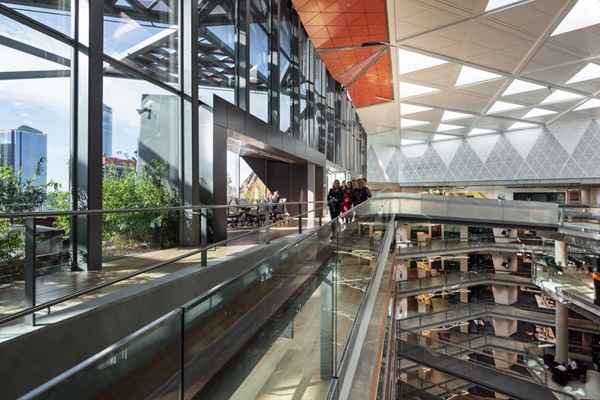
Just as the new building is in some ways a response to 800 Bourke (the atrium with its fly-over pedestrian bridges), likewise the workplace model inside takes existing models (notably ABW) and refines, adjusts and develops them into what Calder calls a matrix model.
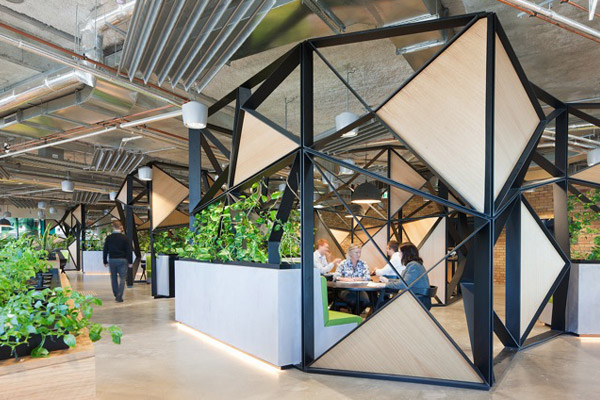
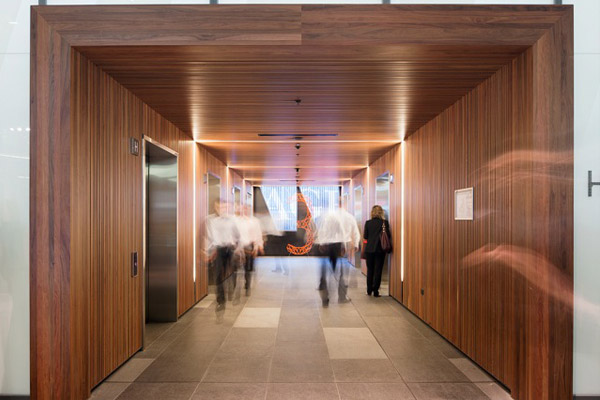
A triangulated site in a pedestrian precinct producing a pedestrianised building – there is nothing formulaic about this building. There is a road servicing the building, but tucked around on the railway side and leading to a mere 140 parking places in the building’s carpark.
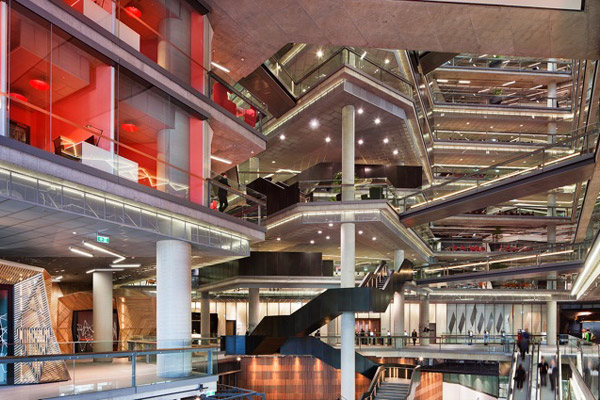
Here at 700 Bourke Street the pedestrian and the cyclist rule (600 bicycle places) and the building forms part of a pedestrianised urban complex fed by the footbridge linking Docklands with the CBD via the new Southern Cross railway station.
Find the full story in Indesign 55, on sale now.
Photography: Trevor Mein, Shannon McGrath
meinphoto.com
shannonmcgrath.com
INDESIGN is on instagram
Follow @indesignlive
A searchable and comprehensive guide for specifying leading products and their suppliers
Keep up to date with the latest and greatest from our industry BFF's!
The internet never sleeps! Here's the stuff you might have missed