The home of architecture and design in the Asia-Pacific
Get the latest design news direct to your inbox!

Get the latest design news direct to your inbox!
Regardless of which design eventually wins the Flinders Street Station design competition, Melbourne is set for another significant contemporary piece of architecture.
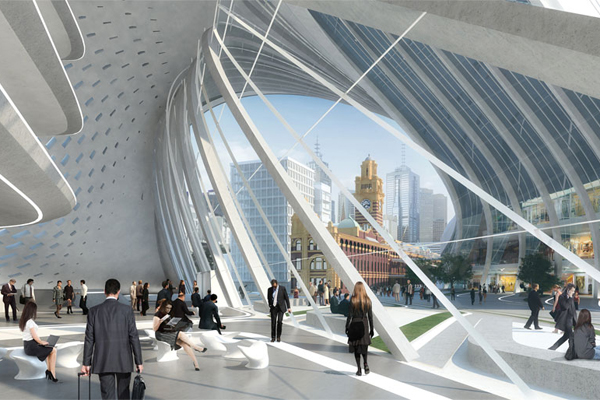
July 23rd, 2013
Almost two years since the Victorian Government first announced its landmark $1Million open design competition for the refurbishment and expansion of Melbourne’s Flinders Street Station – the six finalists’ designs have been unveiled.
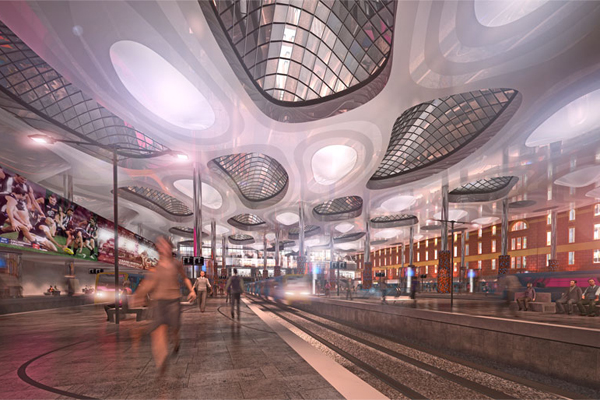
Ashton Raggatt McDougall
Though the successful Australian and International teams had been announced some time ago, it is only today that the public has been privy to the design proposals.
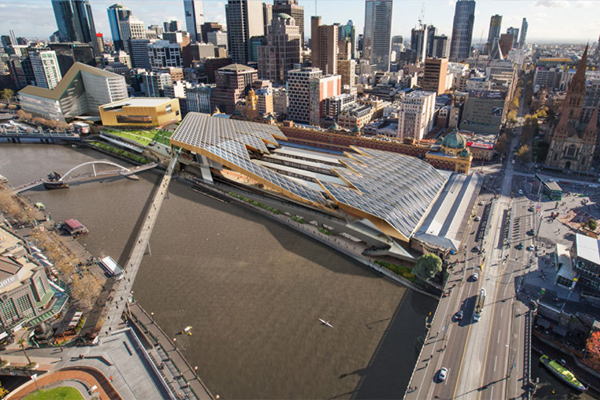
NH Architecture
From Zaha Hadid and BVN’s soaring vestibules to the brickwork viaduct and theatre of transport proposal from John Wardle Architects + Grimshaw.

John Wardle Architects + Grimshaw
Consistent through many of the competition entries is the idea of restoration, far beyond the notion of refurbishment. The great length of Flinders Street Station has long proved to dissect Melbourne’s CBD from its main waterway and in these proposals there is a concerted push to restore that north bank interface with the historic transport hub and the city that sits behind.
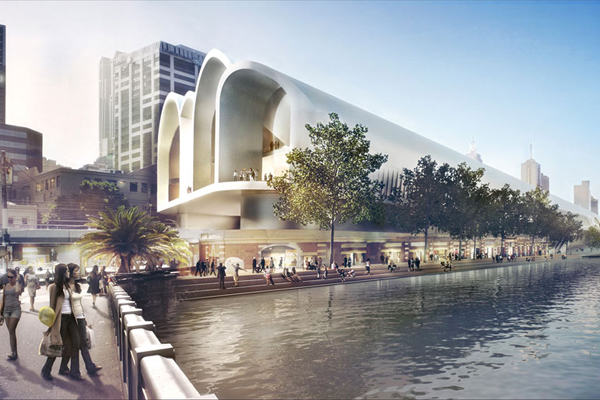
HASSELL Herzog & De Meuron
Public parks, open-air amphitheatres and extensive boardwalks are recurring devices that the designers hope will endear these vast schemes to the public and the competition jury, alike. Public voting is now open, online, with fly-through videos, additional images and design statements from the various teams. As it stands, no input from public voting will be taken in to account by the jury.

Eduardo Velasquez + Manuel Pineda + Santiago Medina


Flinders Street Station Design Competion
(Hero Image: Zaha Hadid Architecture & BVN Architecture)
INDESIGN is on instagram
Follow @indesignlive
A searchable and comprehensive guide for specifying leading products and their suppliers
Keep up to date with the latest and greatest from our industry BFF's!
The internet never sleeps! Here's the stuff you might have missed