The home of architecture and design in the Asia-Pacific
Get the latest design news direct to your inbox!

Get the latest design news direct to your inbox!
The shortlist for the 2024 World Architecture Festival has just been announced, with some standout nominees from our region.
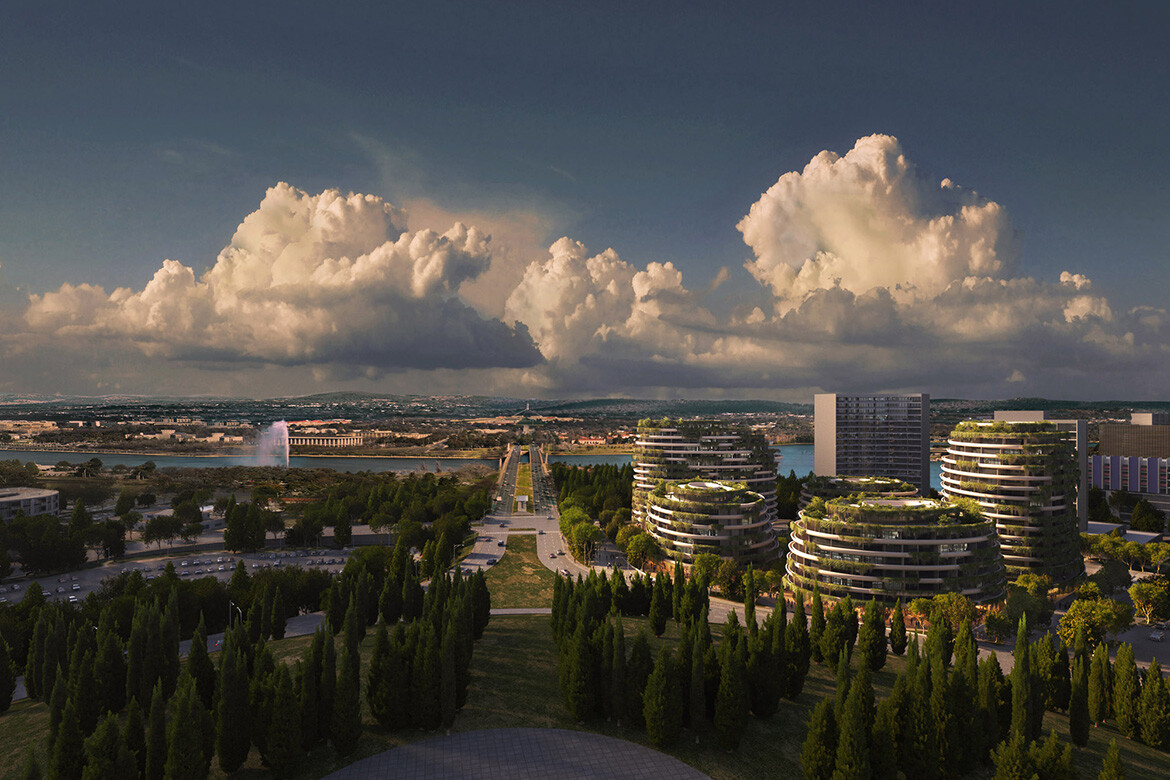
Marion Park Masterplan visualisation, image by Contreras Earl Architecture.

July 11th, 2024
The World Architecture Festival (WAF) returns to Marina Bay Sands, Singapore this year from November 6-8. The shortlist has just been released, celebrating the best new completed buildings and landscapes as well as the most inspiring future architectural concepts. No fewer than 33 categories cover a range of topics from residential to transport and retrofit, while the overall shortlist has been selected from 800 entries and comprises over 480 projects from more than 350 unique practices.
The World Festival of Interiors runs concurrently as part of the wider WAF gathering at Marina Bay Sands. The shortlist for this prestigious programme has also just been announced, with over 80 interior projects from across the globe including cities such as New York, Dubai, Beijing, Osaka, São Paolo, Phuket, Delhi, Auckland, Mexico City, Lisbon and London. While shortlisted projects include work by renowned global practices such as Foster + Partners, Broadway Malyan, Nikken Sekkei and Office AIO, there are also many emerging design firms set to feature.

Returning to this year’s WAF finalists, major world practices named include Zaha Hadid Architects, WOHA, Renzo Piano Building Workshop, MVRDV, Tadao Ando Architect & Associates and Nikken Sekkei. Meanwhile, closer to home in our Asia-Pacific region, notable shortlisted entries include work by Cox Architecture, Billard Leece Partnership (BLP), Woods Bagot, AJC and Contreras Earl Architecture.
The new Footscray Hospital in Victoria, the largest health project in the state’s history, is a design collaboration between Cox Architecture and BLP for clients, Plenary Health and the Victorian Health Building Authority. The project is named as a finalist in the Future Projects – Health category, with its design aiming at fulfilling a vital community role over and above standard healthcare facilities. While primarily a hospital, it will also be a catalyst for change by supporting a broader health, education, research and community precinct.

Five buildings surround a green space, with “the entire design centred around it,” as Patrick Ness, Director at Cox explains. “A major precinct centrepiece, it will create a verdant gathering space and become the living, breathing heart to the hospital for the staff, patients, for families and the wider community.”
Mark Mitchell, Principal at BLP, adds that “the design places each patient and their support network at the heart of our design decisions, recognising the healing benefits of family and community involvement.”
Related: Five insights from last year’s WAF

Elsewhere in Australia, the conceptual Canberra City Hill Precinct Masterplan, ‘Marion Park,’ developed by Contreras Earl Architecture in collaboration with Arup, Willemsen Group and Urbis, has been shortlisted in the Future Projects – Commercial Mixed-Use category. The masterplan was submitted as an expression of interest to support the ACT government’s city centre renewal plan, involving the redevelopment of an almost two-hectare site in the City Hill precinct of Canberra.
“Much like in nature where everything exists for a reason, every element in this project has a purpose,” says Contreras Earl Architecture’s Director, Rafael Contreras. “This project holds a special place for us, and we hope it can serve as a model for future sustainable urban development.”
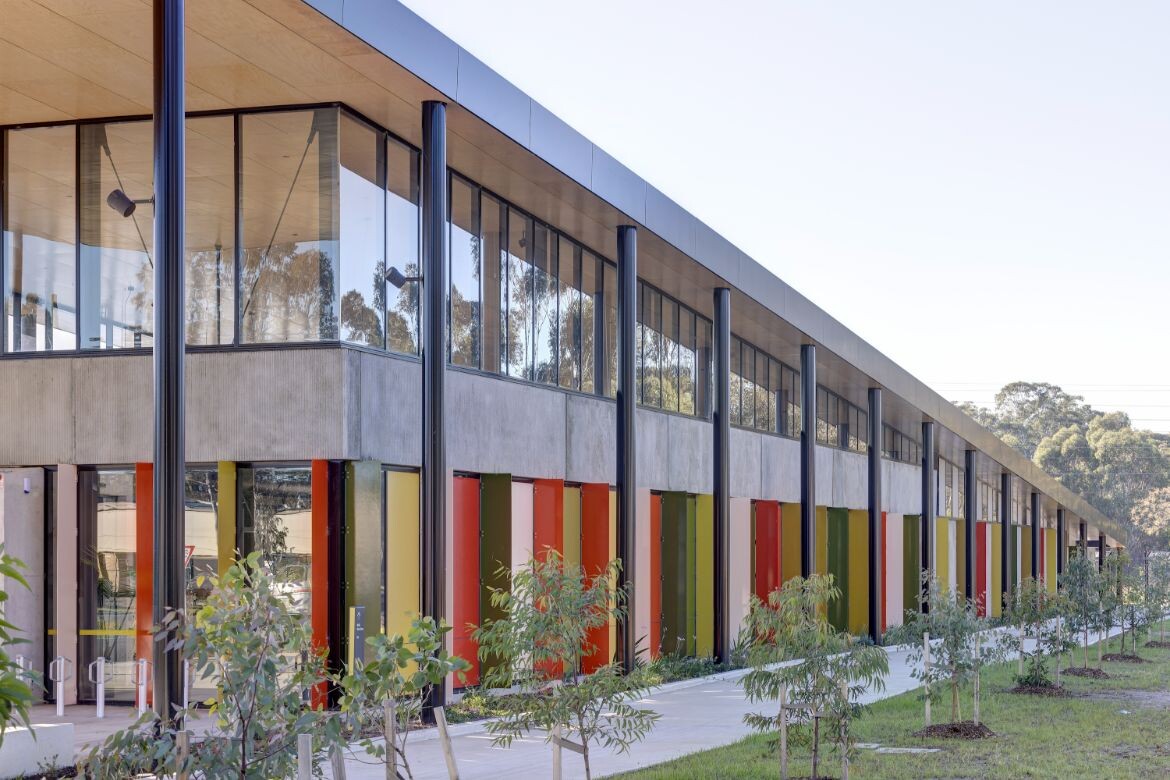
Another notable inclusion is Blacktown Animal Rehoming Centre (BARC) by Sam Crawford Architects in the Completed Buildings – Civic & Community category. SCA Director, Sam Crawford, says “we are honoured to have our ground-breaking, research-led centre shortlisted – the first time our small/medium firm has been included in this prestigious event. What makes the choice of BARC especially pleasing is that this is a council-led project – Sydney councils have been leading the way in commissioning architects to provide high quality facilities for local communities.”
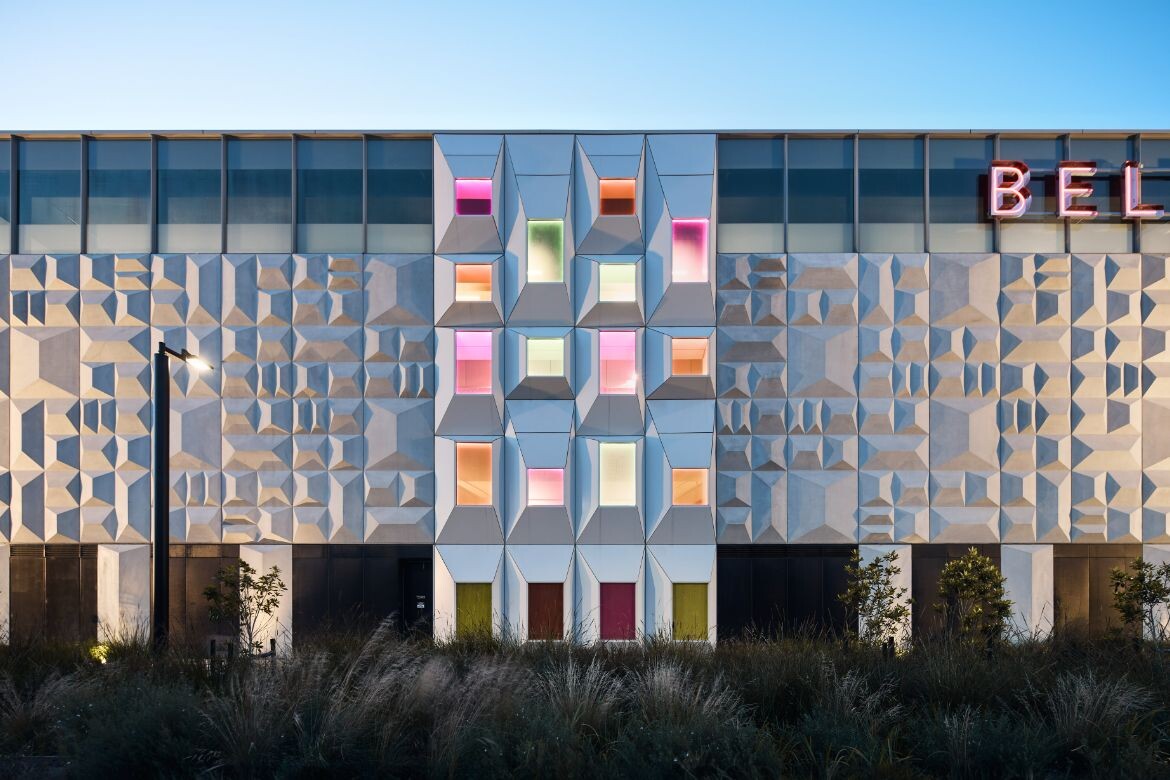
AJC Architects’ Multigate Yennor Project has been shortlisted in the Future Project – Office category. The five-storey building is due for completion in 2025 and aims to reimagine the typical ‘business park’ model by placing a greater emphasis on restoration of the natural landscape. Ararat House by SJB is in a new category, Completed Buildings – House & Villa (Urban). Meanwhile, Woods Bagot has had six projects nominated as finalists at WAF, including the StandardX in Fitzroy, Melbourne as part of the Completed Buildings – Hotel and Leisure category.
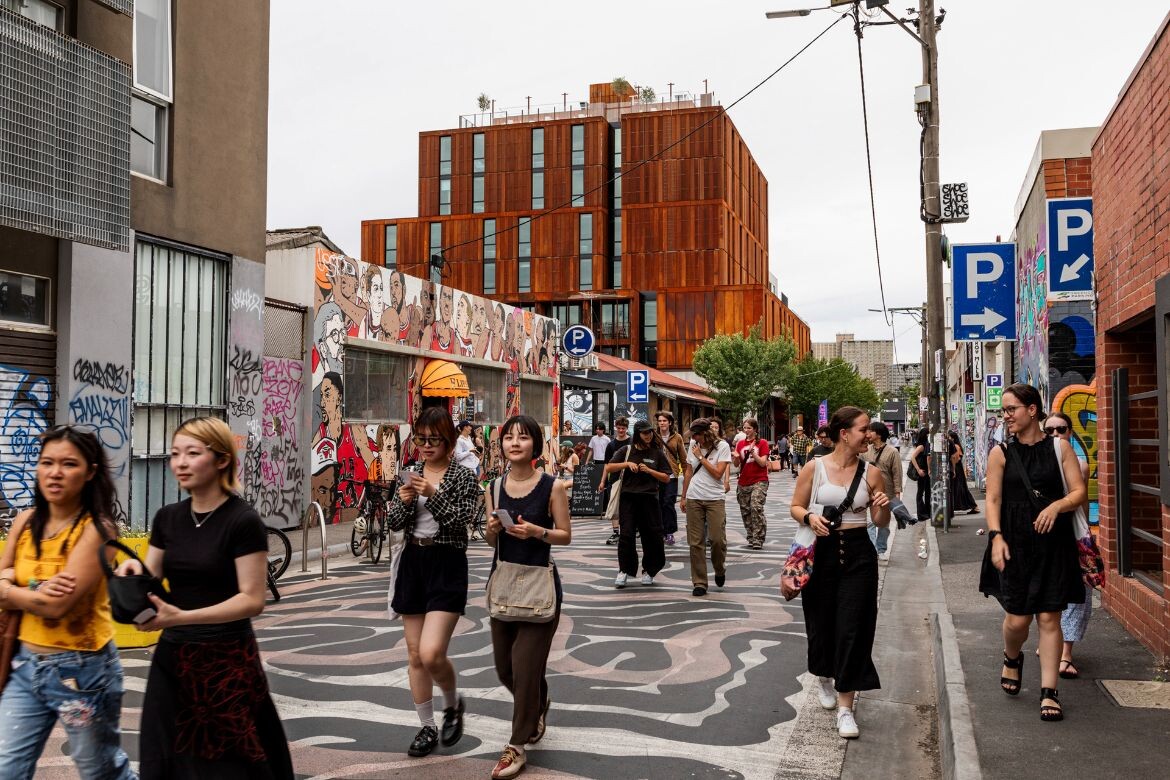
“The building rapidly assumes a distinctly local patina that speaks to Fitzroy’s convergence of industrial heritage and contemporary artistic sensibility,” says Woods Bagot project architect, Robert Rosamilia. “It’s a building that’s entirely of its place.”
This year’s finalists represent 71 countries, with the top five shortlisted countries including China, Australia, India, Singapore and the UK. The international judging panel for this year’s awards consists of 175 industry experts across 32 countries, and will include industry leaders such as Kelley Cheng, Sanjay Puri, Mariana Simas, Sonali Rastogi, Mario Cucinella, Emre Arolat, Ian Ritchie, Charu Kokate, Yael Reisner, Sir Peter Cook and Nigel Coates.
Just like last year, we’ll be there on the ground in Singapore to cover WAF every step of the way. If you’re part of a team from Australia travelling over to present a project, be sure to get in touch and let us know!
WAF
worldarchitecturefestival.com


INDESIGN is on instagram
Follow @indesignlive
A searchable and comprehensive guide for specifying leading products and their suppliers
Keep up to date with the latest and greatest from our industry BFF's!
The internet never sleeps! Here's the stuff you might have missed