The home of architecture and design in the Asia-Pacific
Get the latest design news direct to your inbox!

Get the latest design news direct to your inbox!
In a recent talk on waterfront activation, landscape architect Perry Lethlean discussed strategies for creating authentic waterfront experiences through distinctive design solutions rooted in local identity. Olha Romaniuk reports.

May 4th, 2016
Top image: Henley Square
It was a conversation about fringe spaces, post-industrial transformation and waterfront reclamation that dominated the presentation by Perry Lethlean of Australian landscape architecture firm Taylor Cullity Lethlean (TCL) at The URA Centre in Singapore. Having led many successful implementations of urban waterfront projects, Lethlean, a director of the Melbourne office of TCL, provided invaluable insights into sensitive and sensible waterfront design solutions, drawing examples from various cities, particularly Melbourne, and making parallels to Singapore’s own unique maritime conditions and its rapidly changing waterfront.

Perry Lethlean
Lethlean began his talk with his observations on bland waterfront developments, with the landscape architect dissecting various projects from the macro perspective of designing public spaces. For many such developments, as Lethlean noted, contemporary waterfront design simply meant erasing the real, the particular and the authentic condition of the city, leaving in place resolutions that were predictable and safe.
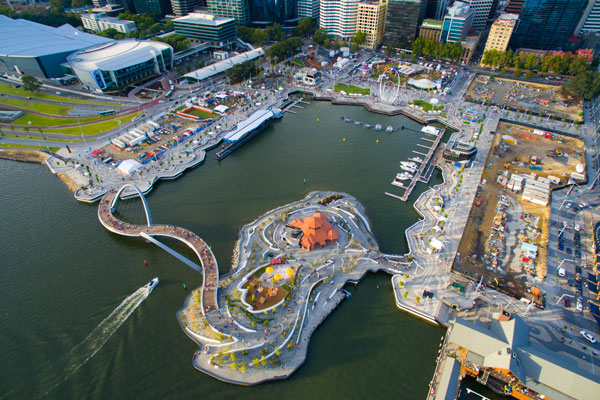
Elizabeth Quay
“Waterfronts operate at a different scale than cities do. They are massive; they also have wonderful typologies and narratives and social stories,” explained Lethlean to the audience. “There is materiality in these places, the textural quality and the patina. The palette is distinctly maritime. But what often happens is that an international vocabulary comes into place to a lot of these waterfronts which results in sameness.”

Auckland waterfront
Offering an alternative view on waterfront design, Lethlean spoke about preserving certain waterfront conditions as they were, without erasing them, and creating authentic public realm experiences in the process, as he and his team at TCL had done with the redevelopment of Auckland’s waterfront. Transforming a formerly desolate maritime industrial site into a mixed-use district, TCL embraced Auckland’s beautiful geology of the place and the city’s relationship to the sea, while preserving the waterfront’s industrial memory.
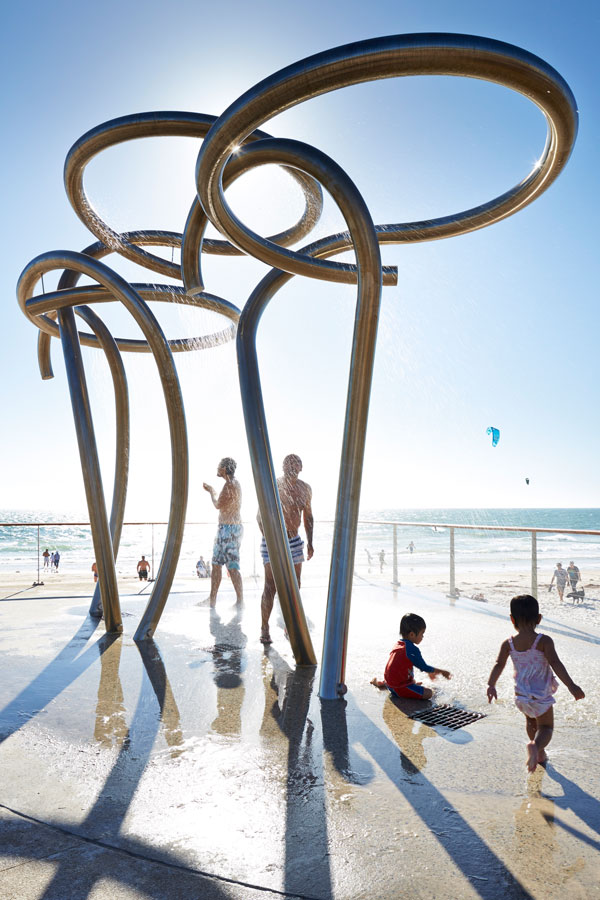
Henley Square
“We asked ourselves questions,” said Lethlean. “What if we accept the harbour condition, not as an erased object, but as a found one and celebrate the morphologies, the patterns, the specificities of the site. What if we create new programs beyond the usual solutions like cafes and restaurants? What might those be?”
TCL’s solution to Auckland’s waterfront – Jellicoe Harbour and Silo Park – deliberately chose to celebrate the diversity of the waterfront’s use, including its industrial container shipping, fishing industry and ferry services. By revealing an array of activities that were once essential to the harbour, TCL was able to retain richness and authenticity of the public realm via a range of hybrid uses and attractions and promote civic programmes with an indigenous flavour.
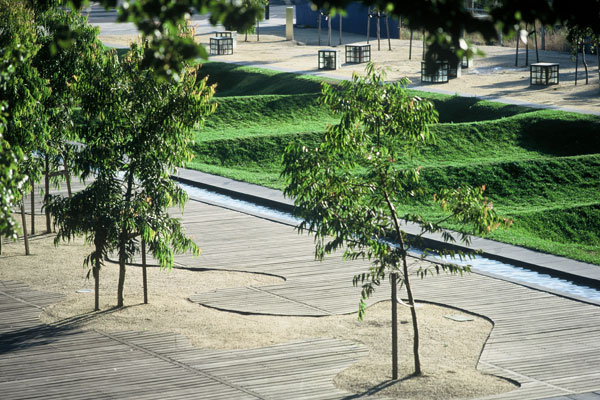
Customs Plaza
Timely enough, Lethlean’s solutions for Jellicoe Harbour and Silo Park resonated with additional relevance in the context of Singapore with its own, rapidly changing coastline. With Singapore’s impending plans for consolidation, relocation of its port operations and the subsequent waterfront transformation playing a critical role in the cultural positioning of the city, some of Lethlean’s questions rang especially true.
“How do we introduce a city agenda into an industrial complex?” inquired Lethlean, in reference to the Auckland waterfront project. “How do we retain industries that were slated for removal? How will the new architecture interfere with the existing architecture? What kind of a relationship will the new ecologies have with existing conditions?”

Customs Plaza
Lethlean’s formula for success at Jellicoe Harbour and Silo Park involved a range community-centred design to create diverse public realm experiences rooted in detailed explorations of the context and the site. Imploring to not copy other cities’ solutions but to seek relevant interjections in a city’s specific public realm, Lethlean also advocated for continuous consultation with the relevant community groups for a well-informed and relevant outcome.
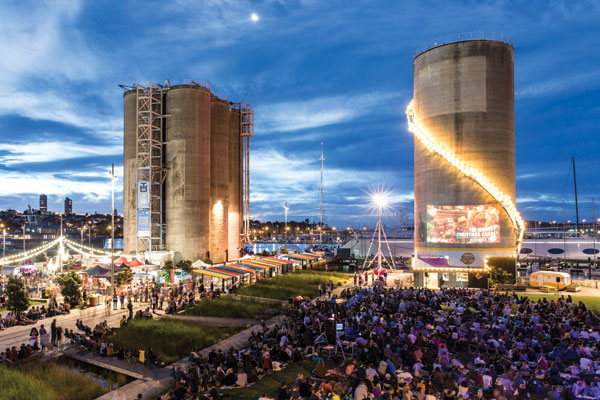
Auckland waterfront
“It’s a really great mode to engage, to get the community to participate in a conversation and to have valuable input to the masterplanning process,” advocated Lethlean at the conclusion of his talk. Indeed, if the success of Jellicoe Harbour and Silo Park project is of any indication, Singapore’s waterfront, too, can apply Auckland’s lessons for its future dynamic and engaging coastline developments.
Taylor Cullity Lethlean
tcl.net.au
INDESIGN is on instagram
Follow @indesignlive
A searchable and comprehensive guide for specifying leading products and their suppliers
Keep up to date with the latest and greatest from our industry BFF's!
The internet never sleeps! Here's the stuff you might have missed