The home of architecture and design in the Asia-Pacific
Get the latest design news direct to your inbox!

Get the latest design news direct to your inbox!
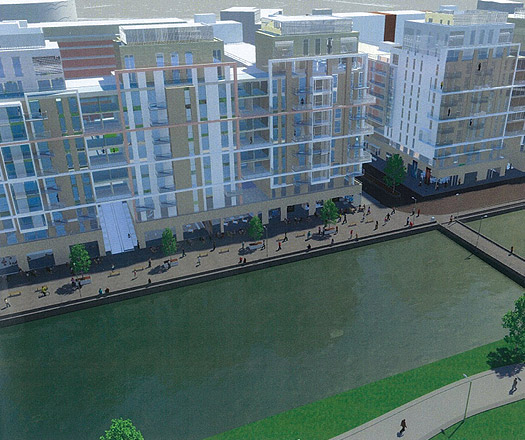
Internationally-acclaimed Australian architect, Shane Thompson, of Bligh Voller Nield (BVN), has led a team of 20 international architects in designing the athlete’s residents portion of the Olympic Village for the 2012 London Olympics.

August 1st, 2008
Mr Thompson, a principal of Bligh Voller Nield (BVN), led a team of 20 international architects in designing the athlete’s residents portion of the Olympic Village for the 2012 London Olympics – a project BVN
won over a number of renowned international architectural practices.
“There has been a change in how Australian architecture is viewed; previously international architects were brought to Australia to showcase trends, now we are increasingly being recognised for the innovations and quality of our design and as a result are now exporting our skills overseas to work on international projects,” Mt Thompson said.
“Winning this highly contested job is testament to how far the Australian architectural industry has progressed and is now regarded as a leader on the world stage.”
The 2012 Olympic athlete’s resident’s quarters will consist of 3800 one, two, three and four bedroom apartments and terrace houses spread over one square kilometre which in total will cover over 15 city blocks. The apartment buildings will vary in height from eight to ten stories with some reaching 30 stories.
“Once completed it will be a new purpose-built suburb of London which will house over 17,000 athletes during the games and will become an integrated suburb of London with parks, a Westfield Shopping Centre and a Euro Star terminal after,” Mr Thompson said.
The London Olympics will be the fourth consecutive Olympics BVN has worked on. From Sydney’s ‘best ever’ Olympics, to Athens and then Beijing in August this year, BVN has been contributing designs and planning across a range of Olympic facilities.
In Beijing, BVN designed five Olympic venues comprising tennis, hockey, archery, rowing, and canoeing, as well as the development of the 2008 Olympic’s operational plan.
“We are very privileged; no other Architectural practice in the world has designed facilities for four consecutive Olympics, nor the other international projects previously undertaken in Venice, Bangkok, Vancouver, Johannesburg and Buenos Aires."
INDESIGN is on instagram
Follow @indesignlive
A searchable and comprehensive guide for specifying leading products and their suppliers
Keep up to date with the latest and greatest from our industry BFF's!
The internet never sleeps! Here's the stuff you might have missed