The home of architecture and design in the Asia-Pacific
Get the latest design news direct to your inbox!

Get the latest design news direct to your inbox!
This Fitzroy terrace extension by Maynard Architects fits together like a game of Tetris.
March 11th, 2009
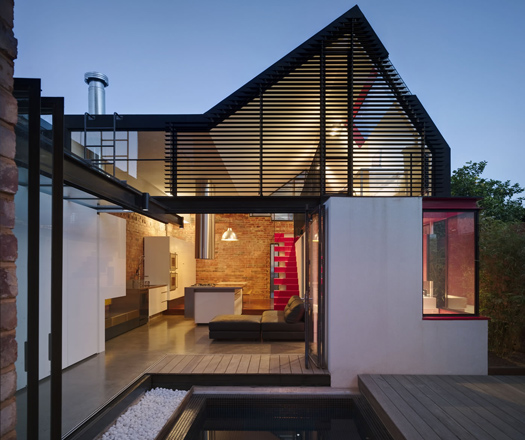
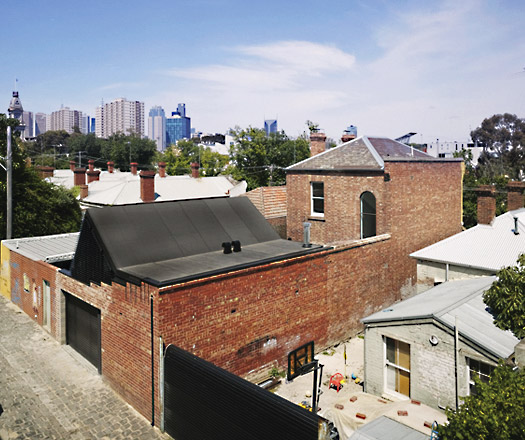
Adding a rear extension to an inner-city Victorian Terrace is nothing new, but Andrew Maynard Architects took to this house, in Melbourne’s Fitzroy, from a different angle.
“Our Essex St house was about timber construction and detailing. Our Tattoo house was about graphics. The Vader house is about steel construction and detailing,” says Andrew Maynard – Principal.
“I made a conscious effort to explore steel tectonics simply because I had not built using steel often in the past.
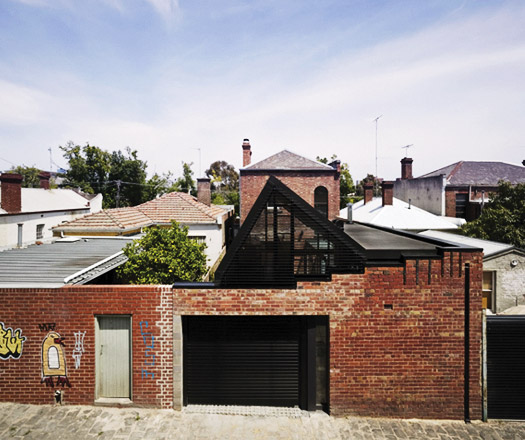
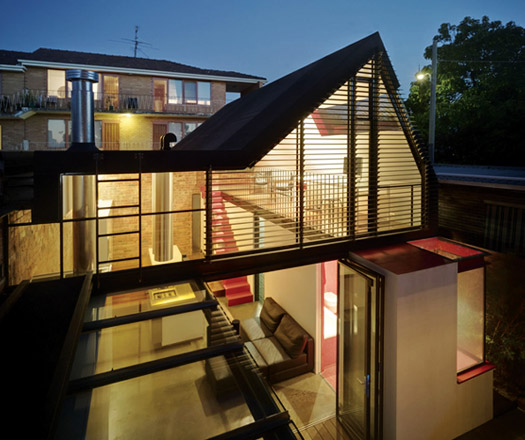
The extension is described by the architect as being “created out of components that appear to have fallen at the eastern end of the site in a Tetris-like manner.”
“Unexpectedly a random Tetris piece has lodged itself deep within the walls of the original building,” Maynard says.
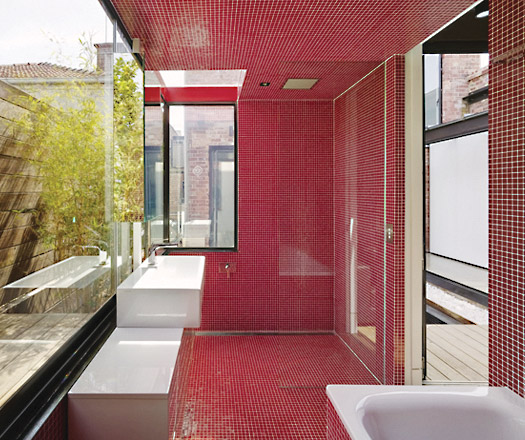
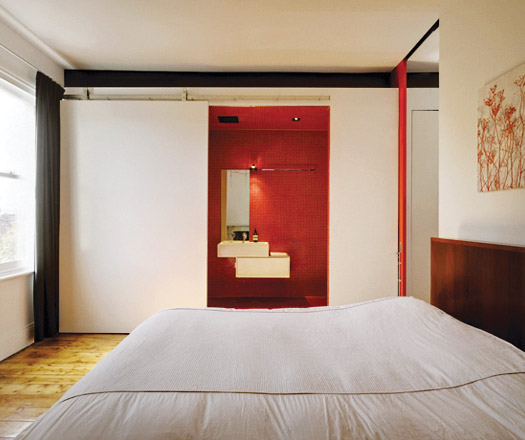
“This floating block provides the master bedroom with a en-suite reflecting its downstairs companion.”
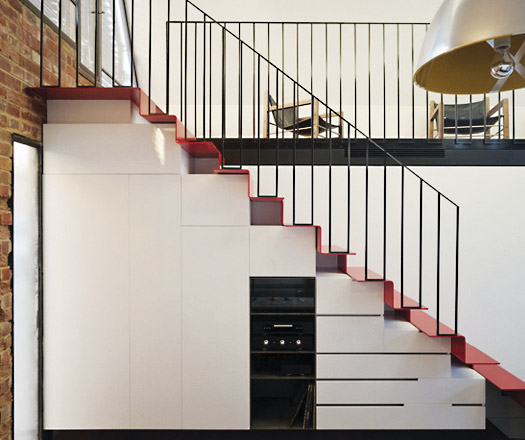
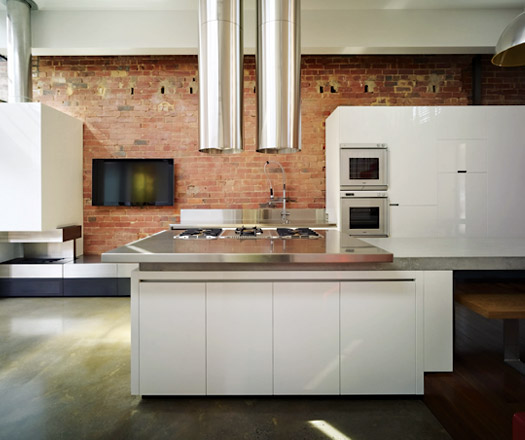
The high masonry boundary wall defines the internal spaces and focuses attention on the courtyard areas – into which the living areas flow. The minimal colour palate – a deep red, clean white and the rawness of the brickwork – combines to create a sense of warmth and character.
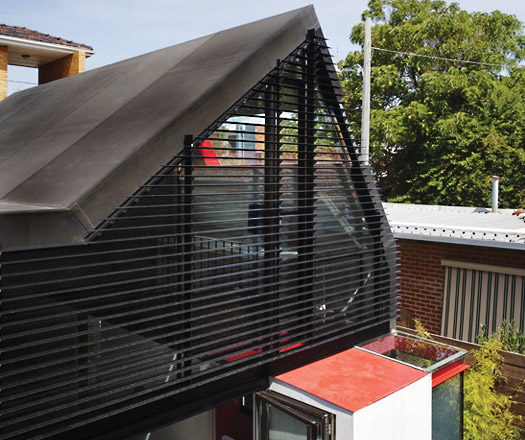
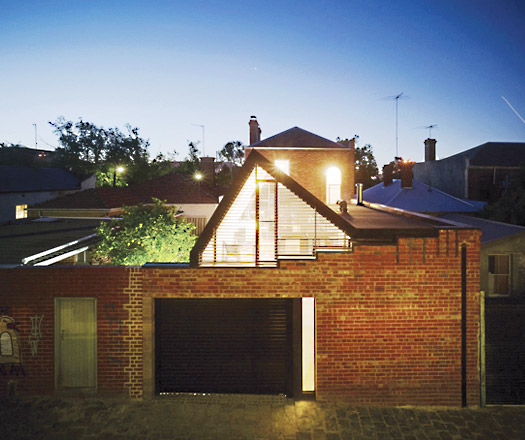
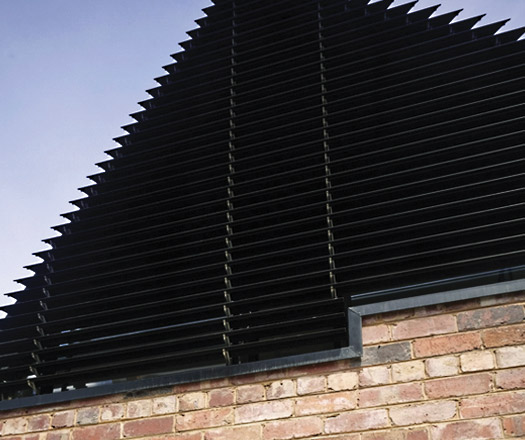
The black louvred mezzanine level of the extension ‘peeps’ over the rear wall, creating dynamic angles and a sharp contrast to the original bare-brick wall.
Clever uses of the internal spaces have allowed for a spa, beneath the timber decking of the courtyard as well as a cellar beneath trapdoors in the floorboards of the extension.
“The most difficult aspect of the project was simply fitting in all of the program while still making the end result feel open, light and roomy,” Maynard says.
“This flexible design, accompanied by its carefully composed material and colour palette, results in an extension that will adapt to function, clients desire and most importantly the demands of time.”
Maynard Architects
maynardarchitects.com
From the arhcitect
“Creating the open expanse of the folded roof form, the playfulness of the hanging beam and the folded stair along with the refined detailing of the folding steel doors and windows was a joy that offered a lot of freedom that the timber tectonics of our past projects could not have achieved.
“The hanging beam is my favourite feature (image 2). It looks like it is defying gravity [or it looks like someone photoshopped a column out of the image].
“Many lay-people that see the hanging beam simply don’t understand it. There is an assumption by many that the beam must be taking load from above when in fact it is hanging from the beam above it for the sole purpose of housing the track for the folding doors.
“The client gave us an extensive and complex brief. A brief such as this typically leads to a huge, dense building on such a small block like this.
“I spent a great deal of time massaging the site strategy and the design to ensure that the overall composition was not simply a functional collection of stuff stacked together on a small block.”
And why the name Vader?
We were told it’s part of a Maynard in-house joke, but were told no more!
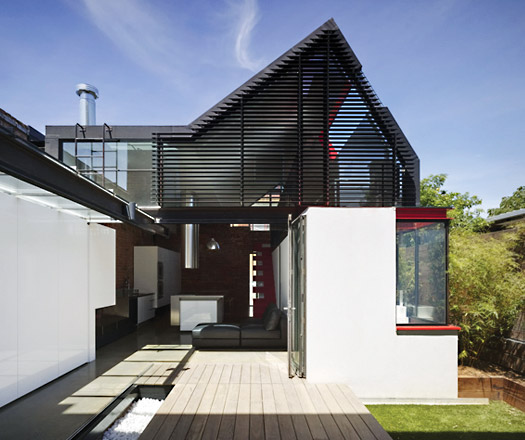
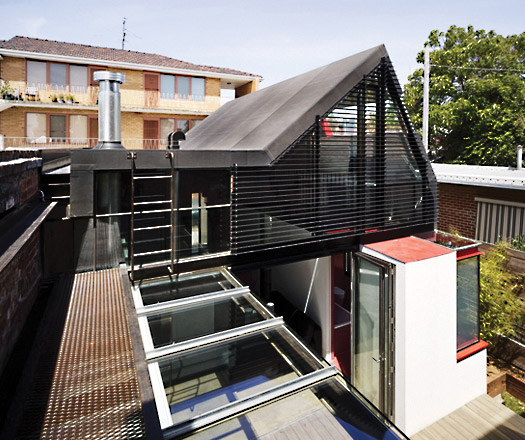
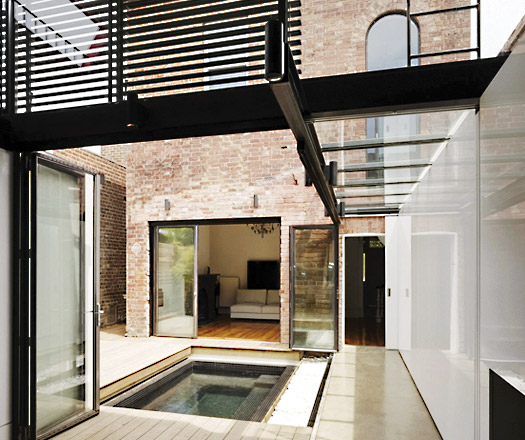
Image 2
INDESIGN is on instagram
Follow @indesignlive
A searchable and comprehensive guide for specifying leading products and their suppliers
Keep up to date with the latest and greatest from our industry BFF's!
Event theme: Celebrate Interior Design
The 65,000-strong International Federation of Interior Architects/Designers (IFI) will hold the World Interior Design Congress 2009 for the first time in the region under the patronage of Her Royal Highness Princess Haya Bint Al Hussein, wife of Sheikh Mohammed bin Rashid Al Maktoum, Vice-President and Prime Minister of the UAE and Ruler of Dubai from 10-11 November 2009.
The internet never sleeps! Here's the stuff you might have missed