The home of architecture and design in the Asia-Pacific
Get the latest design news direct to your inbox!

Get the latest design news direct to your inbox!
Archrival’s site-specific installations explore new ways of thinking and creating by taking a collaborative approach to architecture.

January 23rd, 2012
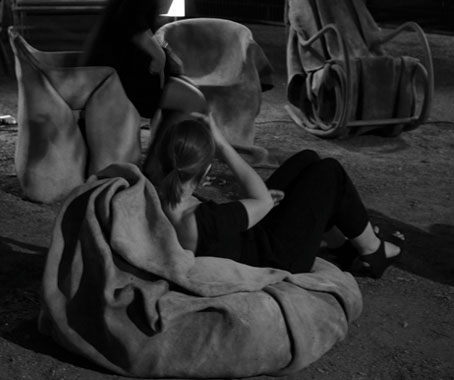
Visitors to the Hyde Park Barracks during this year’s Sydney Festival may be surprised to encounter a moody, tactile installation comprising a series of chairs, benches and ottomans made of repurposed furniture and cloaked in a heavy, sculptural concrete fabric.
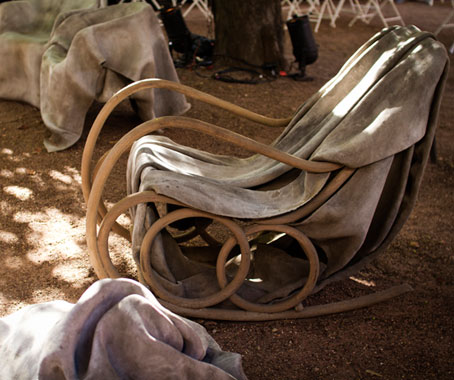
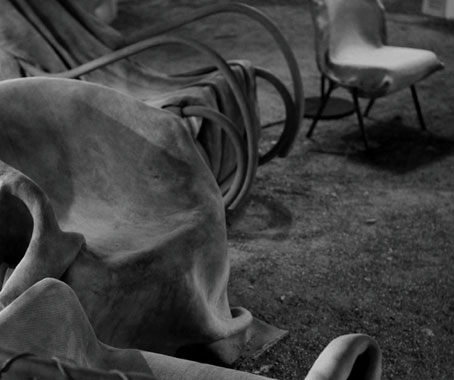
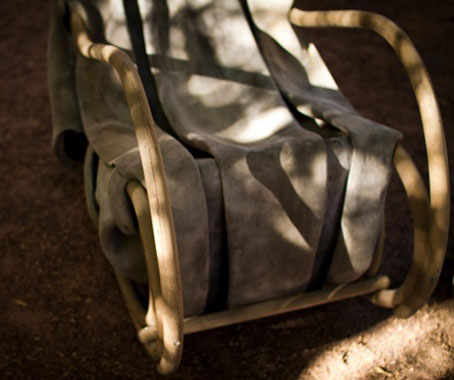
It’s not something you might normally find in an outdoor festival bar, and yet the furniture pieces create an inviting sense of play, their curved forms in contrast with the formal architecture of their surroundings.
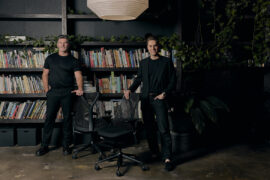
Entitled Concrete Colony, the project is the work of Archrival, a not-for-profit organisation founded and led by architects Claire McCaughan and Lucy Humphrey. McCaughan, Humphrey and a revolving group of collaborators work together to create site-specific installations where the process of creation is just as important as the end product.

Lucy Humphrey (left) and Claire McCaughan
Archrival is all about providing an outlet for architects and designers outside of regular commercial practice, creating unsolicited new work within a short timeframe. It’s also about encouraging collaboration and interaction in an industry that’s often characterised by competition and rivalry.
The initiative’s first project, The Eleventh Hour (featured on Indesignlive here) was a good introduction to the group’s philosophy and way of working. A series of archways installed at Sydney’s Carriageworks invited visitors to interact with the space and alter it over the course of the exhibition using metres and metres of woven string.
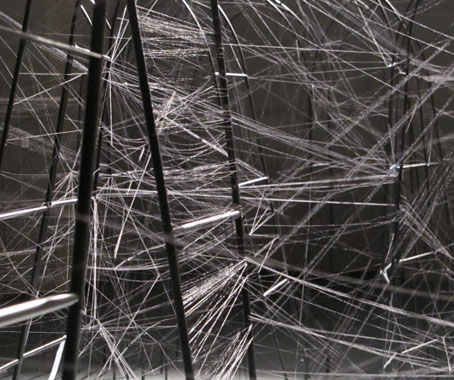
“We were trying to see if we could get people working together; whether they’d come, whether they’d be interested,” Humphrey recalls. “And then on the first Saturday we had 100 people in there weaving!”
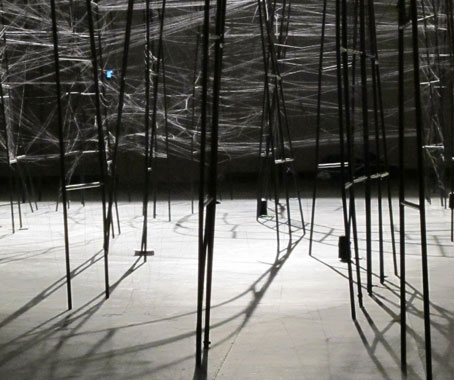
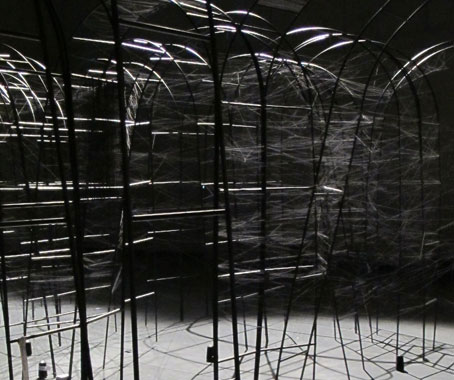
The hardest aspect of the project proved letting it go and take on a life of its own. “As designers we normally have quite a lot of control over what we do, and that was a perfect example of what we [were] saying – let’s invite everyone and not direct them, and let them have the freedom to just be involved in the work,” Humphrey explains.
“It was a learning process for us as well.”
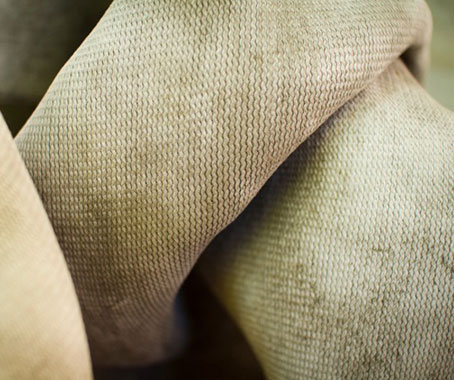
Concrete Colony invited a number of diverse design professionals to a series of workshops, where they created 10 pieces out of recycled furniture and a thick, heavy concrete cloth. The hands-on nature of the task called for everyone to work closely together and put new skills to use.

“Ideally, we want to people who collaborate with us to take the skills back to their practices,” says McCaughan. “I think it affects the way I work in the studio, and hopefully it will affect other people as well.”
“It’s very physical; it’s a different way of forming,” says Humphrey. “Day to day architecture is very prescribed, very neat, and this is just physical building. It’s a more direct physical way of making things.”
McCaughan, a Project Architect at Sam Crawford Architects, and Humphrey, who runs her own design studio, are now working on a project that will exhibit at the Australian Pavilion at the Venice Biennale of Architecture in 2012. One of 6 teams chosen to exhibit, they’re keen to create something effective but understated in an exhibition that can be overpopulated and overwhelming.
“We don’t want to add to all that,” McCaughan says. “We want to provide another experience and question the way [the exhibition] is curated.”
Ephemeral and site-specific, Archrival’s projects use their temporality to their advantage.
“It’s all about speed,” Humphrey explains. “If you want to create relevant ideas, you need to do it fast. If you’ve got that big time lapse between having the idea and then taking so long to produce it, the idea’s maybe not so relevant as it was, or not as new as it was.
“Being able to do things quickly and say ’this is important, this is our focus, this our big idea about this space’, you can keep it going, move faster.”
Archrival
archrival.org
INDESIGN is on instagram
Follow @indesignlive
A searchable and comprehensive guide for specifying leading products and their suppliers
Keep up to date with the latest and greatest from our industry BFF's!
The internet never sleeps! Here's the stuff you might have missed