Indesign Digital Network


People reading
Top Read articles
  1. Toyo Ito Visits
  2. Baffsky & Sass
  3. Nailed It
  4. Kurilpa Bridge
  5. Future Design Classics
Interview: Christoph Ingenhoven

21 May 2009

Interview: Christoph Ingenhoven

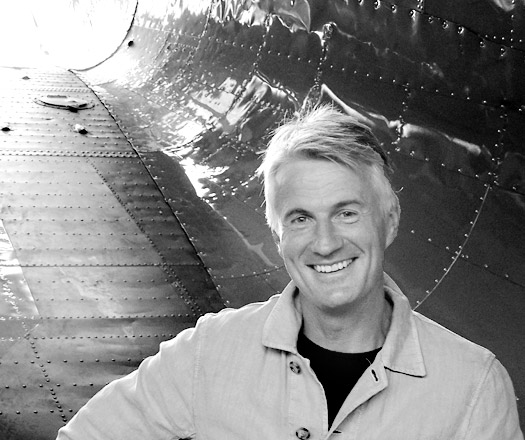
The full transcript of an interview with German Architect Christoph Ingenhoven.

What brings you to Australia?

Initially a call from our partner architectus/Sydney on the Bligh 1 building – asking whether we would be interested in working on a competition in Sydney CBD. My answer was a direct – yes of course.

We are actually quite impressed by the way people work over here and how committed people are – however, also the pure setting means the climate, the sun and the sea are something that keeps us being interested in working in Australia. It is simply one of the great cities of the world.

Are you able to tell us, in brief, the story of your life and career?

Architecture has always been a strong involvement and commitment in my life, I grew up and live in a family of architects, my father, my wife, her father are all architects.

I founded my office 1985 in Düsseldorf, the city where I was born, as I was lucky to had won a competition right after my architectural studies at the Technical Universitiy RWTH Aachen and at the Acadmy of Art in my hometown.

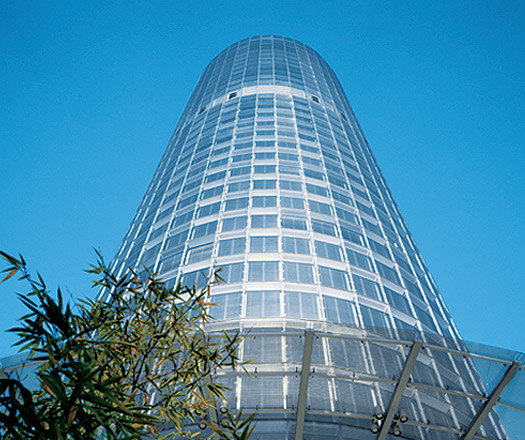
Not long after that I could realise the first prize of the international competition for a high rise of one of the biggest energy suppliers in Europe, the RWE Tower in Essen. It is said to be one of the first green buildings world wide, this was 1997. Today my studio has about 100 people working in Düsseldorf.


It’s been said you work on every project within your practice, is this hands-on approach important?


Yes, being involved in each project is very important to me. It is about commitment and passion and also about growing the common experience within the studio. Each building is a new challenge, each building has its own demands, its special circumstances.

After having developed the basic concept, it is necessary not only to have the involvement in the early concept stage, but to discuss the design with the director/ team in charge in a regular rhythm during the later stages and the client of course – ensuring that we keep the concept as clear as possible beside all the daily constrains and inputs.
 

Sustainability has obviously been a focus for you since you established your practice 23 years ago, how has sustainability (as a concept and a practice) changed in that time?


The approach to sustainability or green design has certainly changed a lot in that period. At the beginning the green movement in Germany was pretty much what I would call an alternative movement and the architecture concepts coming from that were much more simple, but sustainable architecture is not only about healthy materials or some PV cells, but rather about an integral, technical approach that deals with all the aspects of “healthy building” with a long life cycle.

This understanding has been the basis for all our works and basically means that we do consider (based on the actual situation, location context) how we can improve or complement the setting with our concept, how we can reduce the energy needed for the building by having the right volume, exposure, skin/ facade and of course by having the right systems in place.

So green building is also about the life cycle of material, the potential of reuse of the grid/ structure in the future – means flexibility. After that we do think about how we could get the remaining amount of energy needed from renewable sources.

However, beside the energy aspects – sustainability has also a quite strong social component, it is taking care about working spaces, human public spaces, communication, special functions like a childcare or restaurants/ cafes within the buildings and so on.

The biggest change since then is that sustainability has become much more complex, there much more possibilities to influence and to take for, there many more facets of saving energy for example, of saving resources, of using more healthy materials, there is much more knowledge and process in new technologies.

Yet, even if some important steps have become state of the art in architecture, we still often feel like pioneers, this is part of a long good process to make this world a better one.
 

How do you feel Australia compares to others with regard to sustainable design?


Germany is considered to be quite ahead in green thinking, however it is largely about the common understanding and awareness of recycling, energy consumption reduction and healthy materials/ processes.

We had no rating or evaluation system in place until 2008. As well in these matters I think that Australia is doing a great job. Even if green thinking is probably not yet fully implemented in everybody’s mind the systems in place and the concepts brought forward in the last years do show a true and high interest in green building.

The green star system and Nabers actually give a great frame (checklist) for all parties involved in a development and we were extremely happy when our client decided to commit to a 6star green star ranking. This is a very good feeling that we have met partners who are taking and supporting this challenge.


Can you tell us about some of your stand-out sustainable projects?


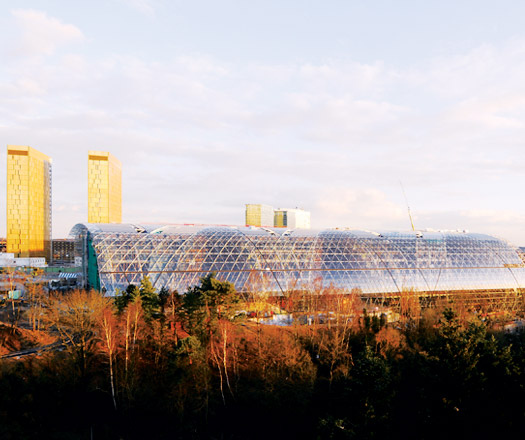
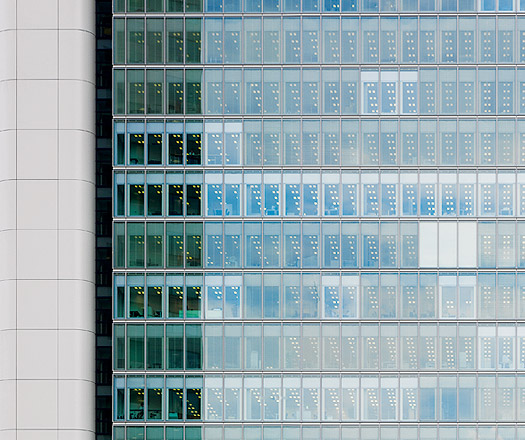
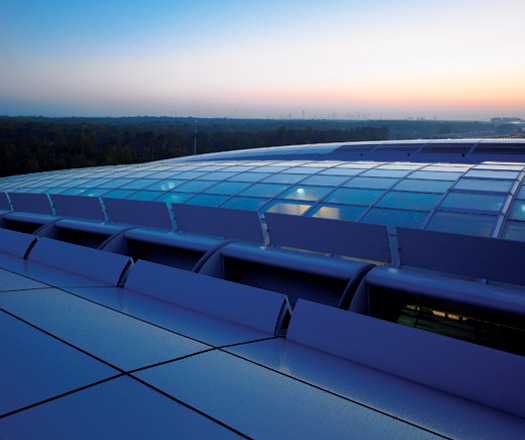
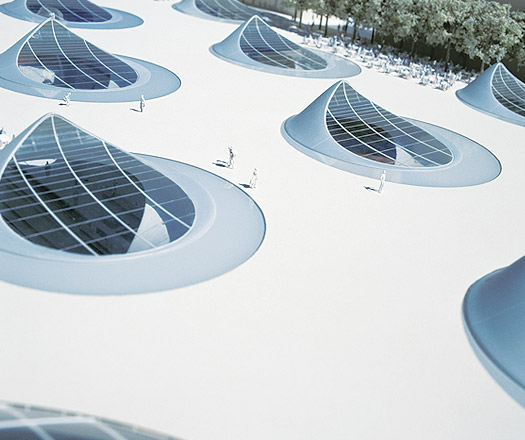
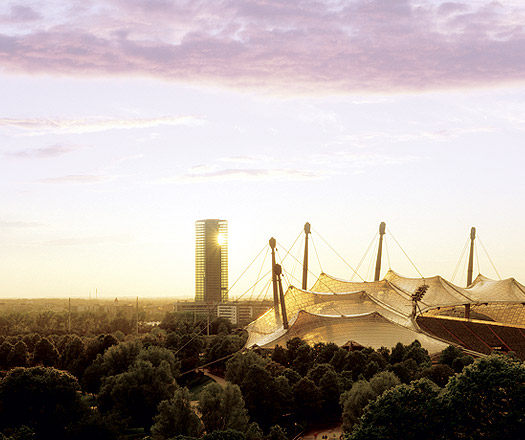
There is the first one I mentioned before, the RWE high-rise, with its fully glazed double facade, there is Up Town Munich a fully glazed high rise with a single facade, which enables to open the windows, there is the European Investment Bank in Luxemburg, the Lufthansa aviation center, the Breezé Tower in Osaka, a university college in Dublin, there will be the zero energy main station in Stuttgart...

What are the biggest obstacles, in your mind, in attaining truly sustainable cities?


Next to the geographical situations, the climate etc., the biggest obstacle might be the human being himself, this is something one can change. We should be aware of all the possibilities we have and use them: sustainable urban design depends on the right mix of uses, the right density, and public transport.

It is pretty much about reducing the energy consumption of a city by combining living and working, reducing the distances in between and therefore reducing traffic. Commuting should be comfortable and easy with public transport. Thus it is about having the right nots – means having a transportation concept which looks at all services rather than having quite independent railway, bus and metro networks.

Mixed use means not only that people should be able to live close to their working places, but a social sustainability can only be obtained if we do not design areas within a city which are deserted on the weekends.

These aspects should be considered while taking about sustainable city planning – people must understand that the city grid /the blocks) are the most stable/ long-lasting part of every design – this grid has to be sustainable in its bones and must allow for future changes/ adoptions.

Having said that – green cities do of course need green buildings and literally green in order to reduce the energy consumption and to create a comfortable and responsible environment for us and future generations.


How will sustainable design weather the storm of the Global Financial Crisis?


I believe that true sustainable design should actually not be affected by the GFC. The reason for that is that a fully integral sustainable approach for an office building should actually not be a premium in investment but pay back in a reasonable time span.

Maybe we are forced to go a bit more slow in future developments for a while, but we will keep on going.
And: sustainability is not only about money – we should understand that we are building houses, skyscrapers and so one which do form the setting for future generations [...] We should consider this aspect – the responsibility we have – in that discussion.

Is it right that you will be somehow involved in the Barangaroo project? What will this involvement entail?
We have been involved in the presentation of an idea for the Barangaroo development and have been working with an international team following the principles of sustainability. A truly sustainable and responsible solution for Barangaroo can be a successful extension to the CBD. Barangaroo is Sydney’s great chance to be one of the sustainable 21st century cities.
 

Where to next for you?


... Wherever green architecture is wanted.

Share this article


story cloud

Jehs+laub For Wilkhahn Erwan Bouroullec On Vitra On The Ground In Milan: Jarrod Lim New Fellows For Dia Victoria Refresh At The Ecc Café On The Ground In Milan: Simon Fallon Argent's Affordable Luxury Baseline, Debetrek And Cdk Stone At Fireworks Gallery Legal Connections: Clayton Utz At 1 Bligh Beef Club Paris The National Hotel By Breathe Architecture 5 Minutes With… Susan Standring Trapeze Table At Lloyd's Of London Coco Republic And Smeg Collaborate Last Chance To Win! The Hettich Experience How We Create And Derlot At Bid Benjamin Hubert X Cappellini On The Ground In Milan: Gregory Anderson Up Close With Cecilie Manz The Vivacious Ludovica Palomba
Indesignlive
Top Read
  1. The National Hote…
  2. 5 Minutes With……
  3. Beef Club Paris…
  4. Trapeze Table At …
  5. Legal Connections…
  6. Coco Republic And…
  7. Baseline, Debetre…
  8. Last Chance To Wi…
  9. Argent's Affordab…
  10. The Hettich Exper…
Indesignlive
Latest Products
  1. Que Est Paul Intr…
  2. 'bend Living' By …
  3. Meritalia - Pillo…
  4. Trapeze Table At …
  5. Benjamin Hubert X…
  6. In Profile: Meinh…
  7. Krost At Evolutio…
  8. Cosmos Collection…
  9. Moloko Bathtub By…
  10. Evolving Design I…
Indesignlive
Singapore Top Read
  1. Architect Barbie…
  2. Jcube: Singapore'…
  3. Sapientnitro By S…
  4. Zona Tortona…
  5. The Penguin Pool…
  6. Leading Man…
  7. The One Ho Chi Mi…
  8. Sia Architectural…
  9. The Exchange By D…
  10. Jwt Shanghai: Cre…
Indesignlive
Top Stories
  1. Rayavadee Unveils…
  2. 'taste Code' By N…
  3. Wine Design Award…
  4. Month Of Design A…
  5. The Art Of Kate R…
  6. Habitus Loves... …
  7. Supremo(tm) - Cae…
  8. Protected: Manutt…
  9. Raffles College D…
  10. Design Hunter Q+a…
Indesignlive
Latest Jobs
  1. Project Co-ordina…
  2. Business Developm…
  3. Mid-level ‘all-…
  4. Business Developm…
  5. Event Coordinator…
  6. Sales Consultant…
  7. Editorial Intern …
  8. Architect / Revit…
  9. Sales Executive…
  10. Internal Sales Co…