The home of architecture and design in the Asia-Pacific
Get the latest design news direct to your inbox!

Get the latest design news direct to your inbox!
The future of physical retail lies in designing with the customer experience in mind, writes Ola Bednarczuk.
January 13th, 2011
Retailers who bemoan the competitive advantage of online retail due to its ability to offer lower prices are endeavouring to fight a battle they are ill-equipped to win.
Various high-profile Australian retailers, including Harvey Norman, Myer, David Jones, Borders and Angus & Robertson, recently put out a call to the government to impose a 10% tax on online purchases in an attempt to “level the playing field.”
Rather than levelling the playing field, physical retailers should be emphasising and improving that which sets their services apart from online retailers – the ability to provide a complete tactile and emotional experience for shoppers.
Physical retailers must rethink the elements of their design and consider how to best incorporate their customers’ needs and desires to create the best possible shopping experience.
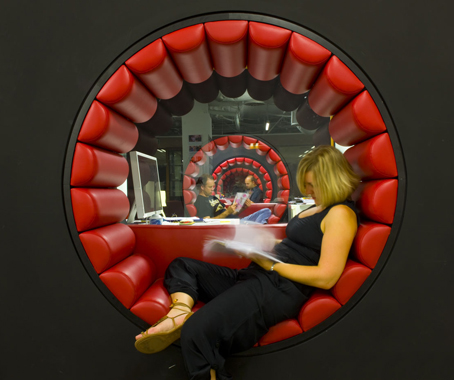
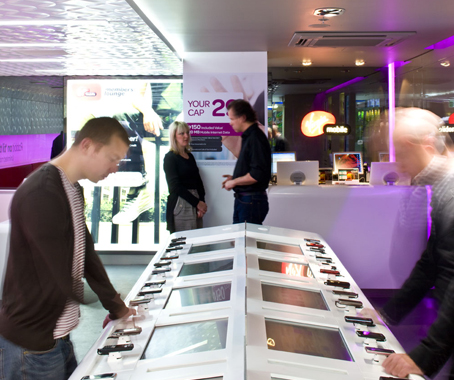
This is the approach taken by experiential design company e2, who have worked with clients including OPSM, Westfield, Virgin and Blackberry to create bespoke shopping environments that provide outstanding customer journeys.
“In designing for the customer, we try to uncover inate insights. Things that inform the design and structure of the retail environment, such that it better responds to the needs and desires of the customer,” explains e2 Retail Strategist David Grant.
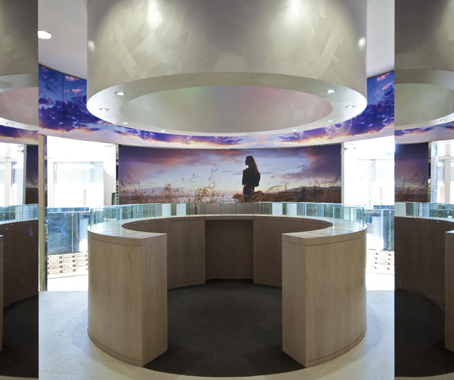
e2 worked with OPSM on its Eye Hub in Melbourne when the optometry store was facing fierce competition from more value-driven brands.

“OPSM had to choose and say, are we going to try to compete on that level, or are we going to try to differentiate ourselves through service, a better range of products, advice and knowledge?” said Grant.
Their final design for the store was based on the idea of the “trusted advisor”, with whom the customer would maintain a relationship.
“Through primary market research, we discovered that customers wanted to pay and value the trusted advice that they received instore,” said Grant.
“People want to touch and see a product; they want to have a conversation with a salesperson who can give them knowledge and advice that’s tailored to them.”
The challenge for physical retailers in the era of online shopping will be to adapt to a changing market, and in doing so reclaim and retain customers.
Grant encourages that retailers invest in both the physical and intangible.
“Ask yourself, how does it feel? How does it make you feel? Really drill down into what this retail brand is, how it is different to your competitors’, and how that can be presented as an experience to the customer that will make them want to come back.”
INDESIGN is on instagram
Follow @indesignlive
A searchable and comprehensive guide for specifying leading products and their suppliers
Keep up to date with the latest and greatest from our industry BFF's!
The internet never sleeps! Here's the stuff you might have missed