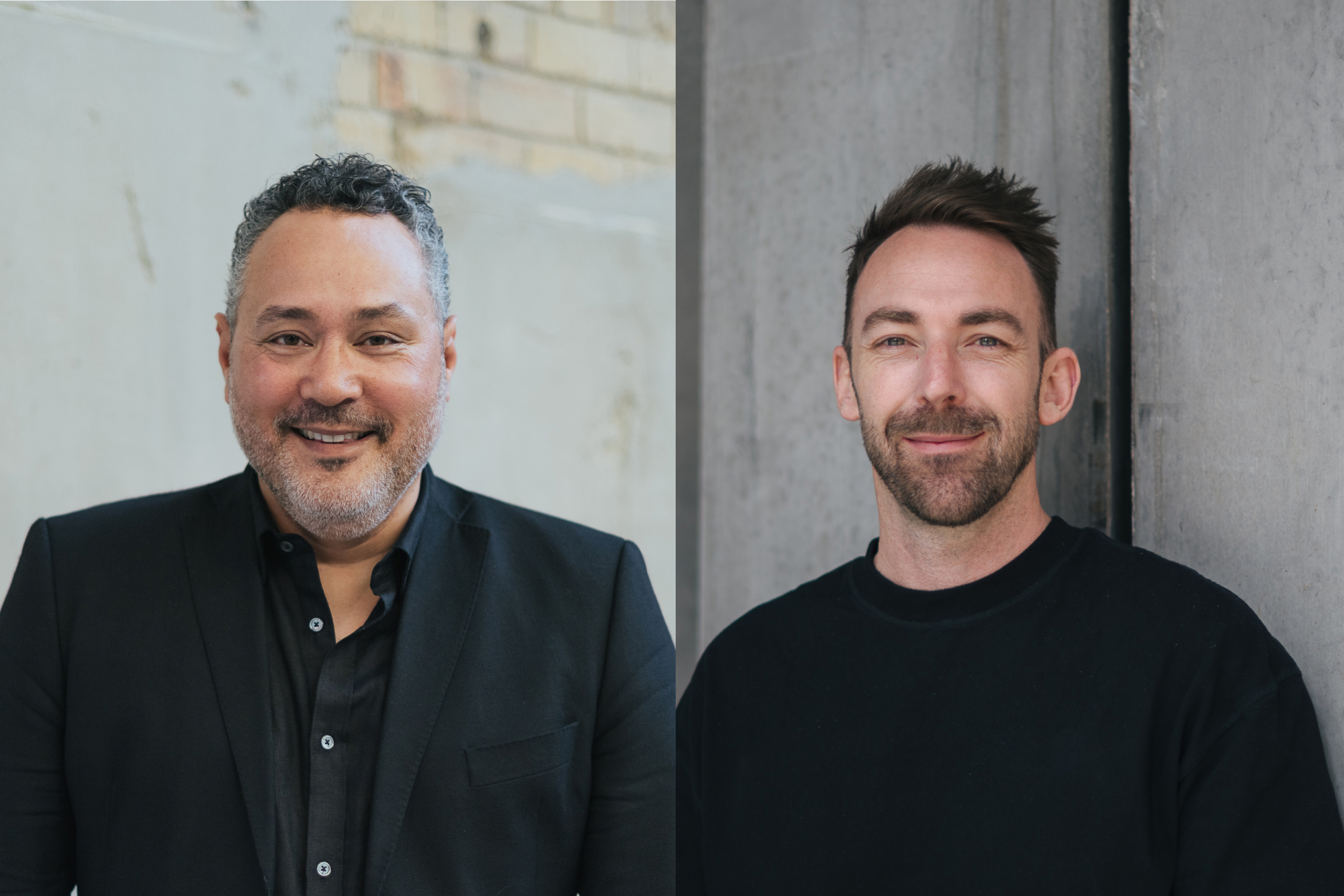
Who would have known it, but production facilities are still well and alive in the contested real estate spaces of Manhattan, New York. Well, it’s flourishing at least for Apparatus Studio. Founded by Gabriel Hendifar and Jeremy Anderson just seven years ago, the duo themselves say it’s nothing short of a miracle that they can do it. But their fourth-level ex-school gymnasium space houses their design studio, development and production facilities – one big family crushed in together, “speaking the same language” and creating a consistent experience from design through to production, packaging and sales.

Do things ever get a bit tight in there? “The thing we’ve learned how to do is balance what we feel is critical to do in house, like hand finishing and assembly,” says Hendifar. “But we partner with vendors and manufacturers around the world to do the things we don’t have space for.”

Column lamps in table and floor versions.
Not only does this make the business scalable, but gives them access to a breadth of materials – stone, metal, glass, leather, porcelain, horsehair – that they are keen to work with. And while “we can’t possibly be the best at all of those things, so really the smartest thing to do is to partner with people who do those things best”, Apparatus chooses to innovate in other ways. The studio takes a ‘classical’ approach to materiality, working with very pure elements. Pushing the boundaries is in what the duo chooses to do with the materials.

Hendifar comes from a background of fashion, costume and scenic design, while Anderson worked in public relations. “It was a combination of my conceptual thinking and Jeremy’s boundless energy and tinkering ability that got us off the ground,” Hendifar says. “We used to say I was the thinker and he [Jeremy] was the doer.”

Horsehair pendant.
That meant Anderson was doing everything from wiring and finishing, to the “less sexy things” like administration. “Gabe was designing new things and doing a lot of client interfacing,” says Anderson. Seven years on, with 50 or so people on staff, the day-to-day is no doubt a little different.
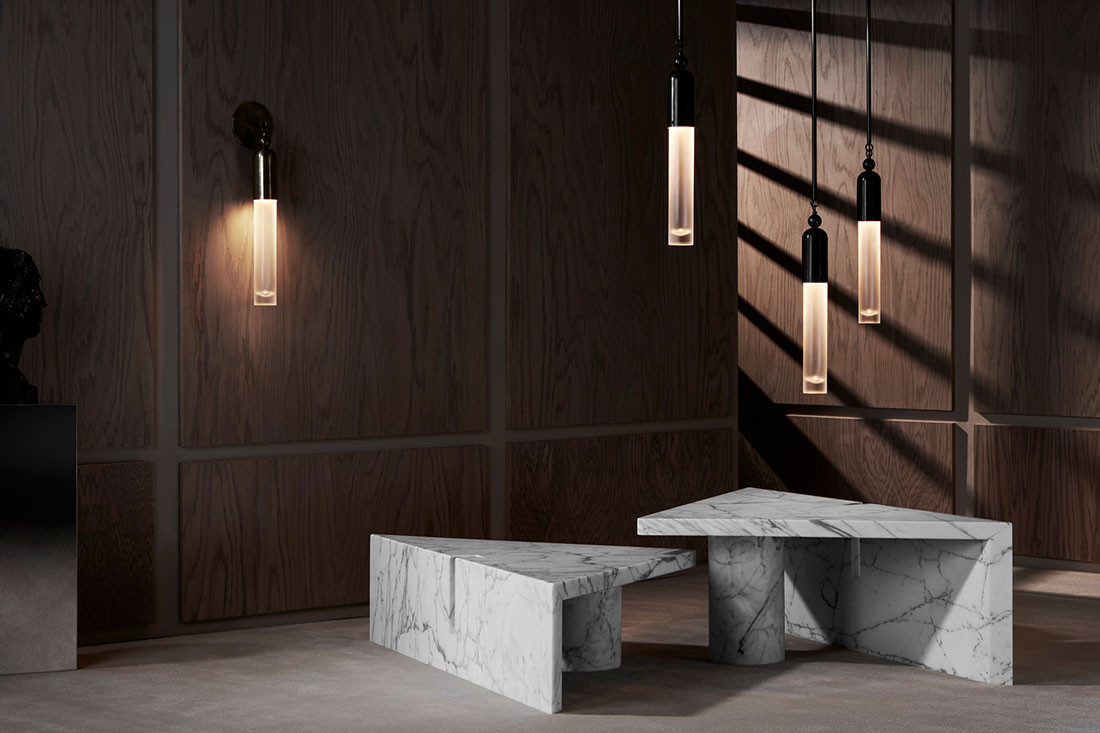
But back then the duo were newly moved in and redesigning their apartment. The aesthetic qualities they were searching for in their apartment lighting remained elusive. “I think that there was something about fusing modern sculptural form with an irregularity and a humanness, and a patinaed finish that we hadn’t really seen,” says Hendifar. “Finishes were too perfect, you would see things that felt like they had just come out of the factory. There was no backstory.
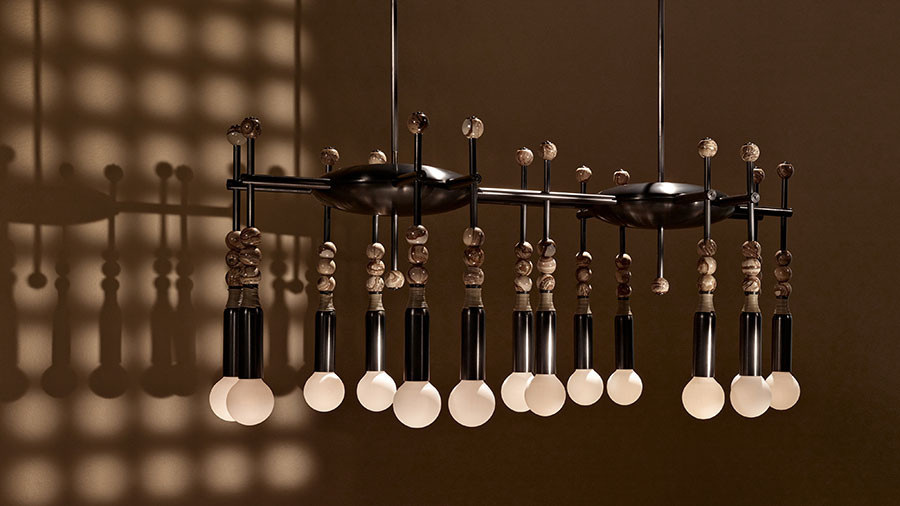
“We had an instinctual need to fill a void in our house and the way we lived. That set up the DNA of the studio, which has always been a litmus test: do we want to live with this?” Their own space is a veritable laboratory for new designs, where they test how well a piece might sit in a space, among other pieces.
There’s something about lighting that captivates the duo “[It’s] a cheesy word, but there’s a little bit of magic,” says Anderson. “There’s something that happens when you’re making a light. You have all the pieces, you understand how they go together and you assemble them. Then you wire the light and plug it in. Something happens that is greater than the sum of the parts. There’s a magic in electricity and I think we were both so enamoured with… the alchemical moment that happens.”