The home of architecture and design in the Asia-Pacific
Get the latest design news direct to your inbox!

Get the latest design news direct to your inbox!
Balustrades, what are they and what do they do? In this handy guide we let you know the best types to use and why they’re more than just a fancy handrail.

Photo source: Joanbanjo
July 1st, 2020
Balustrades. Good for making your stairs look good, stopping yourself from falling horribly to your death and testing to see whether or not that new nanny you hired has magic powers.

You can never be too careful
But is there more to them than just being a fancy way of presenting a handrail? If you’re decking out your stairs, balcony, veranda or deck, looking for some balustrade ideas or looking for some advice on balustrade design here is the guide to help you make a more informed choice.
So, what is a balustrade? Well, a baluster is a vertical moulded shaft, square, or lathe-turned form you can find in stairways, parapets, and other architectural features. Stick a group of those together supporting railing, coping, or ornamental detail and you’ve got yourself a balustrade. Generally you see them built from timber, stone or wrought iron but can also be constructed from glass, aluminium, stainless steel and even wire.
The name derives from the swelling form of the half-open flower of pomegranate flowers, in Italian known as balaustra.

Which is actually pretty neat.
The type you’re looking to install will obviously play a major factor in whether or not this is the kind of home improvement you’re going to be able to DIY. While it is possible, if you’re handy enough with tools, keep in mind that this is something that is generally going to be between you and a bit of a drop. Meaning, if you’re more a Bunnings enthusiast than a full blown zealot, it might be best to leave this particular job to the professionals. At least then you’ll know for sure the thing that stops you from taking the fastest shortcut to the ground floor is up to Australian standards.
Here’s a list of the most common types to give you an idea of which one might be right for you.

Source: Pinterest
A type you’ve likely seen before, this balustrade simply consists of a number of, generally stainles steel, wires running between evenly spaced support posts. In their favour they are relatively simple to install, compared to other types, and offer a good barrier between you and the abyss. On the other hand if the look is not for you you’re probably in the market for something a little fancier.
Costs will likely run at between $180 per lineal metre. You will also need to seek council approval if constructing them for an outside deck or balcony.

Strong, durable and not bad looking Aluminium Balustrades come in a range of styles and colours. They can be custom made so you’re really only limited by your imagination. Another advantage is they are extremely low maintenance, only needing the occasional clean. While they’re a little more labour intensive than the above wire version there are DIY kits available. Cost will depend on the style and length of course but an average pricepoint would be around $200-$400 per meter for DIY kits.
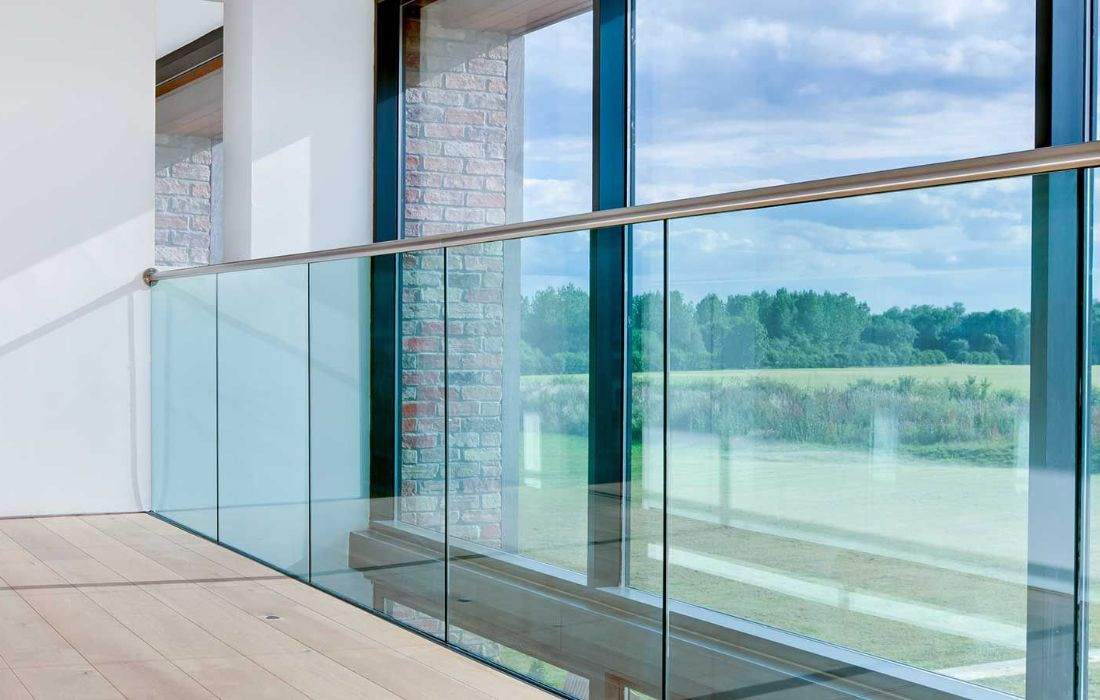
While the obvious downsides include being a hassle to clean, making your house perhaps look a bit like a RSL or living with the constant worry that if your life suddenly became an action movie someone is going to crash through it the upsides are that they don’t obscure your beautiful view and they’re a lot stronger than they appear.
Installation definitely has some major challenges compare to the above options. While it could save you thousands to DIY, glass is heavy and if you drop it, it can break pretty spectacularly so this is one to definitely think hard about before attempting. Costs can run at about $300-$320 per meter with costs increasing if you get them professional installed.

Source: Pinterest
With a modern look and with a great strength to weight ratio stainless steel is a practical and easy to maintain option for a stair or balcony. It can also be combined with wire or glass to achieve the look you’re going for. Like Aluminium these are quite customisable. While DIY is possible it is once again an issue of safety and having a professional will help ensure that the balustrade is sturdy and holds weight. This one is probably going to also require welding, so special equipment will be needed. Costs will range between $250 up to $680 per linear meter.

For the traditional look, wood is really the only way to go, it can be shaped anyway you like, painted any colour and DIY won’t require specialist tools like welders. If you like the look and feel of wood there really is no substitute but so much on this option is going to depend on the materials used. The strength and durability will depend on the quality of the wood and costs are also going to depend on the type of wood used meaning it can range anywhere between $180-$600 per meter. In the end, if you can afford it, you can end up with the best results using timber but as a practical option it might not be what you’re looking for.
INDESIGN is on instagram
Follow @indesignlive
A searchable and comprehensive guide for specifying leading products and their suppliers
Keep up to date with the latest and greatest from our industry BFF's!
The internet never sleeps! Here's the stuff you might have missed