The home of architecture and design in the Asia-Pacific
Get the latest design news direct to your inbox!

Get the latest design news direct to your inbox!
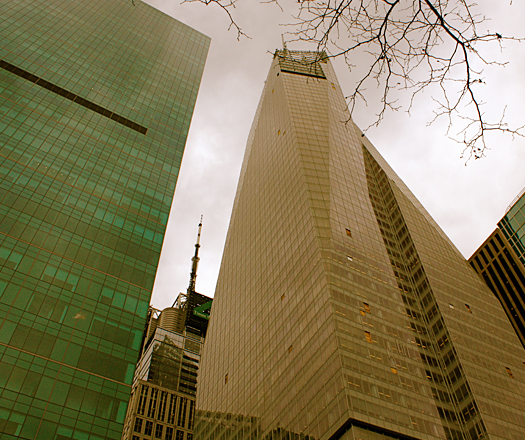
New York correspondent Jess Noble explores the city’s new green Bank of America tower.
February 18th, 2009
As the great city of New York labours to reduce its oversized carbon footprint, it is fast becoming a showcase for cutting-edge green building technology. But with the added costs in developing environmentally responsible architecture, is this economic downturn really the right time to go ‘Green’?
New York’s Bryant Park hosted two glamorous openings this week in the face of the recession. The Fall 2009 Fashion Week Collections went ahead unfazed, pulling back their legendary marquee flaps to the New York elite. While just across the road, shadowing the red carpet arrivals, a soon-to-be landmark tower had its official opening launch.
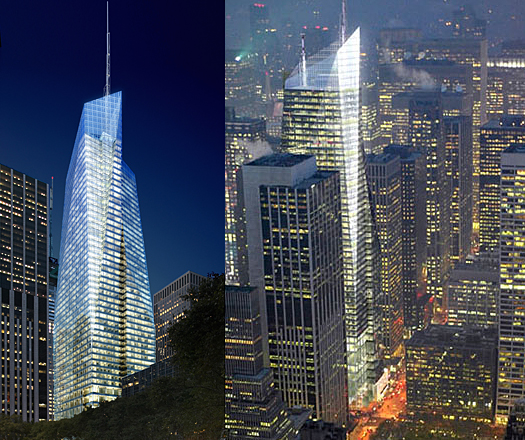
’1 Bryant Park’ is not just another soaring corporate headquarters in the forest of Manhattan’s skyscrapers. The $1 Billion-plus project is now the most environmentally responsible high-rise office building in the USA – a beacon of environmental sustainability.
The BofA tower has also taken the title of New York’s second tallest building, snatching it from the outstretched pyramidal peak of the legendary Chrysler Building. Lecturing more than addressing the packed house at the launch on Tuesday night, the project architects, Rick Cook and Bob Fox of Cook + Fox, instructed that despite the extra construction expense involved in being ‘Green’, it is the only option for the future.
And so the recession creeps back to mind. ‘Green’ means dollars.
Bob Cook offered the idea that though these buildings initially cost more to construct it can be argued that the energy-saving features save money in the long run. To push the point, apparently green building occupants show an increase in productivity and take fewer sick days, giving corporations a tangible incentive to go green.
Cook + Fox incorporated the most advanced ‘green’ technologies in the tower, from waterless urinals to on-site power generation.
It should be noted however, that the financiers – Durst Corporation – spared no cost in the monolithic challenge, giving Cook + Fox a limitless budget.
As environmental concerns continue to intensify, it seems going ‘green’ is no longer an alternative way. Investing in the future is the ideal. But with American economy facing its own devastating climate change, the ‘Green’ way could be a short-term gamble for some, unless you are handed the golden prize of unlimited funds.
Cook + Fox
cookplusfox.com
BofA Building Features
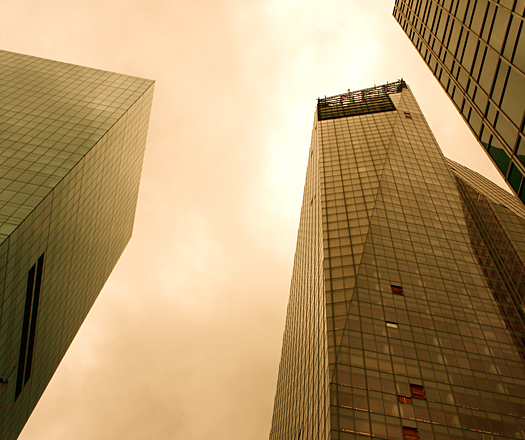
The tower features include air filters that remove 95% of particles, making the interior air cleaner than air outside; a gray-water recycling system, reducing the burden on city sewers by reusing waste and rainwater within the building; rooftop gardens to cool the building and reduce “heat island” effect that makes all of Manhattan hotter in the summer; urinals are waterless saving three million gallons of water per annum; an icemaker in the basement as part of the innovative cooling system that will keep the 55-story tower chilled all summer, using only a fraction of the energy of traditional air conditioners.
Project information
Project name: BofA (Bank of America) Tower
Where: 1 Bryant Park, Manhattan, New York City
Architects: Cook + Fox
Figures: 2.1 million square feet
1,200 feet tall including spire
$1.3B development and construction cost
About Cook + Fox
Robert Fox and Richard Cook joined forces in 2003 to form Cook + Fox. Based in New York City, the two award-winning architects have built a highly successful team who pursue a vision to create beautiful design, shaped by a strong connection to place, where serious standards of sustainability are upheld in every project. cookplusfox.com/
INDESIGN is on instagram
Follow @indesignlive
A searchable and comprehensive guide for specifying leading products and their suppliers
Keep up to date with the latest and greatest from our industry BFF's!
The internet never sleeps! Here's the stuff you might have missed