The home of architecture and design in the Asia-Pacific
Get the latest design news direct to your inbox!

Get the latest design news direct to your inbox!
In Guangzhou, China, architectural office Benoy has recently designed a retail development that also serves as an urban park. Sylvia Chan finds out more about the Parc Central project.
indesignlive.sg
August 10th, 2016
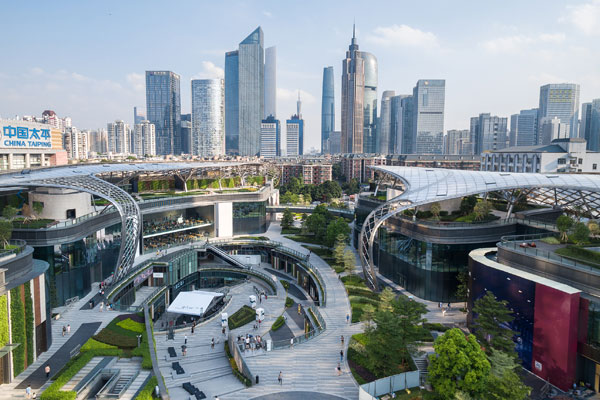
Janet Chan, Senior Associate Director at Benoy, and the master planner, architect, and interior designer of the project, says, “The vision for Parc Central was to create a destination where community and business could mix together in an environment that was rich in character and distinct to Guangzhou.” She adds that Parc Central is also a place for visitors to slow down and take a breather in the fast paced city centre.
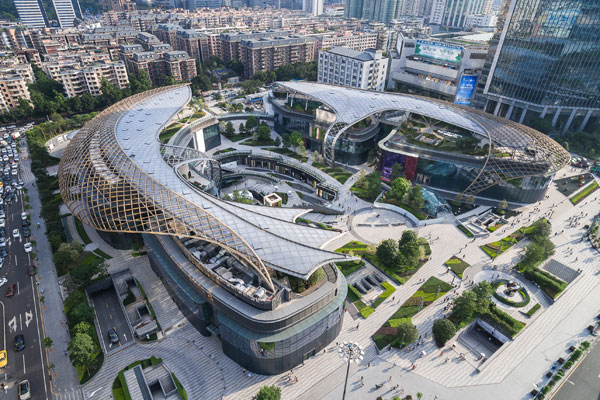
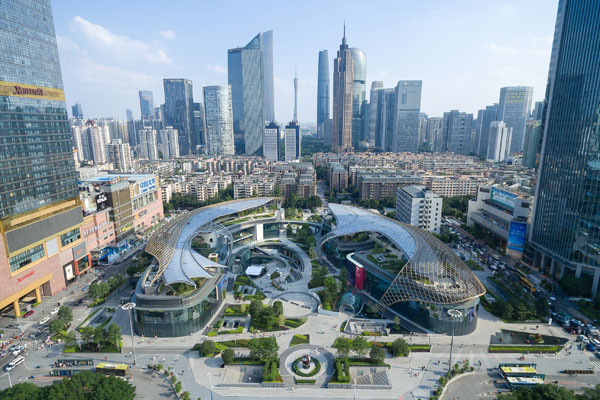
Parc Central makes a departure from the conventional mixed-use complex in favour of a “stadium for retail” typology. This new typology encompasses low-rise structures and largely preserves the ground level for leisure use by incorporating retail programs underground. “This allows the multi-level landscaped park to sit at the heart of the design. It also inspired the stadium-like structure of the retail development, which surrounds and overlooks this civic park space,” says Chan.
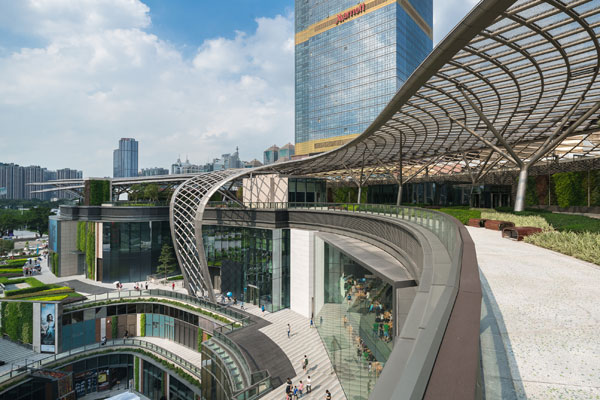
The above ground structure of Parc Central is composed of two buildings that curve around the central civic park space, and the buildings are connected by a pedestrian bridge at one end. The steel monocoque roofs of the buildings, supported by tree-like columns, make reference to the ‘double fish’, a Chinese symbol of peace, harmony, and fortune.
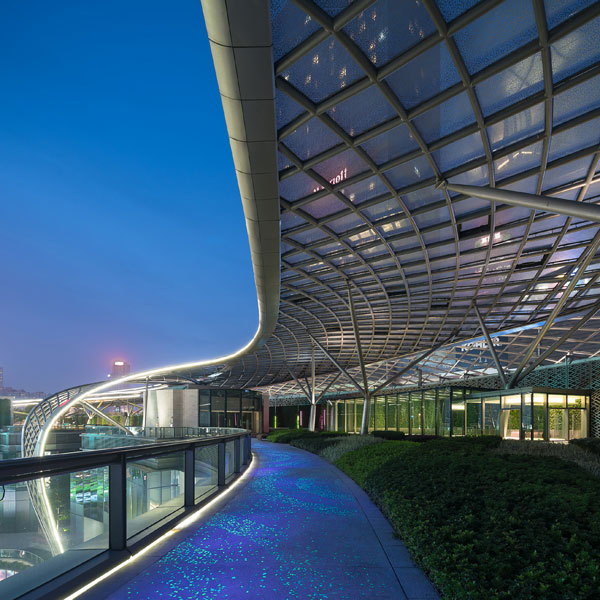
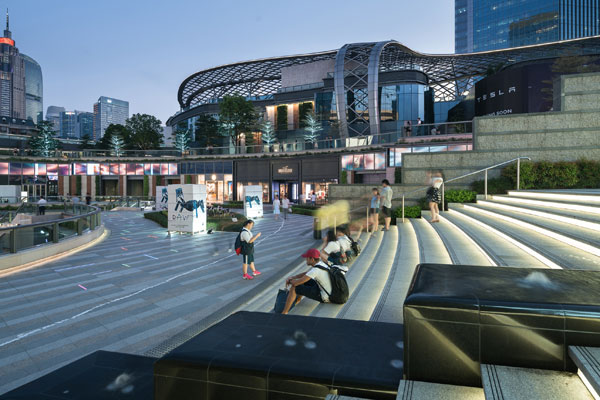
Chan explains that the development, being lower than the surrounding buildings in the Central Business District, adds to the rhythm of the city’s central axis. The multi-dimensional green park also gives the project a strong street presence, while the monocoque roofs are animated at night by a lighting programme.
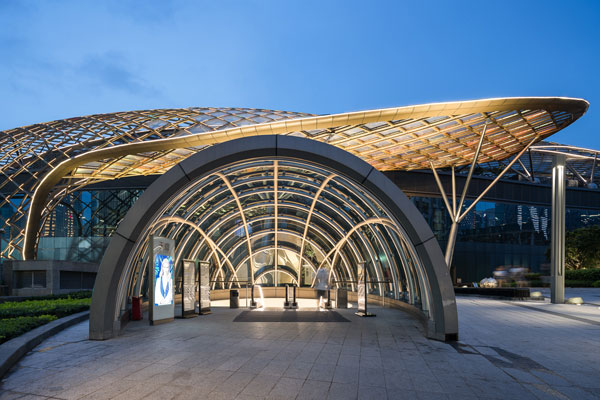
Parc Central was designed not only as an architectural icon. The multi-dimensional green park, formed with landscape elements such as planted walkways and green walls, creates a leisurely space integrated into the surrounding streetscape. This mixing of green spaces and retail elements within the project also offers a unique experience to users.
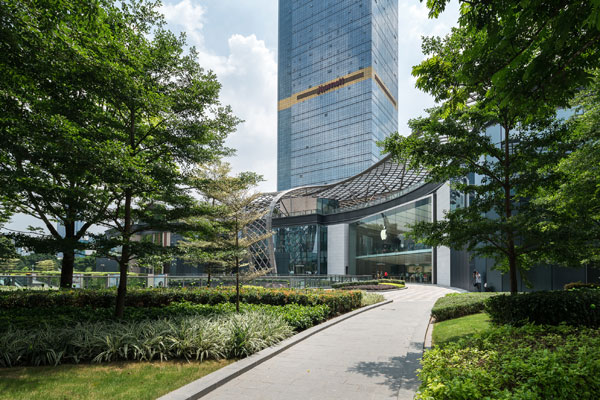
Parc Central will be accessible via the city’s metro system and bus network, and will be linked to the district’s neighbouring developments through footbridges, thus serving as a green transportation hub.
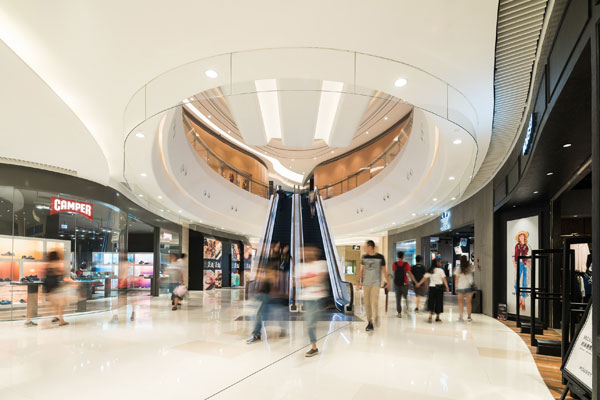
The interior design of the mall at Parc Central is characterised by fluidity, which echoes the ‘double fish’ inspired form of the exterior. The interior also employs a colour palette of white and reconstituted stone to create a neutral space that accommodates a variety of retail programs. “There is a real focus on blending the contemporary interior design with the fluidity of the architecture and organic forms of the landscape,” says Emily WS Wong, Senior Associate Director at Benoy.
A large sunken garden connected to the basement levels of the retail space also provides the underground mall with natural lighting and greenery. Atriums and skylights punctuate the underground mall at various locations, connecting the interior space with the exterior green park. “The open civic plaza at the centre of the development plays a key role in the atmosphere of the mall, allowing natural daylight into the building,” says Wong.
Benoy
benoy.com
INDESIGN is on instagram
Follow @indesignlive
A searchable and comprehensive guide for specifying leading products and their suppliers
Keep up to date with the latest and greatest from our industry BFF's!
The internet never sleeps! Here's the stuff you might have missed