The home of architecture and design in the Asia-Pacific
Get the latest design news direct to your inbox!

Get the latest design news direct to your inbox!
Comparing design to alchemy, Tom Dixon and DRS have created an update on the traditional fine grill affair with a beautiful play of materials and a stunning canopy of lights. Cristina S.K. writes.

indesignlive.sg
August 31st, 2016
Taking advantage of Hong Kong’s affluent restaurant culture, Tom Dixon and Design Research Studio (DRS, who is also behind the design of the Tazmania Ballroom in Hong Kong) created the interiors of Alto, a fine grill restaurant by Dining Concepts with a menu by Chef Mike Boyle. A trendy dining space with open views of the iconic Hong Kong skyline, located on the 31st floor of the V Point Tower in Causeway Bay, Alto’s fixtures and furnishing are inspired by the four elements of nature as established in ancient Greece: earth, water, air, and fire, with a sharpened aesthetic twist and a chiaroscuro of shapes.
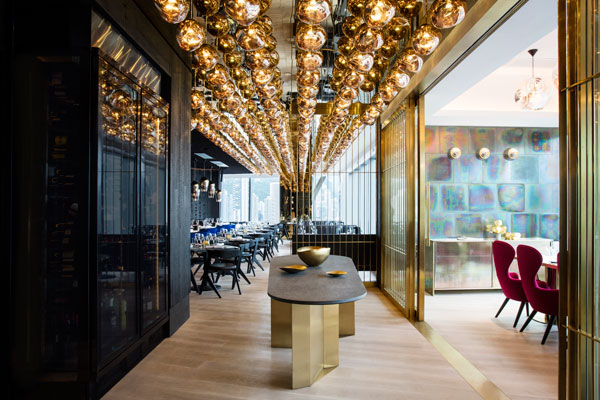
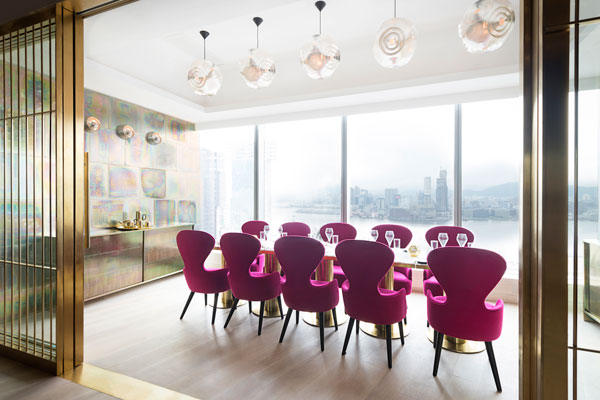
The stylish space wears a black monochrome finishing on its back wall that highlights the glass windows facing it in a stage-like mise en scène. Pouring in: dramatic harbour and city landscape vistas. Offering comfortable armchairs, a combination of mirrors and light absorbing surfaces, and a dark and fiery colour palette, the idea of the traditional grill gets a lustrous update with an on-trend, and sleek atmosphere.
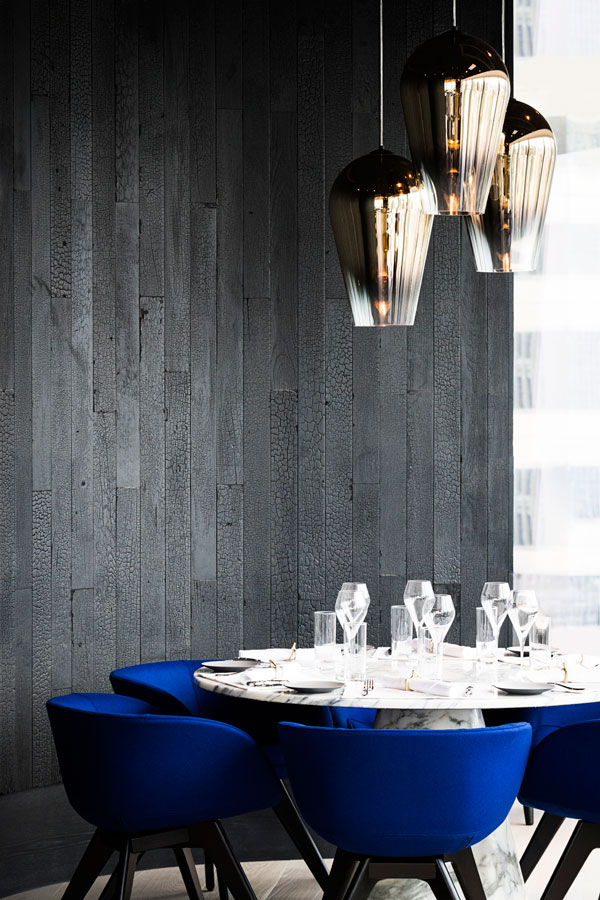
Besides the open views, another theatrical feature is a canopy of 230 gold mini Melt lights said to be the biggest installation of its kind in the world. The result of a collaboration between Tom Dixon and Swedish radical design collective FRONT, Melt lights are the shape of a distorted globe reminiscent of hot blown glass. Fiery and slightly translucent when on, they retire into a curvy icy mirror when they are off. They cover half the ceilings of Alto, balancing the smoky and metallic Fade pendant lights that hang over the dining booths and are said to be inspired by the shapes and shades of the sense-awakening smoke traditionally coming from the kitchen.
For the furniture, Dixon relied on his own series, including the comfortable yet modern Scoop chairs, featuring solid copper plated steel or brass coated legs support with upholstered deep seats; and the Wingback chairs, inspired by the British classic wing chair design that evolved into a voluptuous fireside seat in royal blue or luscious fuchsia.
“For us, the design process is multidimensional and it could start anywhere, with an inspiration, a formal brief or a serious problem to solve. But pretty soon you have to get down to the fundamentals, and the first step is to consider your materials,” says Tom Dixon about the relationship his team of designers have with material.
“The success and desirability of the product is inextricably tied in to the substance that forms it, and a great deal of our success comes from the materials with which it is made. But more than that, the mutation of the raw material into an object of desire or an artefact of function is the real alchemy of a designer. The aluminium and the stone, the wood and the glass, the wax, the iron and brass all come to life with new shapes, new smells and new functions,” he concludes.
Tom Dixon
tomdixon.net
Design Research Studio
designresearchstudio.net
INDESIGN is on instagram
Follow @indesignlive
A searchable and comprehensive guide for specifying leading products and their suppliers
Keep up to date with the latest and greatest from our industry BFF's!
The internet never sleeps! Here's the stuff you might have missed