The sleepy seaside town of Kep, five hours from the Cambodian capital Phnom Penh, survives on a slow trickle of tourists and a shellfish industry built on the crabs that locals scoop from the shallow waters offshore. Hard to believe now, but this place was once the epitome of cool. 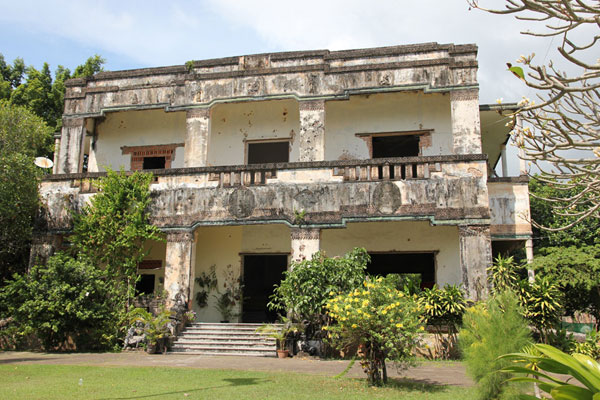 Carved out of the jungle in the 1920s by the colonial French seeking respite from the inland heat, well-heeled local and international visitors flocked to the town to soak up the sun, cruise the streets in vintage convertibles and gamble fortunes in the casino on nearby Bokor Hill. Kep became known as the ‘St. Tropez of Southeast Asia’.
 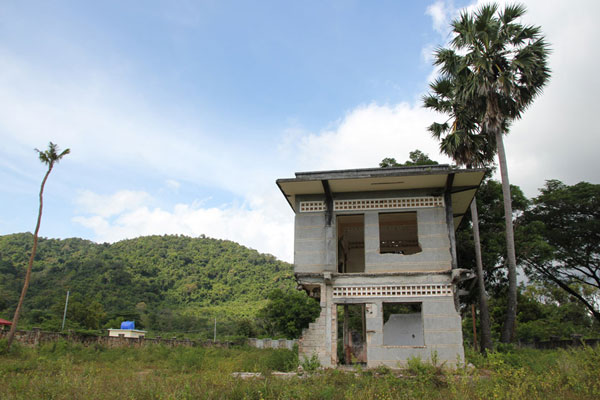 The Modern Architecture Movement caught hold in 1960s Kep and Le Corbusier-inspired villas were soon springing up. Leading the Modernist charge was one of Le Corbusier’s most celebrated students, Cambodian man Vann Molyvann. Van’s ‘New Khmer Architecture’ – Modernist-inspired but with uniquely Cambodian flair – helped transform Kep into a design location of note.
 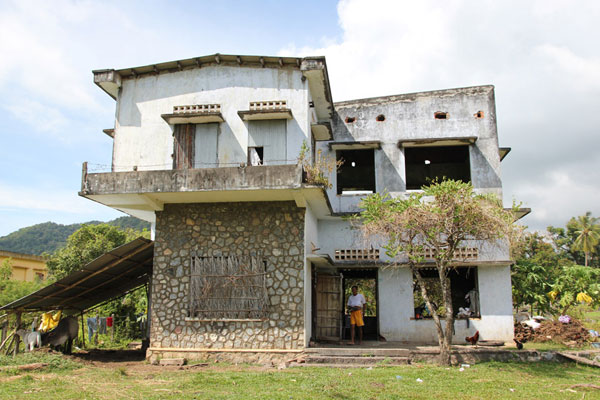 Then the Vietnam War spilled over the Cambodian border. By 1968, the last of the French were fleeing Kep as the murderous Khmer Rouge took over. When the ‘Red Khmers’ finally surrendered
in 1998, the once glamorous Kep-Sur-La-Mer was in pieces. The villas were looted, burned or ripped up for building materials. In most cases, just bullet-marked shells remained. 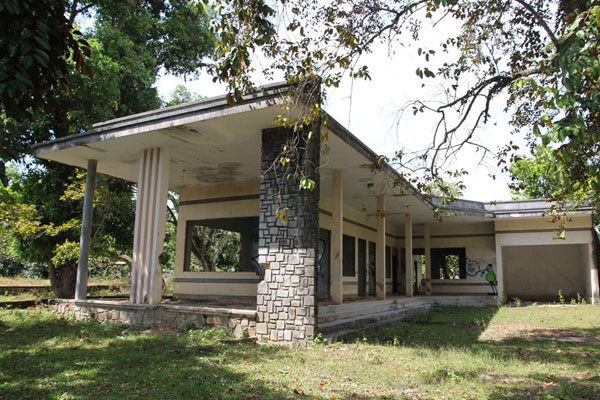 Today, with peace bedded in, visitors are again turning up and the ruins of Kep’s 1960s golden era are being reclaimed from the creeping jungle. One of the first redevelopment projects was Villa Romonea, designed by celebrated local architect Lu Ban Hap. After years in ruins, it was bought by a British developer who turned it into an exquisite six-room boutique hotel.
 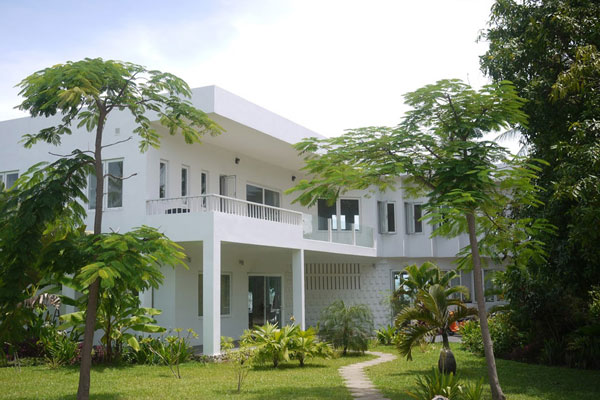 Other villas have been less fortunate. In 1997, some 200 of Kep’s villas built between 1953 and 1975 remained standing. According to a recent study carried out by Cambodia’s Faculty of Architecture, the current figure now stands at 157. It remains to be seen which of Kep’s colonial and Modernist gems have their best years ahead of them – and which will fall away into the ground. This article first appeared on Habitusliving.com cheap christian louboutin shoes,ralph lauren online,louis vuitton handbags,michael kors uk,cheap wedding dresses