A new project by DP Architects proves that even the banal industrial factory typology can be reimagined in new and creative ways that address the utilitarian aspects of factory operation and incorporate people-centric programmatic components into the overall design. The light industrial development for China’s COSL Base in Singapore overcomes a number of challenges, including the oddly shaped site, requirements for operational efficiency and environmental considerations, in an outcome that is both a factory and an office block, enlivened by greenery and communal spaces.
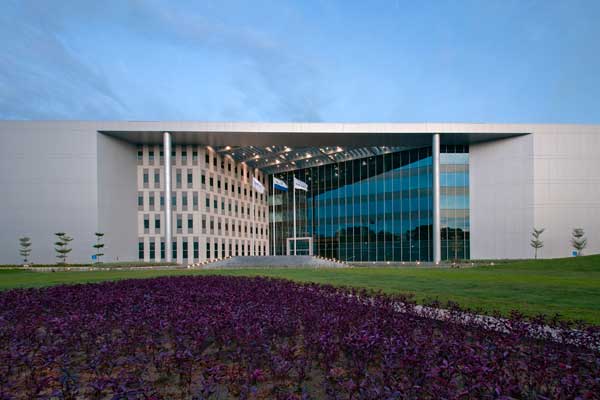
“The project places emphasis on creating a ‘liveable’ habitat and a space for the oft-mundane environment of a factory,” says Tan Chee Yong, Associate Director and Director (China), DP Architects. “[In this instance], the factory is no longer just a utilitarian production centre.”
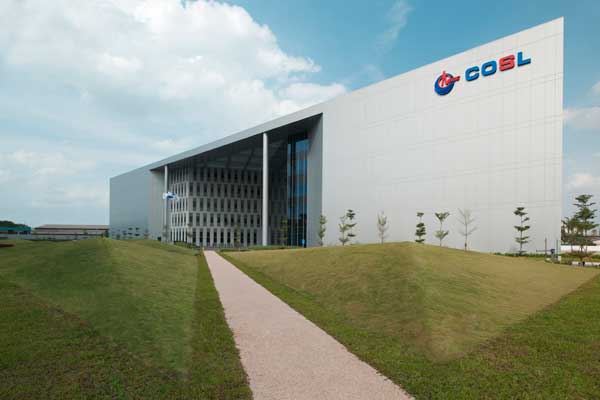
Not deterred by the challenge posed by a parallelogram-shaped site, the DP Architects design team devised an optimal layout within the site’s constraints to allow a flexible and economical use of the land plot. With the office block fronting the main road, Research and Development block in the North and Maintenance and Warehouse block in the South, the overall configuration creates a distinct U-shape that allows for a practical programmatic separation between the office zone and the factory zone. The U-shape opens up to the Benoi Basin, allowing for an efficient proximity to the wharf for easy transportation of goods and materials and opening up a large space in the middle for a storage site.
The factory block thrives on the practicality of the layout. By stacking the warehouse and workshops above the ground floor, the space in the latter is made available for daily operation work in a bigger open yard. DP Architects uses louvers on the façade and jack roof windows to bring ventilation and natural light into the expansive R&D and M&W blocks (36 metres and 48 metres respectively).
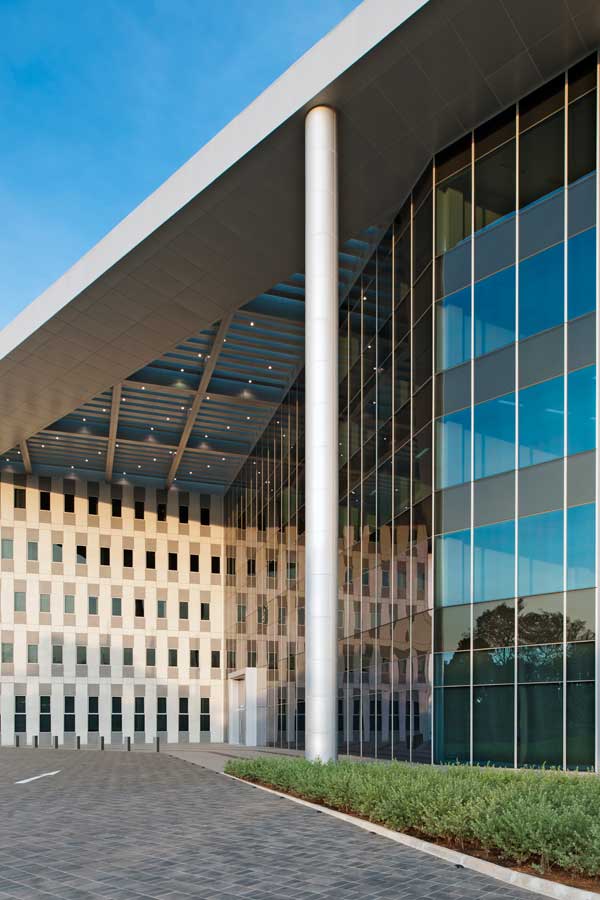
The triangular office zone displays a clever balance of efficient site use, maximising the visual presence of the office facing out onto Benoi Road, and with regard to environmental considerations, minimising the block’s exposure to the West to avoid the harsh daylight and reduce shading requirements. Formed by two interlocking, L-shaped blocks to derive the final triangular shape, the office block volume not only addresses the challenging site but also shields the views of the storage block behind, providing a clean and impactful front façade that visitors will see upon their arrival at the COSL Base.
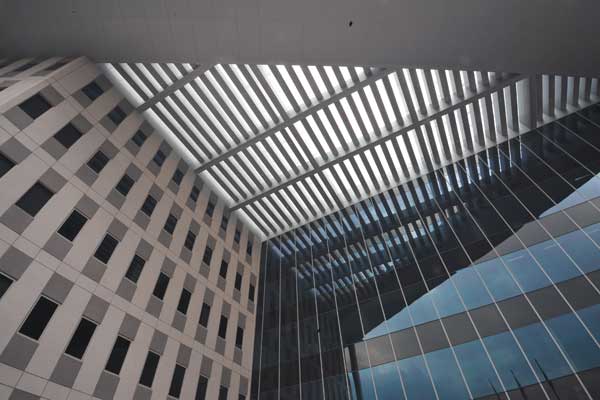
The people-centric considerations come through in the design of the office block, where most of the administrative work and meetings take place. “During the design stage, we proposed using more tropical elements, like a sun-shading trellis and a courtyard, while keeping in mind the grand and corporate look the client [wished] to maintain,” says Tan. “To strike a balance between the two, we introduced a central landscape plaza in front of the building, a drop off plaza with a high level trellis enhancing the sense of arrival and a recreational courtyard for leisure activities. The Office Block is elegantly cladded in aluminium panels and glass curtain walls, establishing its presence as a regional headquarters.”
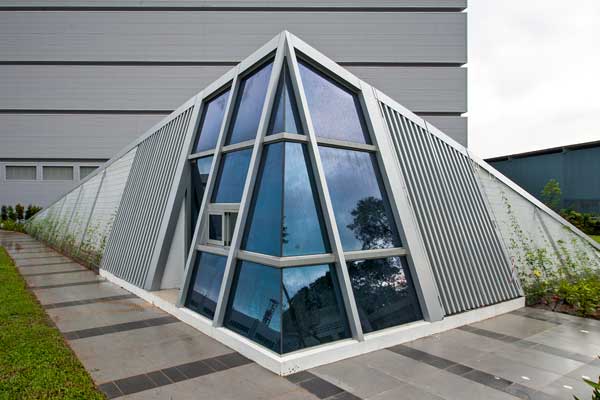
Along with the vast rectilinear front courtyard that provides greenery to soften the industrial components of the development and a green recreational space for leisure activities, the DP Architects team also provided balconies and high-volume breakout spaces within the office buildings to facilitate interaction between the staff and bring natural daylight into the long interior spaces. Additionally, by dividing the office block into two L-shaped volumes, the design team was able to maximise desirable views out onto the recreational plaza, the waterway and the central green plaza for all offices within the development.
“Through effective spatial planning and creative use of materials, the factory can be transformed [into] an aesthetic object,” reiterates Tan. “By introducing landscape and communal spaces, the industrial environment can be made more conducive for the workers.”
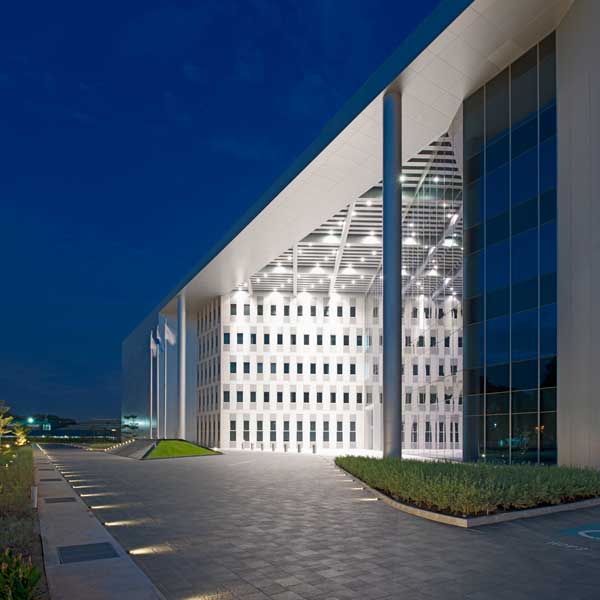
Hardly a mundane factory block, the COSL Base looks to the future toward industrial building typologies that place people-centric values first. With the emphasis on healthy living and people-centric environments, the COSL Base breaks the mould and moves away from your industrial development stereotype, balancing efficiency and practicality that is often demanded of a factory building with the level of liveability that is desirable for overall employee satisfaction.
DP Architects
dpa.com.sg