The home of architecture and design in the Asia-Pacific
Get the latest design news direct to your inbox!

Get the latest design news direct to your inbox!
What makes a design object an instant icon? So asked our INDE.Awards jury, and they’ve found one that stands above the rest. It’s not what you think!
indesignlive.sg
June 22nd, 2018
We rarely put thought into the everyday objects we use, let alone how they are designed. But because of how they are designed, we are not supposed to ponder the origin of a ballpoint pen or a coffee table.
Though design started out as a craft focusing on the conception of beautiful objects, over the years it has surpassed its effortless origins to demonstrate a focus on the needs of people in original and creative formats.
The best product or object design tells a story and respond to user needs in unexpected ways – disappearing seamlessly into our daily routines. Without compromising on form or function, as well as materiality and manufacturing techniques, these objects are designed to serve a function with the aim of becoming a hallmark of exceptional industrial design.
Mies van der Rohe famously said, “A chair is a very difficult object. A skyscraper is almost easier.” Referring to the way architecture and industrial design overlap in the way that they both now require consideration of end-users and the environment, it also emphasises that the approach to both disciplines – though aims to result in something iconic and distinctive –are not really one and the same, industrial design being a subset of architecture.
When it comes to industrial design, it is fair to say that products that stand out are those that have stood the test of time. In this regard, The Object category celebrates modern industrial design that carefully balances function, meaning, and beauty.
The Object 2018 Award is granted to the finest industrial design across the Asia Pacific region. The category celebrates how objects function, what they signify and how they respond to the needs of people in an experimental and rebellious approach.
How can samples of marble or granite, which architects order and receive in substantial quantities, be put to good use? Conserving the original properties and beauty of the material offcuts, can something even be made?
An architect with a design practice based in Melbourne, Josh Carmody introduced bespoke handcrafted pieces for both domestic and commercial clients, balancing modern aesthetic with traditional handcrafted quality – an experiment in sustainable luxury. With over a decade of furniture design and production experience, Carmody’s studio is always committed to balancing a resolved modern aesthetic with traditional handcrafted quality.
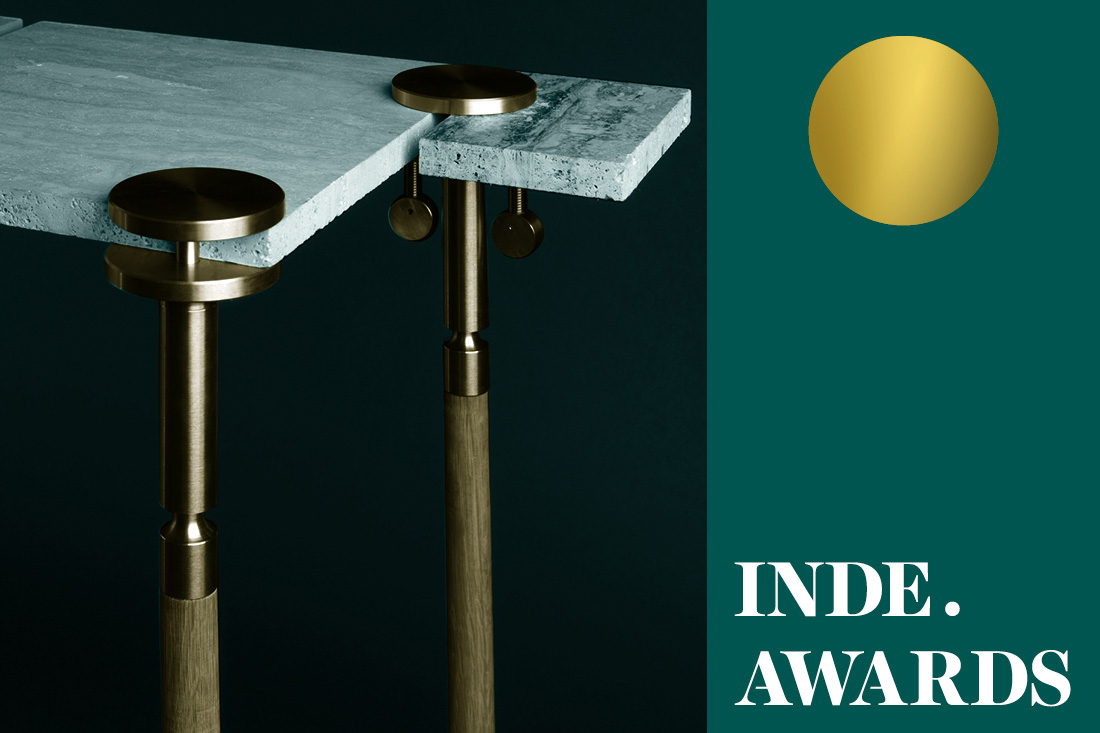
With the intention of inspiring architects and designers to reuse stone, tile and timber offcuts that are generally forgotten in design studio libraries, The Remnants Table Series is a hardware clamp on leg system specifically designed to allow the configuration of table tops in any size, layout and shape. Not only is this a method of utilising untapped resources but materials are brought together to create functional furniture pieces in a creative and simple way.
The Remnants clamp-on system is designed to accommodate materials up to 30mm thick while also allowing materials of varying thicknesses to be joined together, – permitting anyone to make tables out of any material they desire and have access to. An exceptional example of executing a simple idea, the design coordination, restraint and refinement of materials used not only address practicing sustainably but it was also designed for ongoing reuse, repair and recycling.
“As an architect, I always felt a pang of guilt seeing a stone sample headed for the bin… All these opulent and sought after materials, pulled from the earth, transported around the world, cut, honed, polished, delivered, to then be judged not worthy by someone and discarded. This waste never sat well with me.” Josh Carmody of Josh Carmody Studio
Naturally, our bodies have evolved to walk upright and to recline in repose. Sitting elevated, folded into a piece of furniture or object, is a cultural habit. With that in mind, designing a ‘good’ chair, therefore, is basically the art of making the ‘awkward’ feel natural – practically a paradoxical proposition.
As a result of a dialogue between CULT, NAU and Adam Cornish, the Strand Chair was inspired by vintage steel furniture from the 1950’s. With that in mind, and taking cues from braided steal cables, three aluminium ‘strands’ work in harmony to create the outline of the design. Intricate but tactile, Strand is humble enough for residential purposes, yet strong and ergonomically suited to commercial applications.
The chair is designed based on the philosophy that the whole is greater than the sum of the parts; each component works seamlessly with the other to create pieces that rely solely on their ‘unison’.
“The palette of simple, tactile materials were chosen for their ability to age well and add to the character of the chair as the years go by.” – Adam Cornish about the Strand Chair for NAU
Dubbed as the ‘chair for the people’, the process revolved around designing for accessibility. The Strand Chair symbolises a strong yet quaint aesthetic without being overbearing.
Zip Water partnered up with the INDE.Awards to grant The Object award to the region’s most original players in modern industrial design.
Zip Water is a leading provider of water filtration devices that seamlessly marries functionality and style. Elegant and boasting user-friendly features, these products are the epitome of using industrial design to transform spaces for the better. Established in 1947, Zip Water has advocated local manufacturing as a means of ensuring quality, consistency and a customized response to all design specifications.
Throughout the Asia Pacific region, Zip Water products are architects and designers preferred solution because of their ability to address health and safety concerns in a sleek and streamlined design object. Often fitted in commercial and high-end residential kitchens around the world, these products are continuously prized and praised for their easy operation, innovative contemporary design and extended product lifespan.
Similar to the criteria of The Object category, Zip Water is a major proponent of innovation and a considered, meticulous approach to design and manufacturing.
Established to celebrate outstanding architecture and design across the Asia Pacific region, the INDE.Awards is a program curated specifically to commemorate projects on the region’s own terms and not by the terms of other design centres around the world.
With over 400 entries, the calibre of projects, people, products and ideas push the industry to new frontiers by addressing the sectors of design with significant and increasing relevance to the globe’s most populous region.
INDESIGN is on instagram
Follow @indesignlive
A searchable and comprehensive guide for specifying leading products and their suppliers
Keep up to date with the latest and greatest from our industry BFF's!
The internet never sleeps! Here's the stuff you might have missed