The home of architecture and design in the Asia-Pacific
Get the latest design news direct to your inbox!

Get the latest design news direct to your inbox!
A concern for the efficient use of wood informed the design of Woody – an ergonomic chair with what Meda refers to as ‘airy sections’.

July 17th, 2018
Milanese designer Francesco Meda has marked the start of his working relationship with Molteni&C with a wooden chair that emphasises maximum quality and comfort but minimum material use.
Woody has flowing lines and a lightweight, organic effect, due in part to the gap created between the seat and frame. “I focused on achieving airy sections,” says Meda (son of Alberto Meda, with whom he sometimes collaborates), “to reduce the material used and save wood, which is a precious material.”
Woody is produced in ash with seamless joints and offered with two finishes (natural or black stained) and a seat of wood or leather. Ergonomic considerations informed the gentle curvature of the seat and back, which promote the correct posture of the body.
We chatted to Meda to find out more.

Woody has a contemporary identity but a heritage character as well.
Yes a nice combination.
Was that your intent?
The intent was not to take something from the past, but to make something really simple and also contemporary using contemporary technology – a five-axis CNC machine. The result is something that looks like it’s made from one piece. There are no screws.
How do the joints work?
With Molteni&C, we found a nice solution to join the seat and the back – an interlocking joint.
This idea is nice in terms of logistics, because Molteni&C can have the same structure but decide to use leather or wood. It’s the same construction but you can add different solutions. Woody could become a stool or a low armchair, because it’s based on a construction idea more than an aesthetic form – the project started from the construction idea.
What was the benefit of using the five-axis CNC machine?
Usually chairs are made in a more traditional way. But with this machine you can remove the material like a sculptor. You can make sure you use just the right thickness of material where it’s needed, so you don’t waste material. Wood is something precious.
What is the gap in the market you have filled with Woody?
For me the most important thing was to have something good quality, at a good price, and with ergonomic characteristics. Usually wooden chairs are quite uncomfortable. We found the solution in the two curves so you have a nice lumbar support.
What do you think are the most important things a furniture designer should have in mind today?
In this market, which is full of products, it’s to have a legitimate idea and to be conscious that we don’t have to waste to make something that makes sense. This in my opinion is the most important thing a designer has to consider in this period.
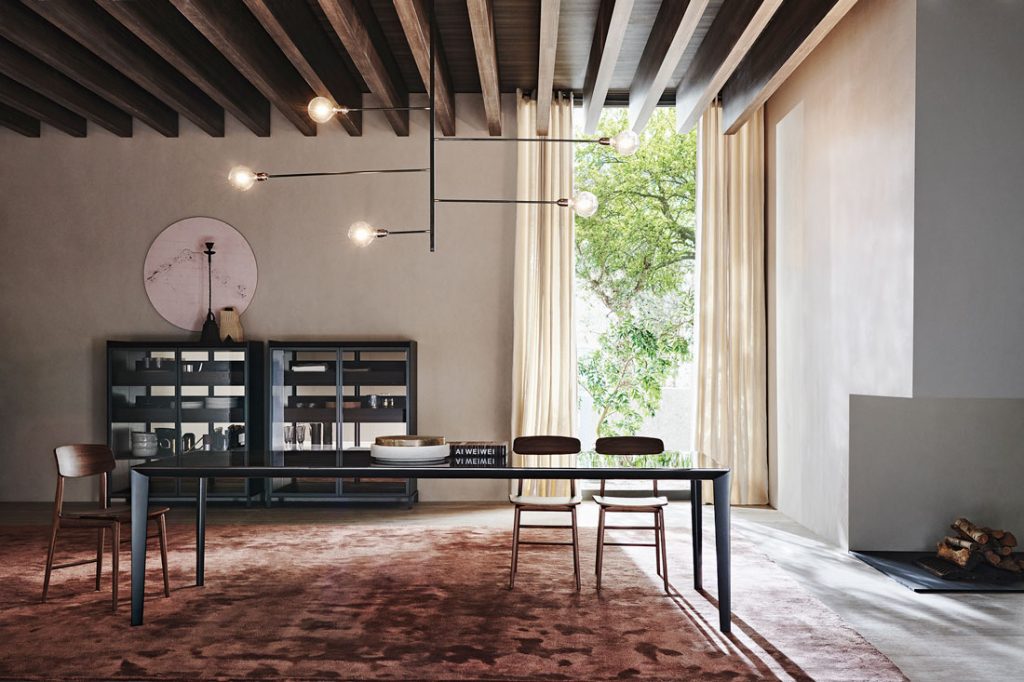
In Singapore, Molteni&C is available from P5.
INDESIGN is on instagram
Follow @indesignlive
A searchable and comprehensive guide for specifying leading products and their suppliers
Keep up to date with the latest and greatest from our industry BFF's!
The internet never sleeps! Here's the stuff you might have missed