The home of architecture and design in the Asia-Pacific
Get the latest design news direct to your inbox!

Get the latest design news direct to your inbox!
Urban in organisation and connective in intent, Uniqlo City in Tokyo is an ambitious flagship for change designed by American studio Allied Works Architecture (AWA) for Uniqlo’s parent company Fast Retailing.
March 28th, 2018
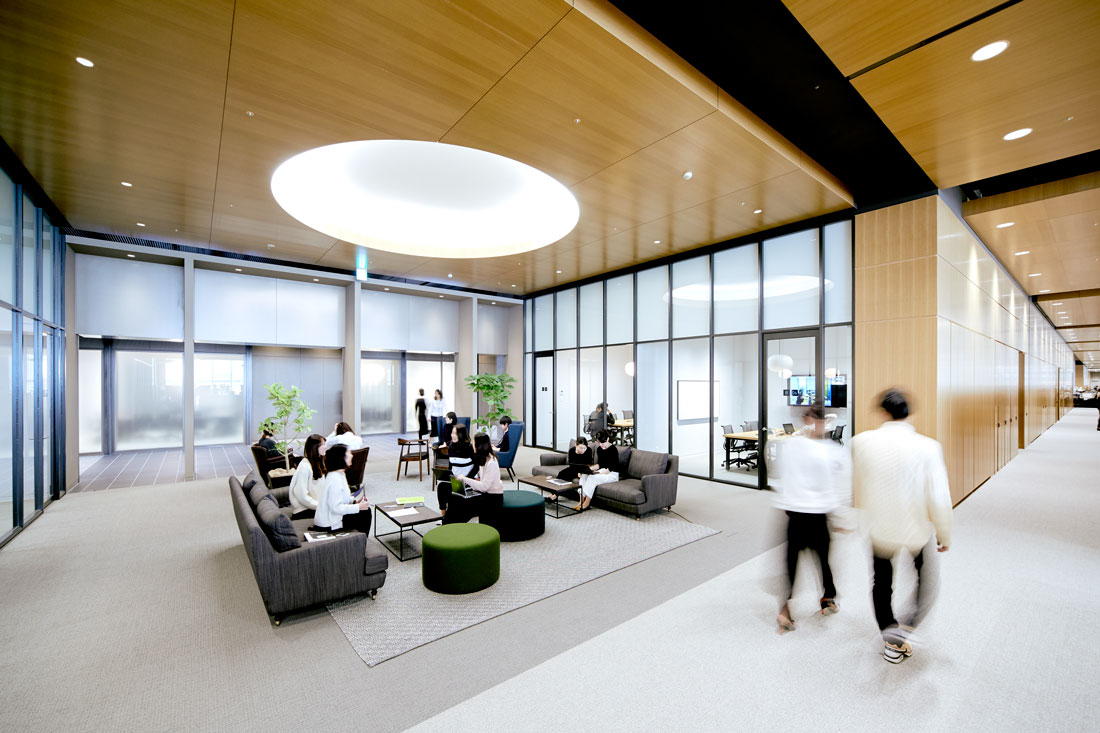
Housing over 1,000 staff on the top floor of an existing building in Tokyo’s waterfront district of Ariake, Uniqlo City encompasses some four acres of interior space. It functions as the apparel retailer’s global headquarters and creative studio and was designed by American studio Allied Works Architecture (AWA) for Uniqlo’s parent company Fast Retailing.
It sits above warehousing and distribution facilities – hence the astounding scale of the 200,000-square-foot floor plate. It provides workspaces as well as product and showroom testing facilities for Tokyo staff and co-workers from around the world.
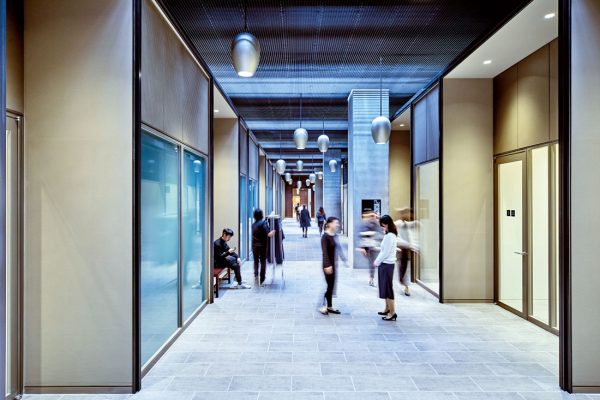
The name ‘Uniqlo City’ tells of a twinned corporate and design vision. “The city metaphor is the result of a social and spatial organising idea to create an interactive community,” says Brad Cloepfil, Principal of AWA. “The entire floor is organised around the idea of a city street,” he explains with reference to the meandering thoroughfare that runs the length of the floor plate.
AWA had previously worked with Fast Retailing on a creative studio and fabrication facility in New York (for their subsidiary labels Theory and Helmut Lang), but this is the studio’s first project in Asia. In Cloepfil’s view, by being grounded on the ideas of exchange and community, the design “bridges cultural values of working practices of the East and the West to foster connections between individuals, departments, disciplines and cultures.”
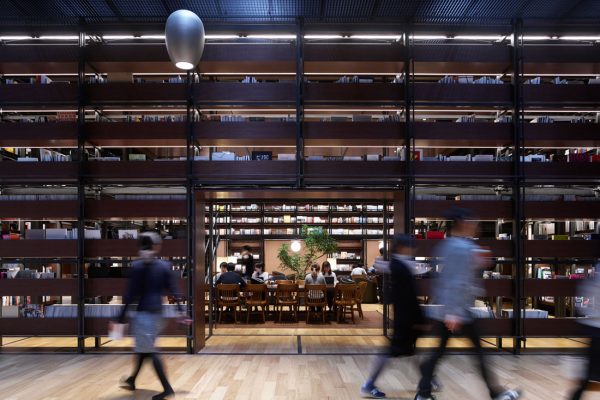
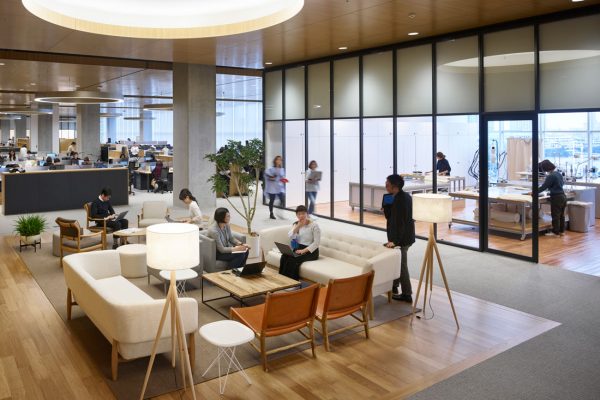
Cloepfil describes the Tokyo space as he might an urban blueprint: “There are four town squares that intersect and redirect the flow – the cafe, the library, the digital media rooms and the town hall space. The street is flanked by front porches that serve as gateways to the various work lofts, and as lounges that serve the adjacent conference rooms. The streets are fronted with many different functions and rooms that serve as ‘retail’ with vending machines, pop-up food carts and benches.”
Many of AWA’s projects are such spatial distillations of logic and purpose. Unsurprisingly, an extended process of dialogue with Fast Retailing to understand their core values and aspirations preceded any actual design planning.
Photography by Kenji Takahashi and Nacasa & Partners (courtesy of Allied Works Architecture and Uniqlo).
Read the complete article in Cubes 90, Out now!
INDESIGN is on instagram
Follow @indesignlive
A searchable and comprehensive guide for specifying leading products and their suppliers
Keep up to date with the latest and greatest from our industry BFF's!
The internet never sleeps! Here's the stuff you might have missed