The home of architecture and design in the Asia-Pacific
Get the latest design news direct to your inbox!

Get the latest design news direct to your inbox!
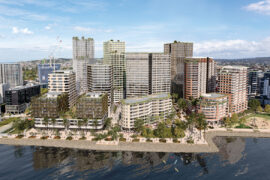
Danish-based AG5 Architects lends it eye for social and environmental sustainability to the impending Gran Rubina Tower in Jakarta writes Christie Lee.

indesignlive.sg
October 29th, 2014
As one of the fastest growing construction markets in the world, Indonesia is home to some of the most sophisticated architecture in the region. Due for completion in 2018, the Gran Rubina Tower aspires to be such a building.

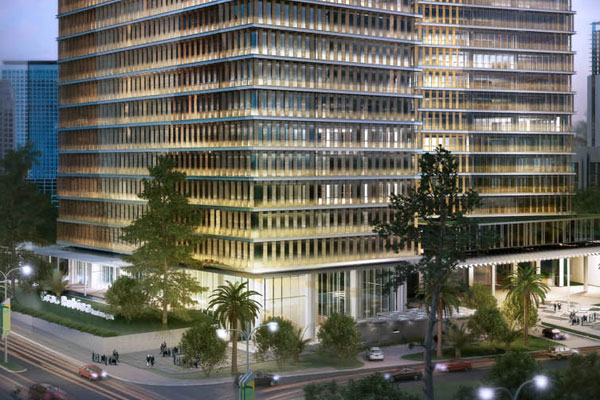
Built atop one of the last remaining green sites in the city, the office complex occupies a sprawling 180,000 square-metre plot of land and stands 22 floors above ground. The developer has culled the expertise of Danish-based AG5 Architects, who have collaborated with Indonesia-based Pandega Desain Weharima (PDW) to conceive a space that is high on both style and functionality.
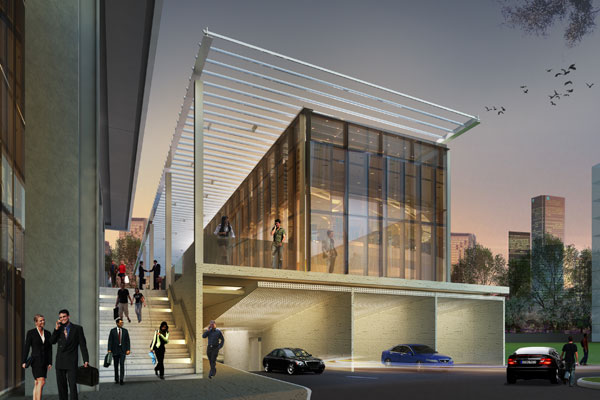
The complex itself comprises three buildings – a taller building sandwiched snugly by the East and West wings on either side. Staggered vertically, the buildings are oriented in a way to maximise solar gain so as to save energy. In addition to the double-glazed windows, a vertical screening system will be put in place to provide solar shading. The latter also forms an unusual pattern on the building facade. It’s estimated that the complex will use 30 per cent less energy than your typical skyscraper in the region.
Patrons can rest assured that all the above are calculated to a tee, thanks in no small part to Bentley Systems. Besides being used to generate elaborate visual renderings, the Bently AECOsim Building Designer BIM is being leveraged to conduct solar and solar exposure studies, which in turn plays a part in deciding how solar shading should be placed.
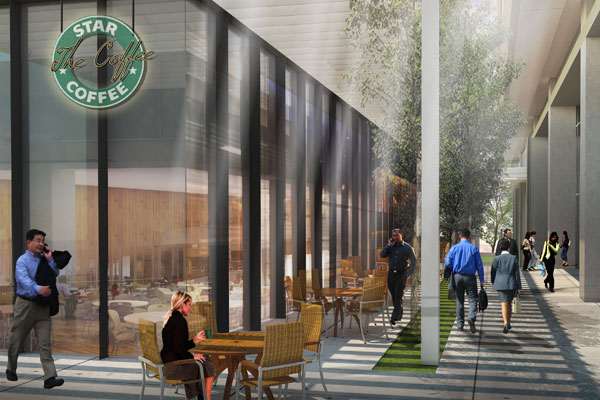
The plaza on the ground floor serves as a communal space to hang out over a cup of coffee as well as a transitional place for people to flow in and out. “There used to be a pedestrian shortcut where the plaza is now located. We wanted it to retain that function,” Brian Sheldon from AG5 Architects says.
Meanwhile, traditional Indonesian rattan hangs in the sky gardens to create a sense of privacy. “When it comes to sustainability, people tend to focus on the environment. What they don’t realise is that social sustainability is equally important,” Sheldon explains.
AG5 Architects
ag5.dk
INDESIGN is on instagram
Follow @indesignlive
A searchable and comprehensive guide for specifying leading products and their suppliers
Keep up to date with the latest and greatest from our industry BFF's!
The internet never sleeps! Here's the stuff you might have missed