The home of architecture and design in the Asia-Pacific
Get the latest design news direct to your inbox!

Get the latest design news direct to your inbox!
Bamboo Futures, an installation at London’s V&A Museum for London Design Festival, explores the model-making process of Canadian-Indonesian architect Elora Hardy of IBUKU.

Elora Hardy (photo by Alexander Berg) and detail of Green Village, Temple House (photo by Keiko China, Nacasa & Partners)
October 3rd, 2019
When Canadian-Indonesian architect Elora Hardy, founder of Bali-based practice IBUKU, designs a building, she doesn’t create conventional blueprints. Instead, her studio crafts to-scale structural models made of hand-whittled bamboo sticks.
These miniature buildings are then used by specialist artisans as the blueprints to build her idiosyncratic bamboo structures – from the Green Village project that led to the founding of IBUKU in 2010 to the fantasy jungle escape of Sharma Springs residence.
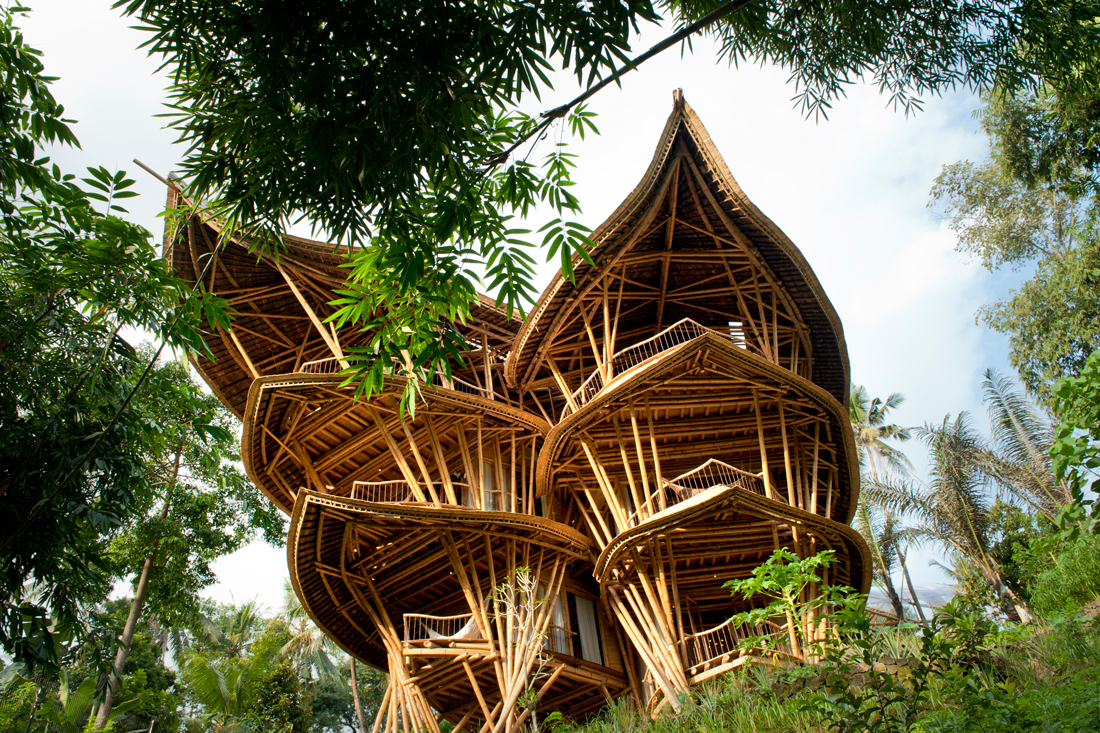
Sharma Springs. Photo by Rio Helmi
For the first time, a collection of eighteen of these models were exhibited together, exploring how IBUKU’s model making has been integral to the creative process over the past decade. The installation, Bamboo Futures, was on show at the Victoria & Albert Museum in London from 14-22 September as part of London Design Festival 2019.
“Model making is so important because the model itself is the blueprint of the house,” says Hardy. “We bring the model to the site and with tiny rules we measure each pole, and consider each curve, and we choose a piece of bamboo from the pile to replicate that house on the site.”
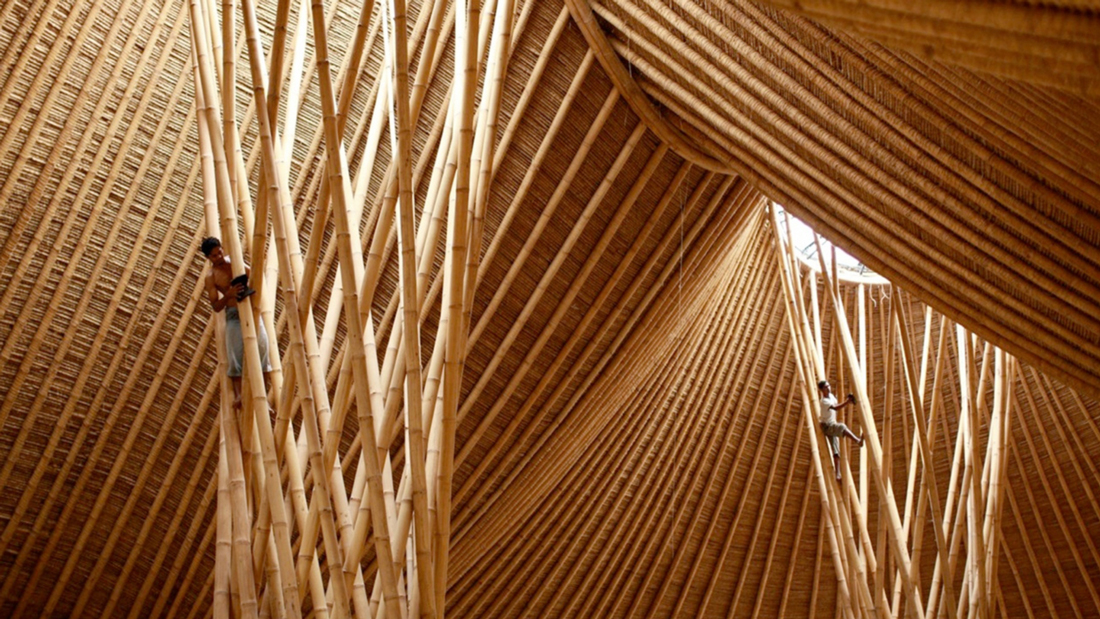
Construction process
Hardy is a master of building with bamboo, creating fantastical structures that soar skyward in harmony with nature. These twisting, curvaceous buildings defy convention and appear to have sprung from a world of fairytales and magic. And, in some ways they have.
In her 2015 TED Talk, ‘Magical Houses, Built From Bamboo’ – which has had over 4.5 million views – Hardy opens with a story about her childhood. “When I was nine years old, my mom asked me what I would want my house to look like, and I drew this fairy mushroom,” she says.
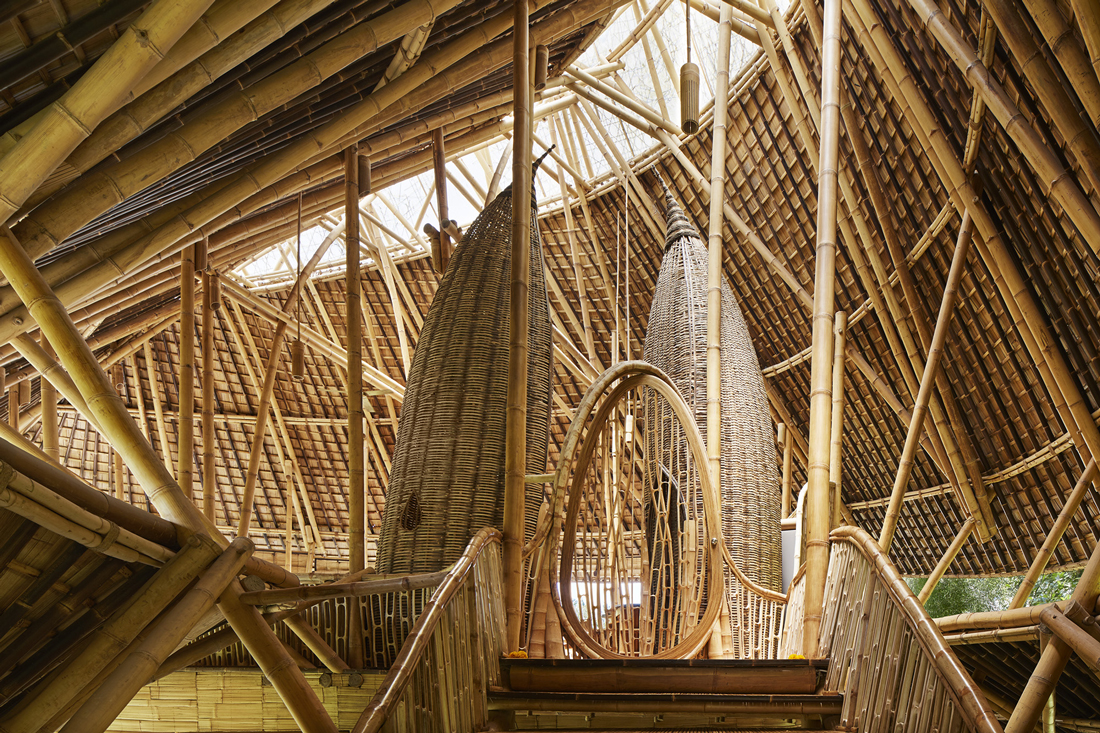
Green Village, Temple House, photo by Keiko Chiba (Nacasa & Partners)
“And then she actually built it. I don’t think I realised this was so unusual at the time, and maybe I still haven’t, because I’m still designing houses.” All these houses are built from bamboo, and many of them still resemble that first fairy mushroom house.
“I feel excited about the possibilities of building with bamboo,” says Hardy. “It is plentiful, it grows quickly and easily, and is uniquely versatile. Our conscience is clear and the world is cleaner and more beautiful for it.”
Despite the benefits listed by Hardy, bamboo has had a reputation around the world for being suited primarily to short-term structures. According to Hardy, however, this is because it is not properly treated or designed. IBUKU sources its bamboo from across Bali and Java, and safely treats it against insect attack with a natural salt solution. The team of architects and engineers then tests the bamboo rigorously to ensure the safety and longevity of the structure.
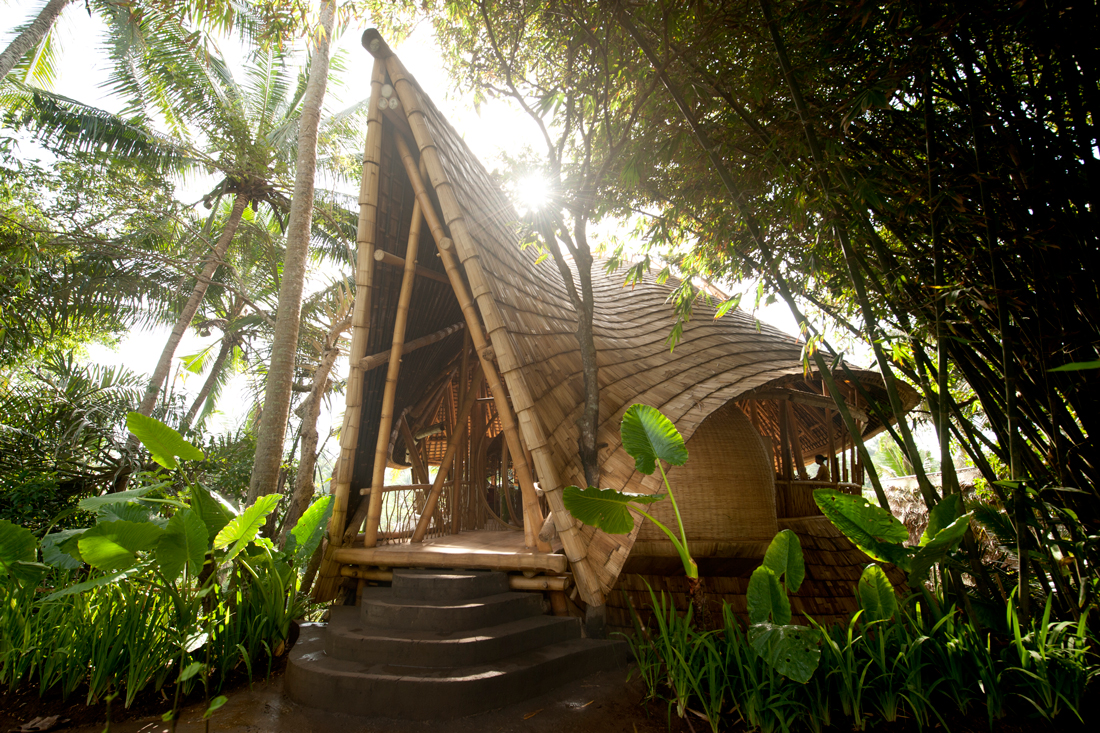
Green Village, Sunrise House, photo by Rio Helmi
“Similarly to wood, a well-designed and well-maintained structure built from properly treated bamboo can be expected to last for many decades,” says Hardy.
She is not the only architect championing bamboo. Also at the V&A as part of the London Design Festival, Japanese architect Kengo Kuma created a sculptural installation exploring how carbon fibre and bamboo can be used together to create strong, flexible structures.
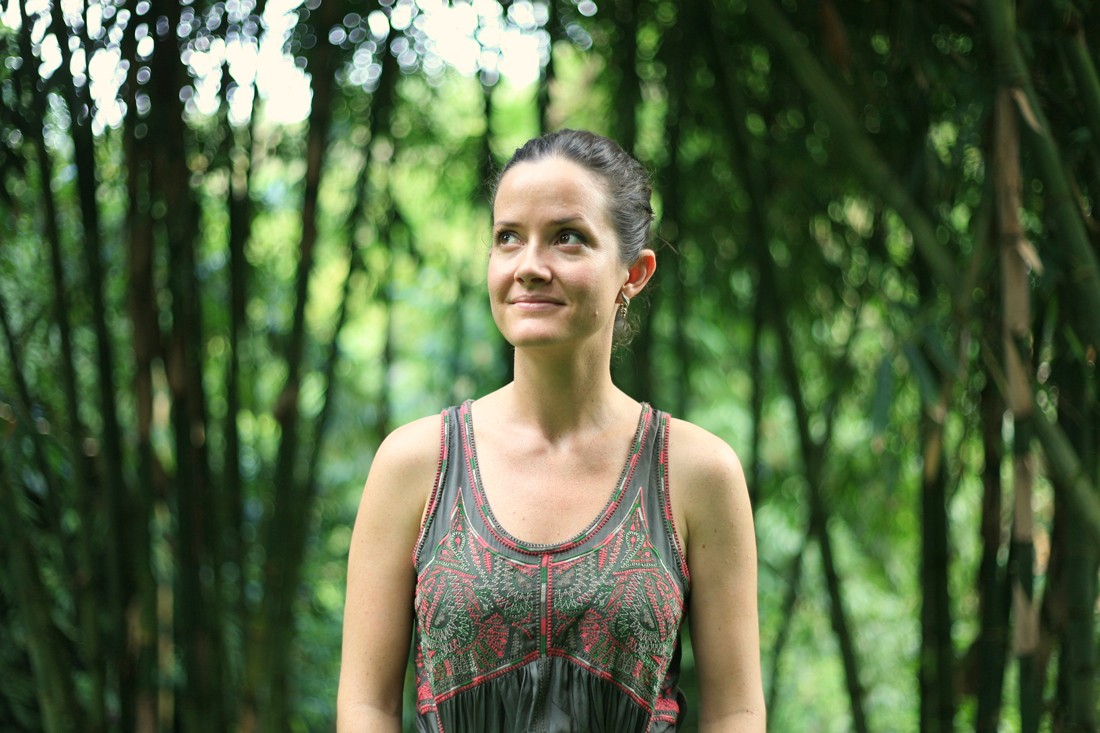
Elora Hardy, photo by Eka Wiradana
As the title of the exhibition – Bamboo Futures – suggests, Hardy, like Kuma, believes that bamboo has many more applications as a building material for the future.
“Engineers, architects and designers have now created a completely new design vocabulary,” says Hardy. “Bamboo is a strong, beautiful and flexible material with a short growth cycle and it allows us to build lightly on the land with a clear conscience. Not only is bamboo good for the environment, but it also helps the people living in the space to connect with nature.”
INDESIGN is on instagram
Follow @indesignlive
A searchable and comprehensive guide for specifying leading products and their suppliers
Keep up to date with the latest and greatest from our industry BFF's!
The internet never sleeps! Here's the stuff you might have missed