The home of architecture and design in the Asia-Pacific
Get the latest design news direct to your inbox!

Get the latest design news direct to your inbox!
Melbourne correspondent Lieu Pham explores the latest in the Southbank Cultural Precinct Redevelopment.
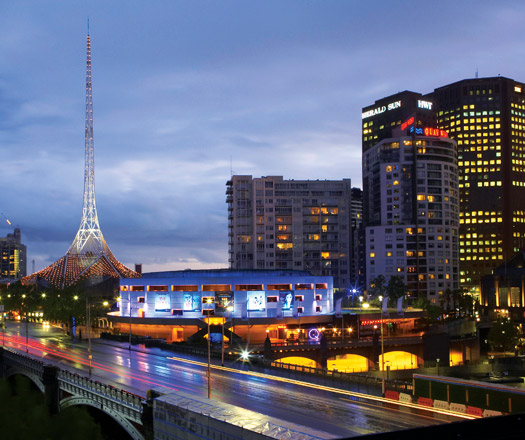
August 5th, 2009
After more than two and half decades of continuous operation, the Arts Centre’s Hamer Hall is due for internal refurbishment and upgrade to improve its amenity, acoustics and technical facilities.
The Hall’s surrounds have also changed significantly since it opened in 1982 with increase in pedestrian traffic along St Kilda Road, the development of the Yarra River promenade and South Gate prompting the need for improved public spaces and better integration with the river frontage.
Executive Director Sean Sweeney of Major Projects Victoria (MPV) says that the challenge of stage one (worth $128.5 million) of the Southbank Cultural Precinct redevelopment is to “refresh the Arts Centre’s Hamer Hall and its surrounds, to maintain the integrity of the original architectural concepts and Roy Grounds vision, but allow the building to better connect with the surrounding environment and to the needs of a contemporary city and its inhabitants”.
The State’s vision for the precinct is to “reinvigorate it as a vibrant cultural and community heart of Southbank as well as providing Melbourne with the cultural presence it deserves – an open, accessible, integrated, imaginative precinct that connects the arts to people and people to the arts”.
The Southbank Cultural Precinct Redevelopment is a long-term plan for Victoria to maintain its competitive advantage well into the future and create a place where all Victorians and visitors can experience the best arts and cultural activities from Australia and around the world.
Minister Tim Pallas hopes the project will encourage Melbournians to take part in more of the city’s cultural offerings, saying the brief is to “renew the buildings and their function as a focus for the performing arts in Melbourne… [and] make it a place people identify with as essential to the culture of Melbourne and somewhere they want to visit regularly”.
Delivered under a progressive alliance and construction due to commence in 2010, the project brings specialists together across the areas of design, architecture and building/construction.
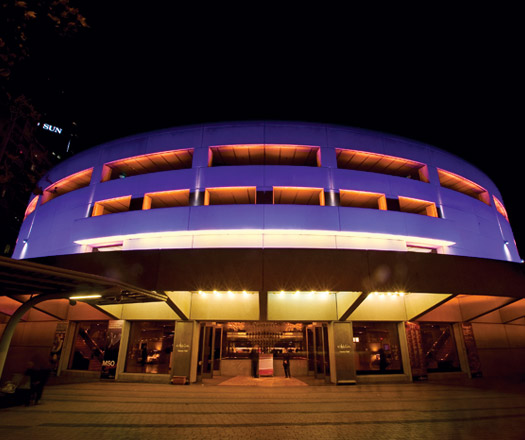
Currently research is being conducted into precedents and benchmarks for the redevelopment of performing arts centres of a similar nature and age, public urban spaces appropriate to giving the Arts Centre a new sense of place and the methods available to make the performance spaces suitable for contemporary and future use.
At present the aesthetics of the project are being considered in the context of maintaining the familiarity of the existing heritage buildings while adding new components that incorporate them into a place that will be recognisable as a contemporary place for now and into the future.
Architects Ashton Raggatt McDougall (ARM) Architects and Peter Elliott Architects (PEA), have been awarded the prize of designing for the project. MPV saw them as the best fit for the project due to their track record in delivering projects that have contributed to Melbourne being recognised as a city committed to good design.
ARM and PEA are renowned for their proven ability to make visually compelling contemporary buildings and urban spaces; ARM is responsible for significant projects such as the Melbourne Recital Centre and MTC Theatre, the additions to the Melbourne Shrine of Remembrance, and to Storey Hall at RMIT and the redevelopment of Melbourne Central.
Peter Elliott Architects’ urban design expertise is responsible for Observatory Gate at the Royal Botanic Gardens, RMIT’s City Campus Urban Spaces Project and the Spencer Street footbridge.
Sweeney asserts that “both architects have been awarded numerous design awards for their work and the expertise that resides in the work and people who make up the practices is in itself a significant cultural resource which this project can harness”.
Images: Peter Glenane of Peter Glenane Photography
INDESIGN is on instagram
Follow @indesignlive
A searchable and comprehensive guide for specifying leading products and their suppliers
Keep up to date with the latest and greatest from our industry BFF's!
TheTal R Egg Chair Exhibition will hit Brisbane on Friday 19 and Saturday 20 September 2008. Celebrating the 50th anniversary of the iconic Arne Jacobsen chair, the exhibition will be held in Hassell’s new Brisbane studio 36-38 Warry Street, Fortitude Valley, Brisbane. fritzhansen.com corporateculture.com.au
The internet never sleeps! Here's the stuff you might have missed