The home of architecture and design in the Asia-Pacific
Get the latest design news direct to your inbox!

Get the latest design news direct to your inbox!
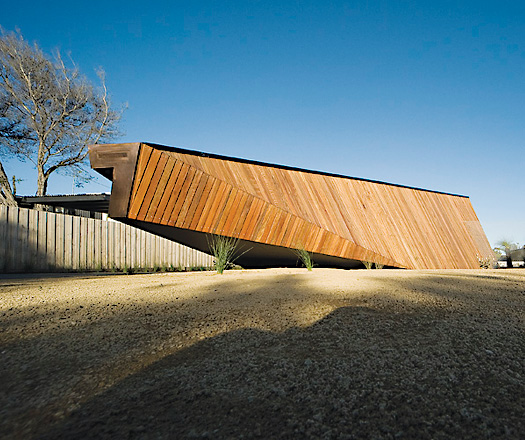
This Blairgowrie project takes the letterbox to a whole new level.
January 20th, 2009
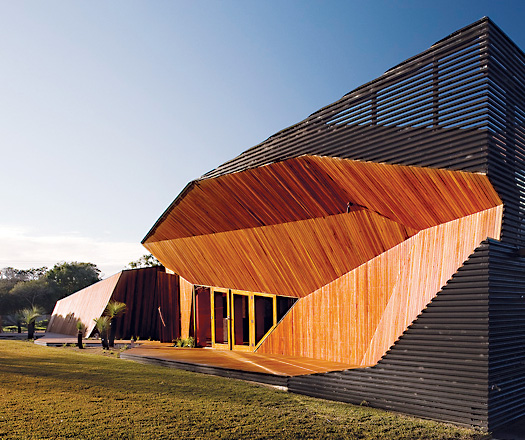
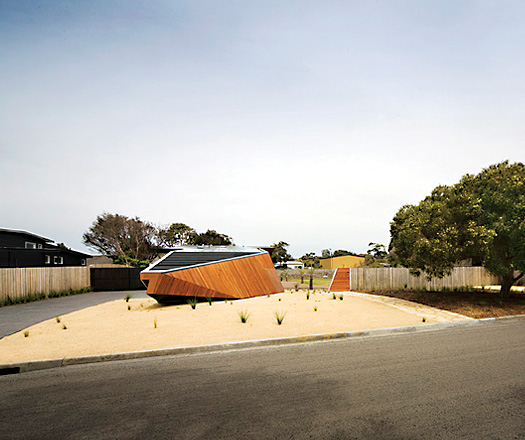
Designed by architects, McBride Charles Ryan, this Blairgowrie residential project sits among the traditional beach houses of the Mornington Peninsula.
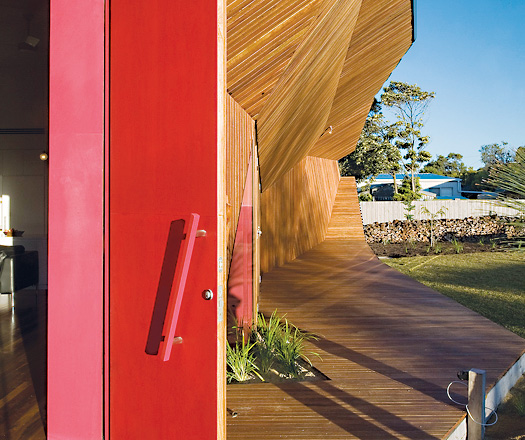
“It makes people smile, a building with the smallest façade on the peninsula – the building begins as the letterbox and unfurls to become this healthy scaled verandah, to some it is an upturned boat, to others its a wave, a cliff,” say Project Architects Rob McBride and Debbie-Lyn Ryan.
Using the house number, ‘7’, the letterbox-sized façade evolves into a two storey structure at the rear.
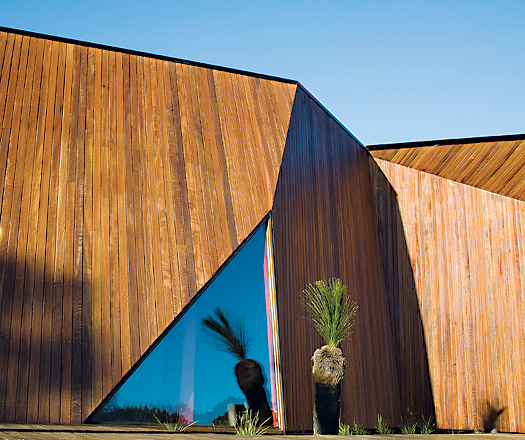
The building is clad on one side with stained timber decking, from the deck to the slanted walls, that creates an almost continuous, wave-like form.
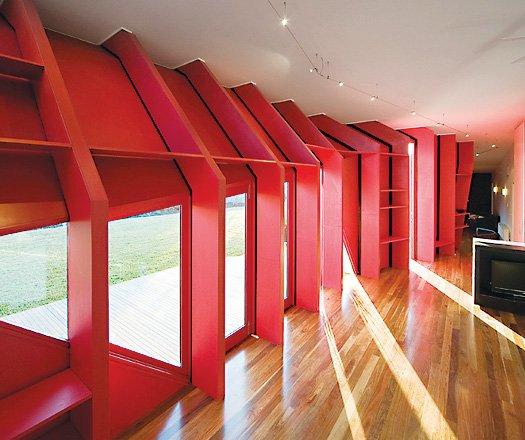
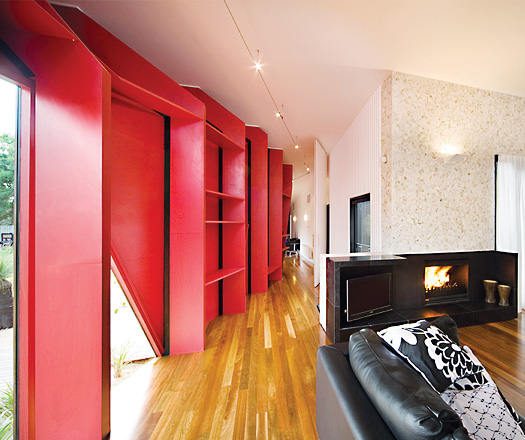
Inside the four-bedroom home you move from the natural-coloured, yet geometric, exterior into a brightly modern space splashed with vibrant red, sharp white and commanding blacks.
In their design statement, as they have with the building, the architects evoke a sense of a relaxed detachment from the city life:
“The peninsula is the place where you suspend formality and convention for a while – we wanted the building to do this and to remind you of that – it moves too far from architectural convention towards the other disciplines – that was the intention.”
“It becomes ambiguous – What is it? Where is the front door? You don’t need a ‘front door’ in a holiday house – you just find your way in.”
Featured in the current issue of Architecture Review Australia, the letterbox house will undoubtedly attract some much-deserved attention as the year rolls on.
Photography by John Gollings
Principal Architects Robert McBride, Debbie-Lyn Ryan
Project team Adam Pustola, Meredith Dufour, Michael McManus, Angela Woda
Time to complete 12 months
Total Floor Area 290sqm
INDESIGN is on instagram
Follow @indesignlive
A searchable and comprehensive guide for specifying leading products and their suppliers
Keep up to date with the latest and greatest from our industry BFF's!
The internet never sleeps! Here's the stuff you might have missed