The home of architecture and design in the Asia-Pacific
Get the latest design news direct to your inbox!

Get the latest design news direct to your inbox!
Following an emerging design direction for city calm, Space Modification Unit have designed a soothing cup of tranquillity for Beijing.



Our biggest cities have become blaring, busy metropolises. Life exists on a relentless hyper fast plane, with little room for pause, reflection and escape. In a movement labelled ‘The New Sublimity’ by UK based trend forecasting agency The Future Laboratory, a new design direction is emerging to offer sips of urban respite, tucked away from the city smoke and bustle.
Hong Kong based practice Space Modification Unit (SMU) have created a sublimely tranquil teahouse, dedicated to a slower, reflective pace. Located in Beijing, the DeHui Tea Space has been designed to encourage a more meditative tea appreciation. Founded by Torsten Radunski and Geraldine Ka Wing Lo, SMU have an open, collaborative approach to spatial design, drawing in expertise from museums and collectors, branding consultants, media designers, and food and beverage design specialists.
DeHui Tea Space is housed on a busy street in one of Beijing’s quickly developing hutong neighbourhoods — historically cramped laneway sectors of the city, lined with traditional courtyard residences. Sandwiched between delivery and service hubs, the tea house is poised in pleasant contrast to its busy surroundings.
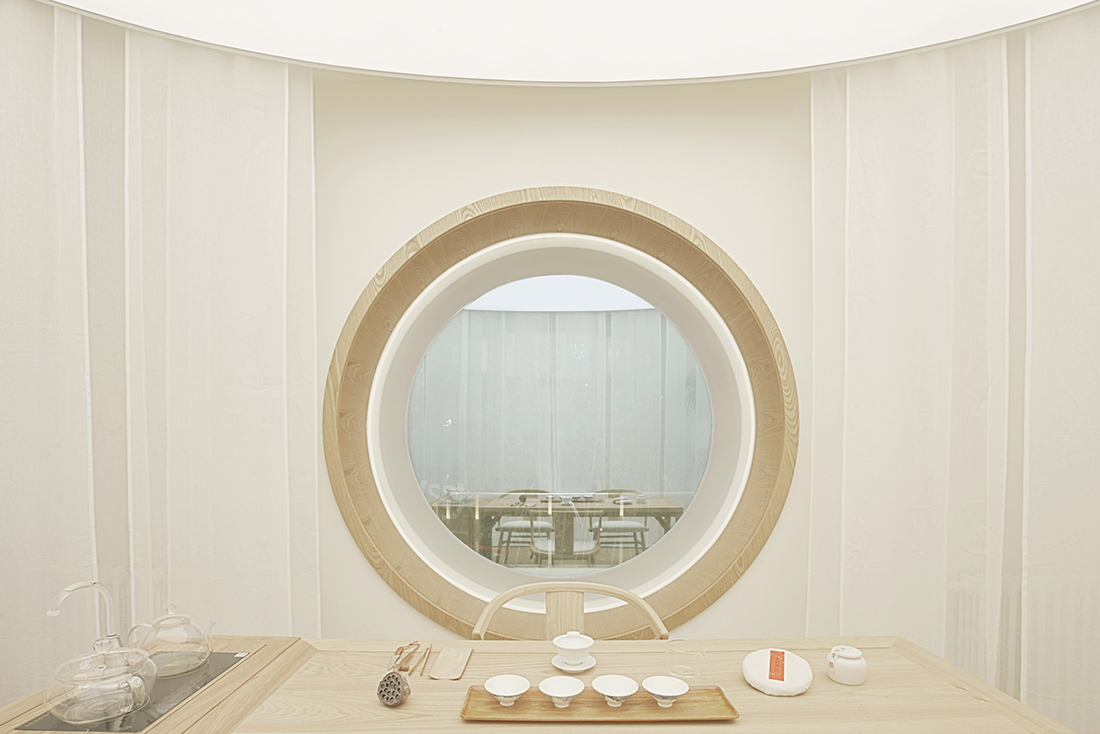
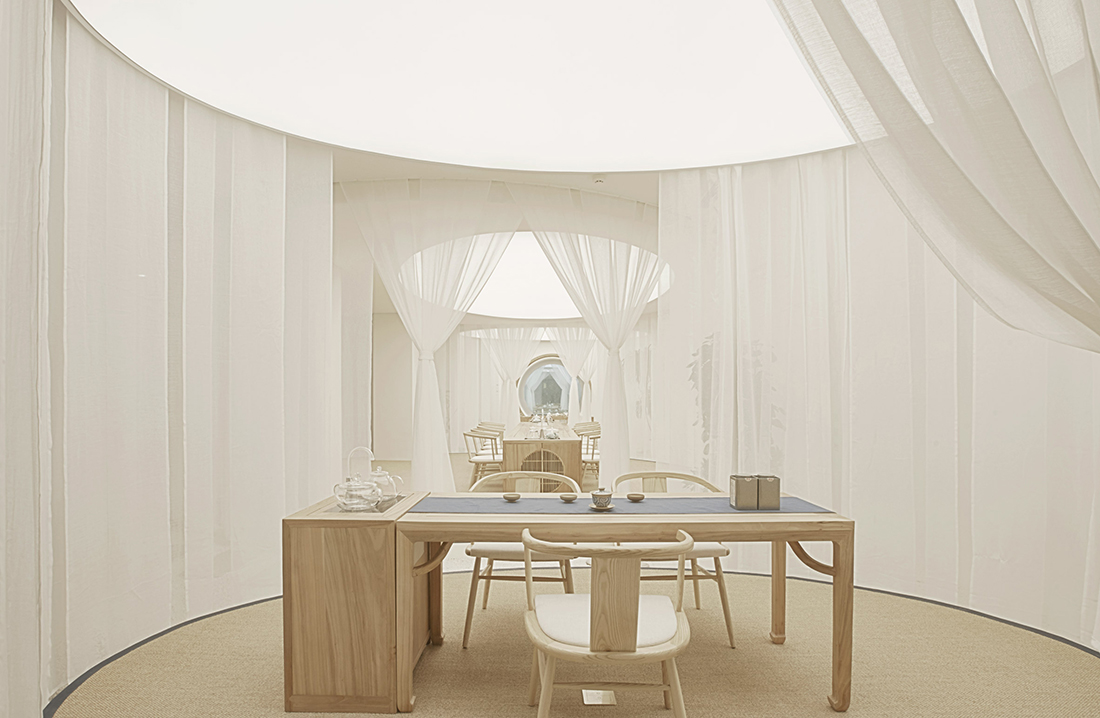
The 250sqm space accommodates up to 100 in a series of veiled circular and elliptical shaped rooms. Circular designs are a symbolic reference to harmony, fulfilment and oneness in Chinese culture, and run throughout the teahouse, such us porthole shaped windows, and cut out circle display nooks for tea pots.
The material palette consists of ‘linen, elm wood, marble and terrazzo with occasional warm metal highlights,’ SMU details on its website. Tearoom floors feature soft carpeting that balances the colour of the woodwork. Stepping stone pathways have been created between rooms, surrounded by white pebble stone. The central space features oval shaped Barrisol ceilings, while two totally private tea rooms continue the design motif of the main space. A duck-egg blue corridor links spaces, and doubles up as a gallery for temporary exhibitions. Back of house operations have been tucked away behind a montage door.
Outside, the site’s back lit frosted glass façade appears to glow from within, beckoning weary city dwellers in to refuge. A porthole window on the front wall ‘frames the view inward to intimate spaces for contemplation and friend gathering.’
INDESIGN is on instagram
Follow @indesignlive
A searchable and comprehensive guide for specifying leading products and their suppliers
Keep up to date with the latest and greatest from our industry BFF's!
In 2007 Stylecraft hosted its first Ten Pin Bowling event for Architects, Designers, Project Managers and many companies associated with the design industry. The aim of the evening was to raise money for Breast Cancer Research in Australia. Bowling for Breast Cancer has been a huge success, is now an annual event and has raised […]
The 2010 Brit Insurance Design Awards have announced the nominees for the third edition of the annual awards. Industry experts nominate the most compelling and progressive designs of the year across seven categories: architecture, fashion, furniture, graphics, interactive, product and transport. Among the nominees for architecture are the MAD Architects ’Hutong Bubble 32’ in Beijing […]
The internet never sleeps! Here's the stuff you might have missed