The home of architecture and design in the Asia-Pacific
Get the latest design news direct to your inbox!

Get the latest design news direct to your inbox!
The Mirvac Olderfleet development has brought Melbourne’s ‘dress circle’ of Colllins Street buildings into the 21st century. The buildings now represent the cutting edge of sustainable design, complete with Verosol blinds.

September 1st, 2022
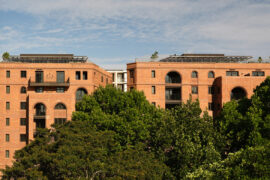
Lining Melbourne’s Collins Street since the 1880s is a row of Victorian buildings that have become an irreplicable part of Melbourne’s rich architectural heritage. These recently underwent their most significant makeover to date. Under the watchful eye of Grimshaw Architects, the buildings were re-imagined as part of ‘Olderfleet’, a 58,000 square metre commercial development by Mirvac.
Now constituting the new building’s facade, these original structures have been joined by a striking 38-storey glass tower, along with all the latest amenities and technologies expected in a premium grade office building.

Beyond that, and importantly, Olderfleet also represents the cutting edge of sustainable design. The first building in Australia to achieve a Platinum Core and Shell WELL Pre-Certification, it was also designed to achieve a 6 Star Green Star, 5 Star NABERS energy rating and 4 Star NABERS water rating.
Considering all of this, it is no wonder that a lot of thought went into the choice of shading solutions for Olderfleet. As was the case for the rest of the fitout, the designers sought window covering products that would contribute not just in terms of aesthetic appeal, but also environmental performance. They wanted something that would help improve the thermal efficiency of the building.
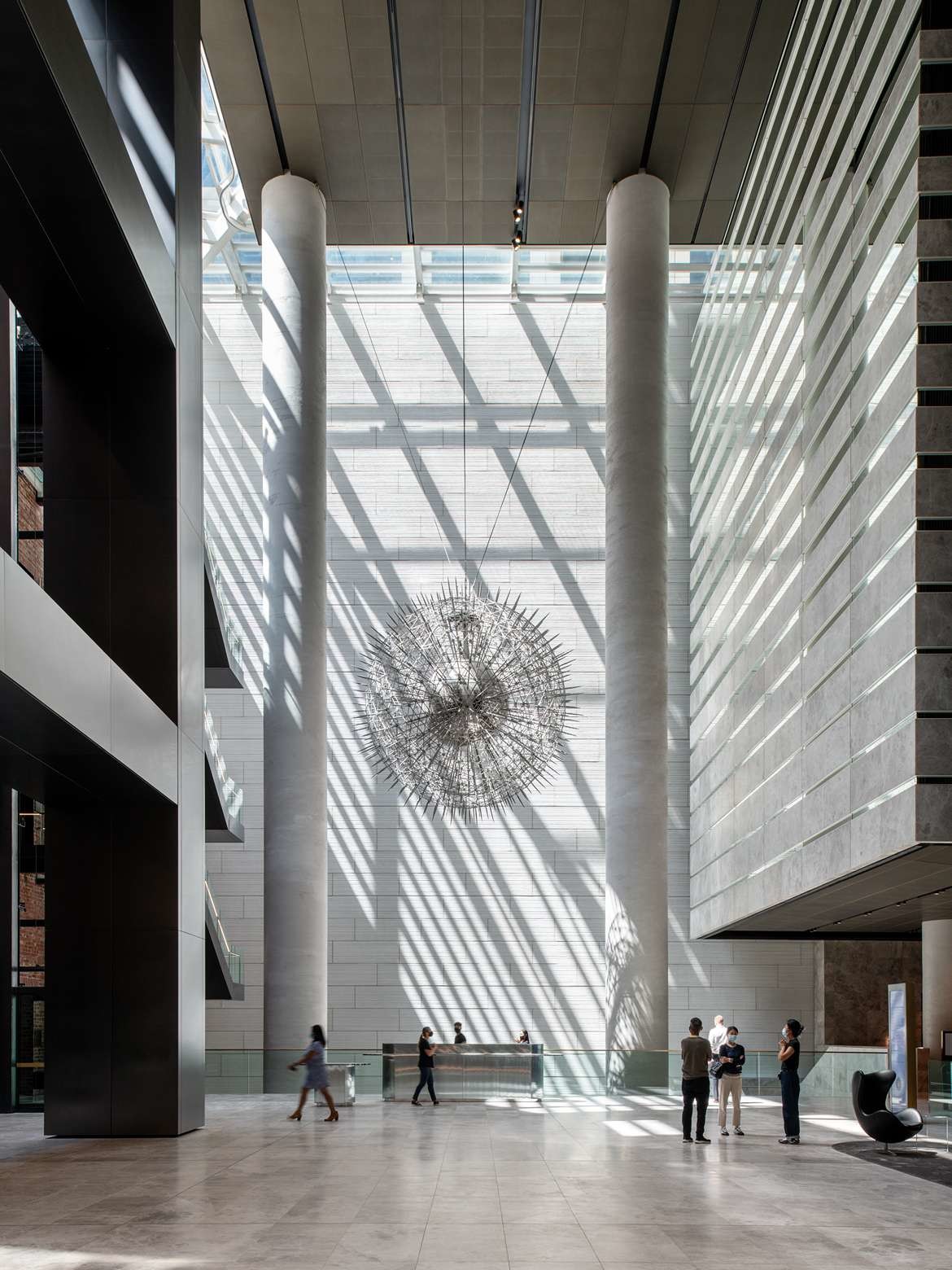
Grimshaw chose Verosol’s 123 Earth Screen fabric for the entire facility. Part of the supplier’s Core collection, the fabric was developed in Europe to the highest quality standard. PVC Free and flame retardant, it features a distinctive woven screen-like construction, and a decorative textile appearance. The seven floors of the building that are occupied by the building’s major tenant Deloitte feature fully automated dual blinds, while the rest of the Olderfleet carry manual blinds.
And as Pino Alessi, managing director of Alessi Design Group (the blind retailer responsible for the sale) points out, the blinds were specified in a colour specifically developed for the project.

“The onyx bronze colour chosen by Grimshaw has been specially made with two colour yarns to match the interiors. It delivers comfort to all tenants, while at the same time, maintaining crisp views to the outside,” said Pino, adding that the 123 Earth Screen features visual light transmittance (VLT) of 5 per cent and is able to reflect up to 68 per cent of the sun’s harmful rays.
According to Alessi, Verosol worked closely with Alessi Design Group and Grimshaw Architects to ensure the fabrics chosen would help ensure all the building’s thermal and environmental targets were met. Now fully operational, the blinds are helping to provide a new, sustainable lease of life to a precious part of Melbourne’s architectural heritage.
Verosol
verosol.com.au

INDESIGN is on instagram
Follow @indesignlive
A searchable and comprehensive guide for specifying leading products and their suppliers
Keep up to date with the latest and greatest from our industry BFF's!
The internet never sleeps! Here's the stuff you might have missed