Embodying Conrad Architects’ approach to design, its new studio is a place to inspire the design aspirations and ambitions of those who work in and visit it.
When an architecture firm designs its own workplace it’s an opportunity to lead by example and to realise an outcome uninhibited by client constraints. Conrad Architects’ new studio in Cremorne, Melbourne, embodies the practice’s design approach to align philosophy with company culture.
As with any space there are physical and non-physical elements that contribute to its aesthetic and atmosphere. At Conrad Architects, the physical is a refined and sophisticated industrial space, and the non-physical is a comfortable, enjoyable and inspiring environment that encourages the team to strive.
The studio is in a commercial building and embraces its industrial aesthetic. “Prior to fit-out, the space was unable to be leased as it presented as uninviting and uncomfortable. Rather than focusing on creating the latest ‘trendy space’ our design process focused on addressing the human senses to foster wellbeing and creativity,” says Director Paul Conrad.
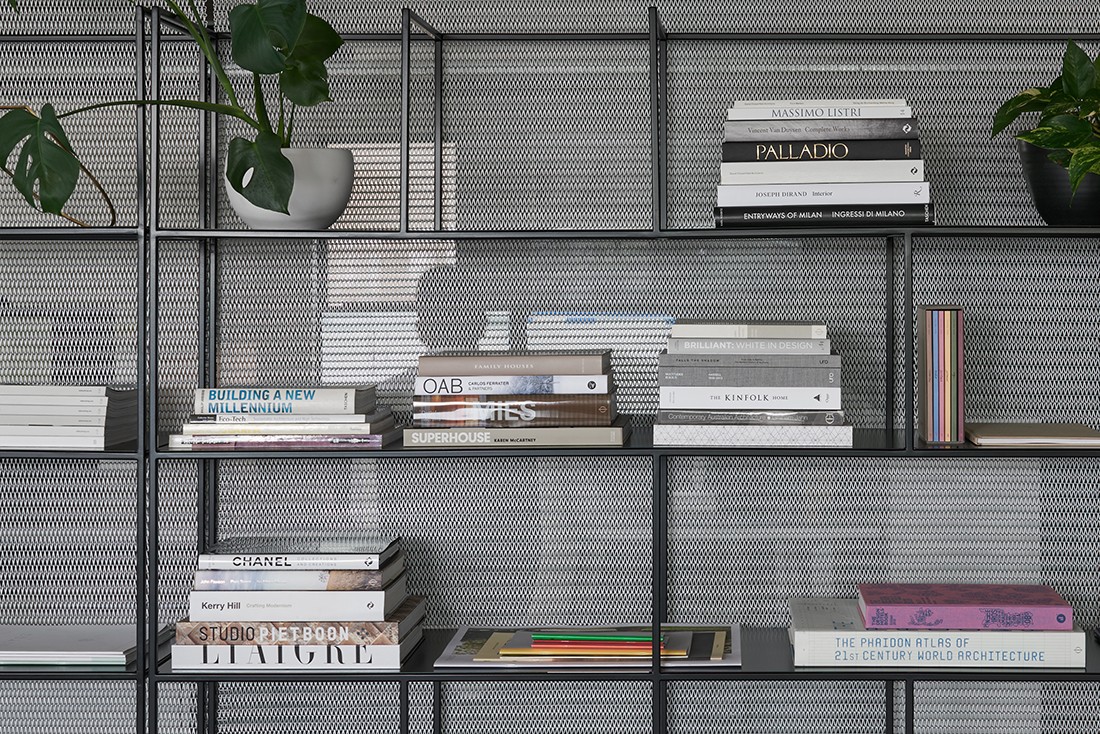
Conrad Architects took a light touch to the building, exposing the pipes, ducting and concrete structure, and working with a monochrome palette. The concrete pillars guided the zoning of the space with wire mesh divides and a glass-enclosed boardroom maintaining openness and privacy. Acoustic baffles soften noise and spotlights, desk lamps and floor lamps provide a hierarchy of lighting. Plants and a bolt of red piping across the ceiling add striking colour.
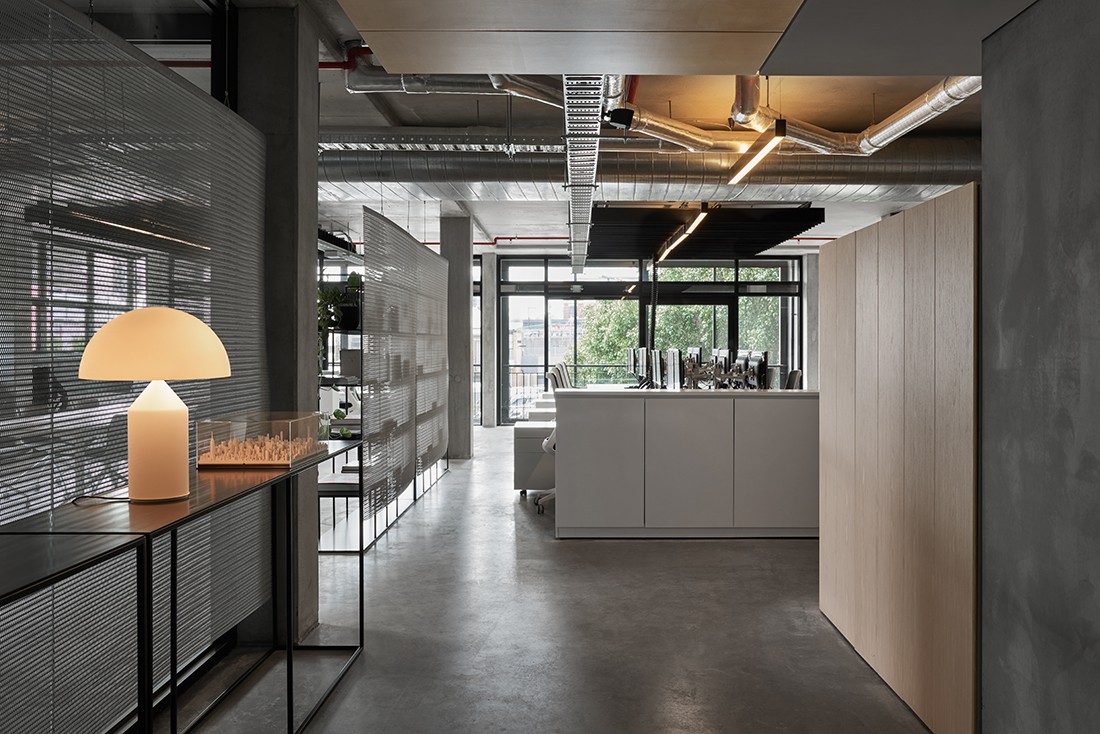
The open-plan layout and seating arrangements encourage collaboration and Porcelain-topped custom-made meeting tables are resistant to scratching from material samples.
Artworks and classic design pieces evoke a gallery space and encourage the team to engage with different mediums of art and design. This includes the Favela Armchair by the Campana brothers for Edra, Gaetano Pesce’s sculptural UP7 Foot from B&B Italia and Paul’s own fine art photography in colour and black and white.
The design of the workplace varies stylistically from Conrad Architects’ residential work, but the philosophy remains the same: “clarity of idea, restraint, the importance of light, and engagement with art,” Paul describes.
Indeed, as Conrad Architects leads by example in its workplace, the studio becomes a place to inspire the design aspirations and ambitions of those who work in and visit it. “It is great to inhabit a space that sets a minimum benchmark for our design quality, but also exhibits this to clients and collaborators,” says Paul.
INDESIGN is on instagram
Follow @indesignlive
A searchable and comprehensive guide for specifying leading products and their suppliers
Keep up to date with the latest and greatest from our industry BFF's!
In the second instalment of our performance seating three-parter, we turn to DKO’s Michael Drescher and Jacob Olsen to peek behind Sayl’s confident architectural form and explore the ideas of inclusivity, adaptability and freedom to move as hallmarks of what sitting your best actually means.
Blending versatile cooking with smart performance, Bosch AccentLine appliances bring a quieter sense of order and simplicity to the modern kitchen.
True luxury strikes a balance between glamorous aesthetics and tactile pleasure, creating spaces rich in sensory delights to enhance the experience of daily life.
In the first instalment of our three-part series exploring what it means to sit your best, we pose the question to Gray Puksand’s Dale O’Brien, who discusses the importance of ease and majority rule when it comes to sitting and reveals why specifying a task chair is not unlike choosing a Volvo.
As sensory beings, humans thrive in environments that deliver subtle visual cues, pleasing textures and harmonious acoustics.
This November marks 25 years since Greg Natale opened his Sydney studio. In the decades since, he has built one of Australia’s most recognisable design practices, defined by pattern and decorative conviction.
In the second instalment of our performance seating three-parter, we turn to DKO’s Michael Drescher and Jacob Olsen to peek behind Sayl’s confident architectural form and explore the ideas of inclusivity, adaptability and freedom to move as hallmarks of what sitting your best actually means.
In the first instalment of our three-part series exploring what it means to sit your best, we pose the question to Gray Puksand’s Dale O’Brien, who discusses the importance of ease and majority rule when it comes to sitting and reveals why specifying a task chair is not unlike choosing a Volvo.
The internet never sleeps! Here's the stuff you might have missed
Josh Robson, Senior Principal and Senior Architect at Populous, talks us through the recently completed One NZ Stadium at Te Kaha, designed with Warren and Mahoney.
From a beachfront transformation in Bali to a cross-cultural prelude in Tokyo, Southeast Asia’s leading design platform returns with renewed urgency and regional ambition.