The home of architecture and design in the Asia-Pacific
Get the latest design news direct to your inbox!

Get the latest design news direct to your inbox!
Futurespace and SCA Design help Cisco Systems get agile

While commissioning designers and architects to design a space is often a collaboration with the client, it is not often that the client themselves are the experts.
Cisco Systems, a company that has made its name as the worldwide leader in networking for the Internet, commissioned Sydney-based design studio Futurespace and Singapore-based studio SCA Design to fit out its workplace in Sydney in accordance with its global design standards of the ‘Cisco Connected Workplace’.
The ‘Cisco Connected Workplace’ is a solution framework that offers the foundation for companies to deliver innovative workplace services to employees and guests. Reflective of the ever-popular agile work environment, the ethos envisions staff using a variety of spaces that fit the job they are doing at any given time. For this office in particular, the brief entailed integrating two individual offices into one campus to enhance collaboration and socialisation between employees.
SCA Design headed up the project, taking on the role of head design team while Futurespace took charge of the documentation and scheduling phase including tendering and construction. As the Futurespace team are Sydney-based, they were also in charge of coordinating the services team, compliance with Building Codes of Australia and site coordination.
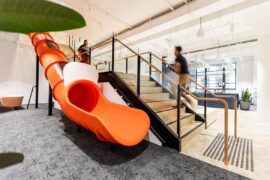
The resulting office unfolds over five levels, greeting employees with bright and impactful, graphic interiors. The workspace is split into different areas that are designed to address a variety of tasks. From dedicated workstations to audio privacy rooms, and community walls to nap rooms, the employees at Cisco Systems are offered a number of options to choose how and where they work. A booking system called ‘Cisco Maps’ and clear way finding allows staff to schedule meeting and workspaces – as well as to locate their colleagues.
While the majority of the design was led by SCA Design, Futurespace gave its input by facilitating local themes, which allowed for a more Australian aesthetic. One of the E-Cafes – which are situated on every floor – features a floor-to-ceiling beach image alongside a fake-grass covered floor illustrating the indoor-outdoor lifestyle that Sydneysiders revel in.


INDESIGN is on instagram
Follow @indesignlive
A searchable and comprehensive guide for specifying leading products and their suppliers
Keep up to date with the latest and greatest from our industry BFF's!
The internet never sleeps! Here's the stuff you might have missed