The home of architecture and design in the Asia-Pacific
Get the latest design news direct to your inbox!

Get the latest design news direct to your inbox!
Charged with reviving one of the largest, and most iconic, residential buildings in the Eastern Suburbs of Sydney is no easy task. Elana Castle chats to Nick Tobias about the process thus far
September 18th, 2012
Tell us about the genesis of the project.
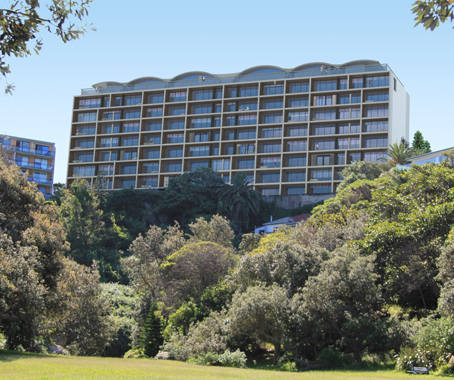
We were engaged by the client (the building’s owners corporation) a number of years ago after a multi-practise interview process. They came with a fairly open brief, however the critical task was to solve the matrix of problems with the eighty unit apartment building in an elegant and holistic way. Aside from the aesthetic appearance, problems ranged from dilapidation and non-compliances to a general lack in functionality.
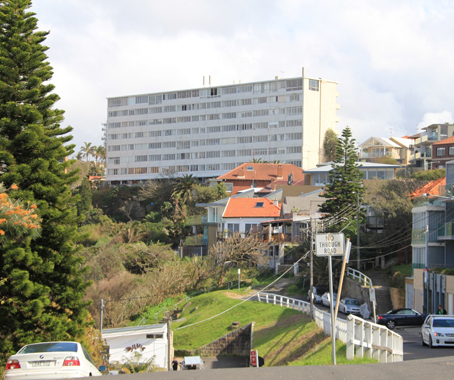
The existing facade of 20 Illawong Avenue, Tamarama
What fundamental changes are you proposing and why?
New facades to the existing building which will include private open spaces, sun control and aesthetic improvements to the overall facade. There is nothing redeeming about the existing aesthetic and this is a great opportunity to improve a highly visible piece of architecture.
A second lift tower to satisfy compliance issues and provide secure access from the new car park to the apartments.
Rooftop penthouses. A key source of revenue for the project, they also soften the harsh building silhouette.
A two storey underground car park to alleviate the noise and oil pollution problem currently posed by on site parking.
New landscaped areas (in partnership with Aspect Studios) which will include a vegetable garden, fruit orchard and a new interface between the building and the ground plane.
General building and common area upgrades to satisfy compliance requirements as well as uplifting the user experience.
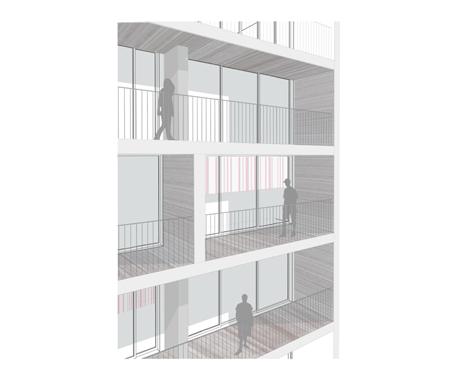
Balcony additions on East Elevation of 20 Illawong Avenue, Tamarama
What obstacles have you encountered thus far?
The main obstacle has been the approval process. Being such a visible building, the application was quite sensitive politically. That said, as the development is over the $20 million mark, the approval body is not the Council, but a panel appointed by the state government called the Joint Regional Planning Panel (JRPP). They take a very pragmatic, ’merit based’ (and non-political) view on things and have supported the development.
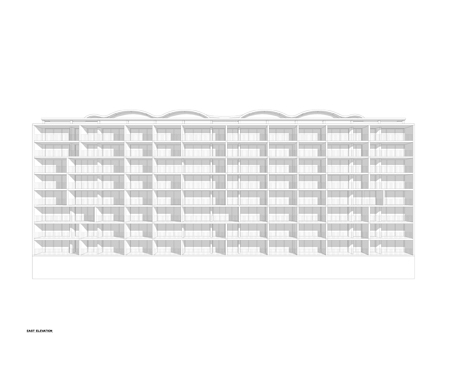
East Elevation of the Tobias Partners proposed design
What do you foresee as the next challenge?
The construction phase. Existing buildings that are in very poor condition are notoriously challenging projects. In addition, there are eighty occupied units so the building will have to be partially or fully vacated at various stages of works.
What is the next stage in the design process?
We are about to commence design development and preparation of the construction certificate. This will enable us to look much more closely at the detail of the building, and how the structure, services, landscaping and other elements come together. It’s a very exciting stage.
Editors note: Often incorrectly credited as a Harry Seidler development from the 1960’s, the late architect’s wife, Penelope Seidler, has refuted any association with the building in its current form or involvement in the proposed changes.
Tobias Partners
INDESIGN is on instagram
Follow @indesignlive
A searchable and comprehensive guide for specifying leading products and their suppliers
Keep up to date with the latest and greatest from our industry BFF's!
The internet never sleeps! Here's the stuff you might have missed