The home of architecture and design in the Asia-Pacific

Get the latest design news direct to your inbox!

5 reasons modular monitor arms are the best fit for today’s modern office

Adaptable. Open. Collaborative. Modular. These are the words used to describe today’s modern office space. While you might associate the term “modular” with the office furniture, have you considered the role of modularity in workstation technology?

Just like modular wall partitions and desk systems make it easy to reconfigure a workspace in minutes, modular technology mounting systems enable flexibility with the technology support.

The Advantages of Modular Monitor Arms 

How can you ensure your technology best accommodates your employees and “moves” with your modular office? Modular mounting hardware enables you to attach many different arm configurations to create (and recreate) your ideal workspace.

  1. Maximise Your Space. With digital documents eliminating the need for extensive storage space and flat monitor screens requiring less desktop space than their bulky predecessors, desks are getting smaller and narrower and workstations are shrinking up to 40%. Modular mounting hardware helps optimise this space.
  2. Future-proof Your Investment. In the spirit of flexibility and adaptability, investing in customisable, modular monitor arms will ensure you’re covering all of your bases. Your space and technology needs will invariably change, so prepare for it from the get-go with hardware that you can easily adapt.
  3. Reconfigure, Anytime. Modular mounting hardware solutions are built to accommodate office expansions (or contractions) as well as different and ever-evolving technologies—not to mention more flexible styles of working, such as part-time in the office and part-time at home, which might lead to desk-sharing or more frequent use of common work areas at the office. In fact, WorkplaceTrends’ most recent Workplace Flexibility Study reveals that 75% of employees rank workplace flexibility as their most important benefit, leading organizations to see improvements in employee satisfaction, productivity, and talent retention.
  4. Personalize Workspaces. Modular, configurable technology mounting hardware makes it easy to meet user preferences for what types of technology they use while working and how they’re most comfortable using it. Consider the BYOD (bring your own device) trend that continues to impact today’s workplaces: the majority (59%) of companies allowing employees to bring their own devices to work. This means there may be no “standard” solution for technology mounting, making flexibility key.
  5. Ensure Employee Health and Safety. Your employees engage with technology all day long. They may be sitting at their desk for hours at a time, or changing work locations several times within a day. No matter how they’re interfacing with their office technology, organizations have a responsibility to help keep employees’ health and safety top-of-mind. Knoll research recommends investing in high-quality monitor arms to position screens correctly and help reduce the eye and next strain associated with awkward posturing.

When it comes to creating a functional, productive, and comfortable office space meeting the needs of a wide range of employees and uses, it pays to consider your technology—and the hardware that supports it. Why not explore Atdec’s range of adaptable modular monitor mounts and find out how they can evolve with the ever-changing needs of your growing business.

INDESIGN is on instagram

Follow @indesignlive


The Indesign Collection

A searchable and comprehensive guide for specifying leading products and their suppliers


Indesign Our Partners

Keep up to date with the latest and greatest from our industry BFF's!

A collective vision: The whimsical workplace with Intuit, COX and MillerKnoll

A collective vision: The whimsical workplace with Intuit, COX and MillerKnoll

Stepping into Intuit’s Sydney workplace certainly doesn’t feel like walking into an office. Why? In this film, we discover that, when joy takes precedence as a design driver, even a high-performing commercial CBD headquarters can feel like an intuitive wonderland that invites employees to choose their own adventure.

Michael Drescher and Jacob Olsen on finding the sweet spot with Herman Miller’s Sayl Chair

Michael Drescher and Jacob Olsen on finding the sweet spot with Herman Miller’s Sayl Chair

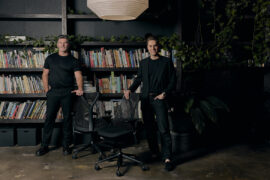
In the second instalment of our performance seating three-parter, we turn to DKO’s Michael Drescher and Jacob Olsen to peek behind Sayl’s confident architectural form and explore the ideas of inclusivity, adaptability and freedom to move as hallmarks of what sitting your best actually means.

Dale O’Brien on sitting easy with Herman Miller’s Verus Chair

Dale O’Brien on sitting easy with Herman Miller’s Verus Chair

In the first instalment of our three-part series exploring what it means to sit your best, we pose the question to Gray Puksand’s Dale O’Brien, who discusses the importance of ease and majority rule when it comes to sitting and reveals why specifying a task chair is not unlike choosing a Volvo.

In a different light: The Geelong College’s Belerren Centre designed by Wardle

In a different light: The Geelong College’s Belerren Centre designed by Wardle

The Geelong College’s Sport and Wellbeing Centre ‘Belerren’ designed by Wardle is designed around bringing in natural light. But Shade Factor’s job was to help modulate and precisely control it for the most important competitive moments.

Related Stories

Dipped in integrity: The profound depth of Aeron Chair’s extended palette

Dipped in integrity: The profound depth of Aeron Chair’s extended palette

Aeron Chair’s new shades, Nightfall and Jasper, arrive with a sense of quiet cohesion – no bells and whistles, no loud technicolour; just two timeless, perfectly versatile near-neutrals. But the new hues aren’t just about colour – and their significance is much more profound than their surface-level subtlety might suggest.

Alex Bain on finding his anchor in Herman Miller’s Aeron Chair

Alex Bain on finding his anchor in Herman Miller’s Aeron Chair

In the last instalment of our three-part performance seating series, Alex Bain from Architectus explains why sitting well shouldn’t feel like sitting at all and explores an unexpected success metric of the hybrid workplace: the grounding power of emotional support.

Michael Drescher and Jacob Olsen on finding the sweet spot with Herman Miller’s Sayl Chair

Michael Drescher and Jacob Olsen on finding the sweet spot with Herman Miller’s Sayl Chair

In the second instalment of our performance seating three-parter, we turn to DKO’s Michael Drescher and Jacob Olsen to peek behind Sayl’s confident architectural form and explore the ideas of inclusivity, adaptability and freedom to move as hallmarks of what sitting your best actually means.

Dale O’Brien on sitting easy with Herman Miller’s Verus Chair

Dale O’Brien on sitting easy with Herman Miller’s Verus Chair

In the first instalment of our three-part series exploring what it means to sit your best, we pose the question to Gray Puksand’s Dale O’Brien, who discusses the importance of ease and majority rule when it comes to sitting and reveals why specifying a task chair is not unlike choosing a Volvo.


While you were sleeping

The internet never sleeps! Here's the stuff you might have missed