The home of architecture and design in the Asia-Pacific
Get the latest design news direct to your inbox!

Get the latest design news direct to your inbox!
Fisher & Paykel create appliances deliberately ‘designed to match’ as a direct response to extensive, ongoing research with the design and architectural community regarding kitchen trends and customer preferences, as well as its own mission to offer products that are both desirable and durable.

Mark Elmore for Fisher & Paykel
October 30th, 2014
Above: Mark Elmore for Fisher & Paykel
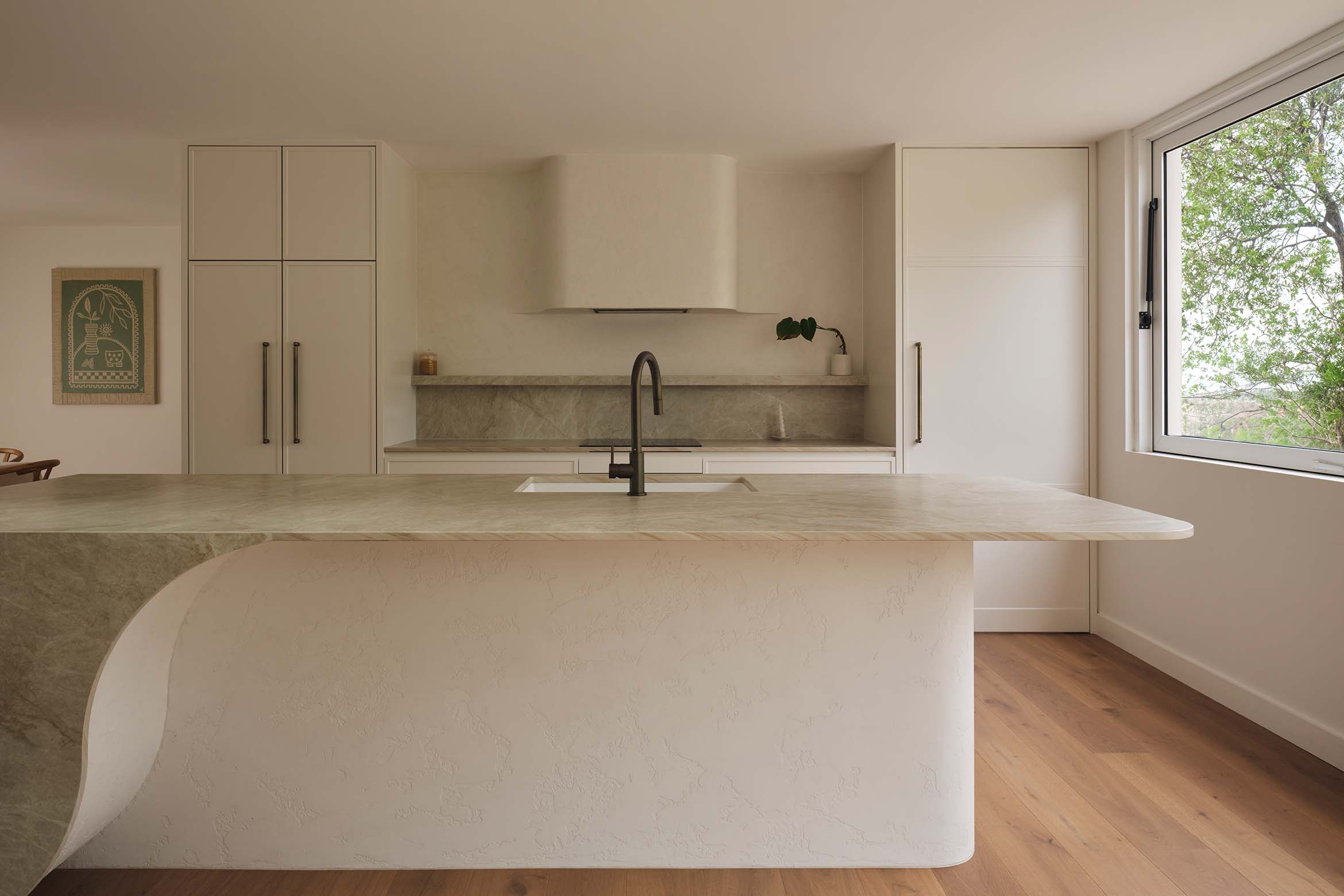
Kitchens have become the sociable heart of the home and are therefore increasingly incorporated into, or exposed to living areas. So it’s unsurprising that appearance has become as important as performance. Fisher & Paykel research confirms consumers value styling as well as performance when it comes to choosing appliances, and kitchen designers are drawn to a cohesive look.
The sleek styling of Fisher & Paykel’s Designed to Match range of kitchen appliances creates the contemporary look that flows so smoothly through living and kitchen spaces.

The Designed to Match range uses the same materials and finishes, the same details in handles or dials and exactly the same proportions across ovens, cooktops, refrigerators and dishwashers. So any number of Fisher & Paykel kitchen appliances will line up perfectly. Consistent 480mm, 600mm or 900mm product sizes ensure designers can match appliance lines within kitchen cabinetry. This is true for all products including more ergonomic, smaller DishDrawerTM dishwashers and CoolDrawerTM multi-temperature fridges. These can be distributed around the kitchen or elsewhere, including on the living or dining side of an open-plan kitchen.
Premium materials and finishes enhance timeless styling and durability. Black, Stopsol glass, brushed or polished stainless steel and anodised aluminium, machined stainless steel dials and edge-lit LED controls, all combine to create the highest aesthetic and user-friendly standards.

In the Designed to Match range, Fisher & Paykel’s 60cm oven and mix-and-match Gas on Glass and Induction cooktops been internationally recognised – for both design and performance – by German-based Red Dot Awards. These modular cooktops are styled with a stainless steel strip, which visually unifies any combination of cooktops you might choose.
For further media information and high res images please contact: Edwina Gatenby at Maxicom Public Relations
INDESIGN is on instagram
Follow @indesignlive
A searchable and comprehensive guide for specifying leading products and their suppliers
Keep up to date with the latest and greatest from our industry BFF's!
The internet never sleeps! Here's the stuff you might have missed