The home of architecture and design in the Asia-Pacific
Get the latest design news direct to your inbox!

Get the latest design news direct to your inbox!
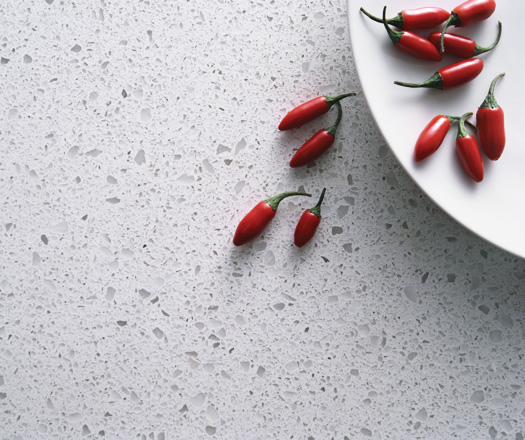
CaesarStone quartz surfaces continue to be specified for their versatility and durability while retaining their focus on environmental standards and product development.
February 10th, 2009
With a commitment to upholding strict environmental standards, CaesarStone employs the latest technologies and design innovation to create their popular quartz stone surfaces.
The company was founded in 1987 when it made history by combining the natural physical properties of quartz with their original manufacturing process.
CaesarStone’s timeless surfaces are stain, crack, scratch, chemical and heat resistant, making them the durable choice for carefree kitchens, bathrooms, bench tops, wall paneling and various other applications.
CaesarStone manufactures its products in accordance with the environmental standard ISO 14001 and has been certified as non-toxic in accordance with international NSF 51 standards.
By maintaining strict safety standards, observing eco-friendly manufacturing processes and striving to work only with eco-friendly suppliers, CaesarStone continues to improve its commitment to the environment, utilising the latest methods to ensure that it delivers an eco-friendly product.
CaesarStone has recently launched Mosaici Collection which is the direct result of investment in recycling technologies. CaesarStone has a global collection program utilising reclaimed material content from first grade off-cuts in selected CaesarStone white colours. Recycled stone constitutes up to 42% of the finished material.
CaesarStone has been used in key projects including: the Qantas Club Sydney, The Meta by Phillip Starck , The Hilton Sydney, The Bank Apartments, Lumiere Residences, Village Docklands in Melbourne and many more residential and commercial projects.
With every CaesarStone surface comes a comprehensive 10-year limited warranty.
See their website for more details on this versatile product.
caesarstone.com.au
INDESIGN is on instagram
Follow @indesignlive
A searchable and comprehensive guide for specifying leading products and their suppliers
Keep up to date with the latest and greatest from our industry BFF's!
The internet never sleeps! Here's the stuff you might have missed