The home of architecture and design in the Asia-Pacific
Get the latest design news direct to your inbox!

Get the latest design news direct to your inbox!
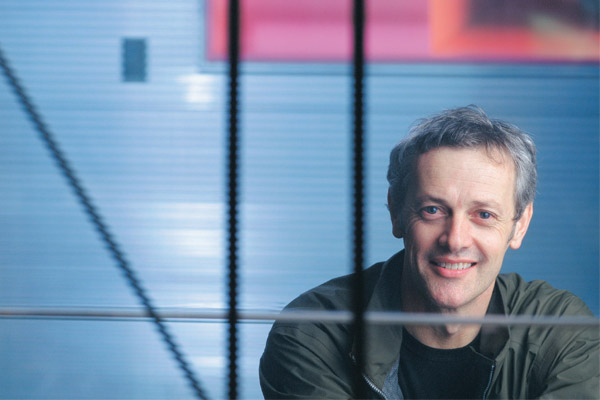
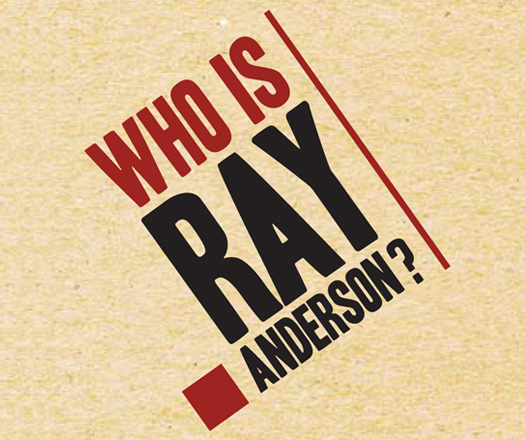
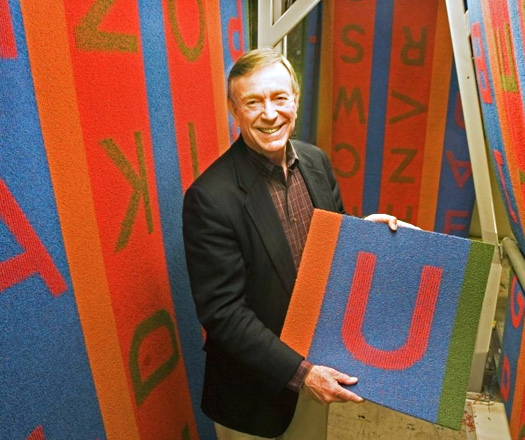
A hero of the environment, an advisor to Presidents, star of ’The Corporation’, a radical industrialist and an environmental entrepreneur – This is Ray Anderson.
August 27th, 2008
This article first appeared in Issue 29 of Indesign’s DQ magazine. A little longer than our regular articles, we hope you’ll take the time to get to know Ray Anderson.
Anderson will be presenting a talk at MCA, The Rocks, on Thursday 4 September. Register now to take part.
Read on to discover the story behind the man.
At an age when many people are justifiably considering retirement, Ray Anderson had an epiphany that drove him to transform his company, InterfaceFLOR, to achieve global sustainability. Rachael Bernstone reports.
Always the entrepreneur, industrial engineer Ray Anderson founded Interface in 1973, and in doing so, revolutionised the commercial floor covering industry in the United States. Interface produced America’s first modular carpet tiles, based on techniques and technologies Anderson had observed in Europe.
For the first 21 years of operations, Interface was a typical manufacturer with a business model that depended on petro-chemicals, but that all changed in August 1994 when an internal task force asked Anderson to outline the company’s “environmental vision”. “Frankly, I didn’t have a vision, except ‘comply, comply, comply’,” Anderson recalls, “I had heard statesmen advocate ‘sustainable development’ but I had no idea what it meant. I sweated for three weeks over what to say to that group.”
In a serendipitous coincidence, Anderson was given a copy of The Ecology of Commerce by Paul Hawken. “I read it, and it changed my life,” he says. “It was an epiphany. I wasn’t halfway through it before the vision I sought became clear, along with a powerful sense of urgency to do something. Hawken’s message was a spear in my chest that remains to this day.”
In his speech to the task force, Anderson borrowed Hawken’s ideas and agreed with his central hypothesis: while business is part of the problem, it can also be a part of the solution. “Business is the largest, wealthiest, most pervasive institution on Earth, and responsible for most of the damage,” Anderson says. “It must take the lead in directing the Earth away from collapse, and toward sustainability and restoration. I gave the task force a kick-off speech that, frankly, surprised me, stunned them, and galvanised all of us into action.”
Since then, Anderson and his associates have refined their objectives to steer the now-titled InterfaceFLOR towards Mission Zero – their sustainability program that aims to take nothing from the earth that is not renewable and avoids harming the biosphere – by 2020. It’s 14 years since Anderson’s epiphany, and the company has already design quarterly reduced its overall environmental footprint by more than 40% globally. In Australia, InterfaceFLOR’s improvements include:
• An overall reduction of its environmental footprint by more than 50%
• A reduction in greenhouse gas emissions by 24%, despite substantial
increases in production;
• A decrease in energy consumption by 56% per unit of production;
• A reduction in non-renewable energy usage of 55%; and
• Water savings of 48% per unit of production.
This year, InterfaceFLOR Australia begins a $31M investment in a capital upgrade of their manufacturing facility at Picton in NSW which has already contributed to its global parent’s sustainability goals, including reducing waste, decreasing reliance on fossil fuels and saving water.
Achieving these outcomes has necessitated the complete revision of the
company’s processes from cradle to grave, so that InterfaceFLOR now sources raw materials from sustainable suppliers and recycles post-consumer waste, through their Re Entry program, to produce new products, among other initiatives.
Rather than incurring massive costs to “go green”, the approach has resulted in significant savings and the market has responded favourably. It has recorded annual sales growth in Australia and New Zealand of 25% each year since 2004, and in the USA, InterfaceFLOR’s share price has jumped from $US3 to $US19 in just four years.
Not content to effect change only within his own company, Anderson has
become an advocate for sustainability to the wider business sector. He works tirelessly to spread the sustainability mantra, giving speeches to industry, serving as co-chairman of the President’s Council on Sustainable Development during the Clinton administration and appearing in documentaries such as The Corporation. Last year, Anderson was named one of TIME Magazine’s international ‘Heroes of the Environment’, an honour previously bestowed on Richard Branson and Al Gore.
As his success continues, Anderson can feel justifiably proud of his own efforts, and those inspired by his vision, to make InterfaceFLOR a sustainable company. As it edges nearer to achieving status, the company moves closer to Anderson’s ultimate goal of becoming the world’s first “restorative enterprise” – one that returns more than it takes by helping others achieve sustainability.
“We look forward to the day when our factories have no smokestacks and no effluents,” Anderson says. “If successful, we’ll spend the rest of our days harvesting yesteryear’s carpets, recycling old petro-chemicals into new materials, and converting sunlight into energy. There will be zero scrap going into landfills and zero emissions into the biosphere. Literally, our company will grow by cleaning up the world, not by polluting or degrading it. We’ll be doing well by doing good.”
Ray Anderson will be presenting Under a Sustainable Flag: Leading the Next Industrial Revolution, at the MCA on Thursday 4 September. Register now for this unique opportunity.
InterfaceFLOR
1800 008 101
interfaceflor.com
INDESIGN is on instagram
Follow @indesignlive
A searchable and comprehensive guide for specifying leading products and their suppliers
Keep up to date with the latest and greatest from our industry BFF's!
Your are invited to The University of Newcastle 5th year Architecture "Anarchi" Exhibition 2008.
5th year is the final year of the Masters of Architecture degress and the students final major projects will be on exhibition. Please join us for an eveningto celebrate the completionof 5 years hard work.
Refreshments will be served.
The internet never sleeps! Here's the stuff you might have missed